Houston’s data center capacity could more than double by 2028, and CenterPoint’s power-connection queue jumped from 1 gigawatt to 8 in under a year. That build-out is filling buildings with servers worth more than the real estate around them. Most plans get one thing backwards. Data center physical security gets bought like technology, so the money flows to cameras, badge readers, and analytics, and the on-site officer, the person who can actually stop an intruder, gets value-engineered out to hit a number. A camera records a break-in. An officer interrupts one. This article covers what data center physical security includes, what drives its cost in Houston, what Texas allows an officer to do, and how to tell a real security partner from a body in a uniform.
What is data center physical security?
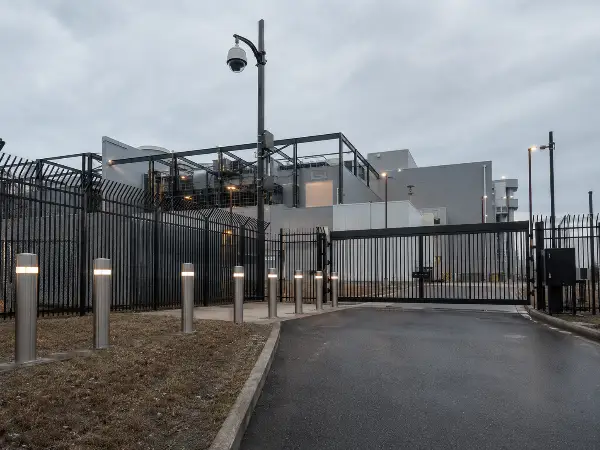
Data center physical security is the layered system of people, barriers, and technology that keeps unauthorized people away from servers and from the power and cooling that keep them online. It combines perimeter defense, access control, video surveillance, environmental protection, and trained on-site officers who verify identity and respond to incidents in person.
Teams usually build it in five layers, known as the five Ds of perimeter security: deter, detect, deny, delay, and defend. Each layer buys time and information before a threat reaches the server floor. Miss one and the others carry more load than they should.
Why Houston data centers are a target right now
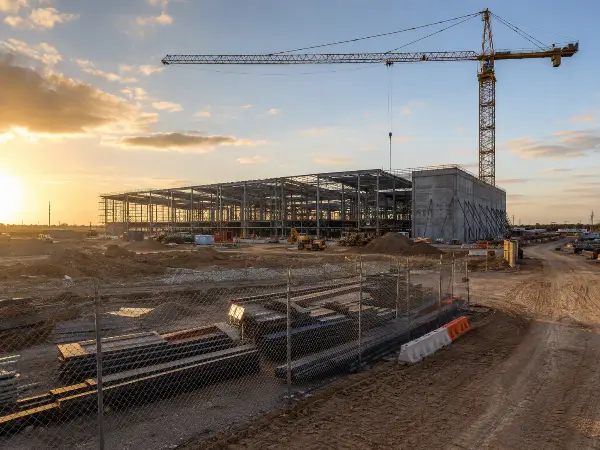
The risk is climbing because the prize is growing. Houston held about 154 megawatts of data center capacity in late 2025 with more under construction, and CBRE expects that number to more than double by 2028. One developer has floated a 250-acre campus near the city with a potential 500-plus megawatts.
More sites mean more copper, more switchgear, and more expensive hardware sitting behind fences that crews just finished pouring. Thieves read the same headlines. So do the insiders who already carry a badge. A half-built or freshly commissioned facility is the softest it will ever be, and that window lands right when the security budget is still an argument over line items.
The thinnest part of most data center plans
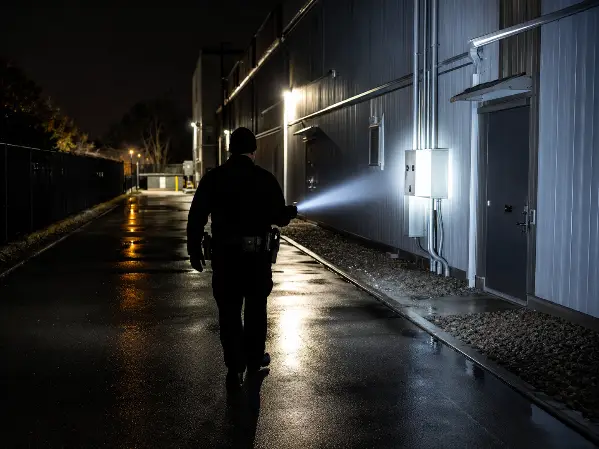
The weak spot in most data center security plans is not the camera system. It’s the empty chair where a trained officer should sit, in view of what the cameras point at. Technology detects. People intercept. That gap carries a price: IBM’s 2025 Cost of a Data Breach report puts the average U.S. breach at $10.22 million, even as the global average fell to $4.44 million.
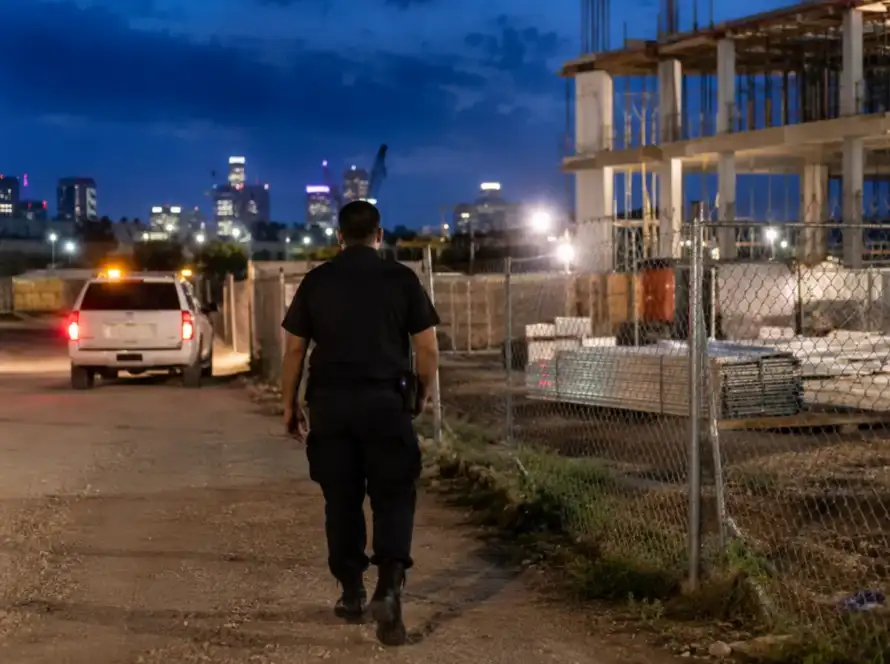
Here is what the difference looks like on the ground. At a Houston construction site at 3:30 a.m., one of our officers found a man prying open a storage container to pull rolls of copper wire. The officer held observation, called it in, and kept eyes on him until police arrived and made the arrest. The copper went back to the site. A camera would have filmed the same theft and lost the copper by sunrise. We see the pattern across the construction sites and warehouses we cover: an officer on site turns a loss into a report and an arrest.
Data centers are not construction sites. But the physics of the problem holds. A locked door delays. Only a person decides, moves, and stops.
Do cameras, remote monitoring, or on-site officers protect a data center best?
You need all three, and the order matters. An officer on site is the only layer that can physically stop and detain, while cameras and remote monitoring stretch that officer’s reach. Buy the technology to make the guard better, not to replace one.
| Approach | What it does well | Where it fails | Best role |
|---|---|---|---|
| On-site security officers | Verify identity, intercept intruders, respond in seconds, document for court | Cost per hour; one person can’t watch every screen | The layer that stops and detains |
| Remote video monitoring | Wide coverage, lower cost, audio warnings, timestamped footage | Records the breach; response waits on someone else arriving | Extends an officer’s eyes after hours |
| Access control and biometrics | Blocks the front door, logs every entry, slows tailgating | Beaten by a propped door or a polite person holding it open | The gate, not the guard |
What on-site officers actually do at a data center
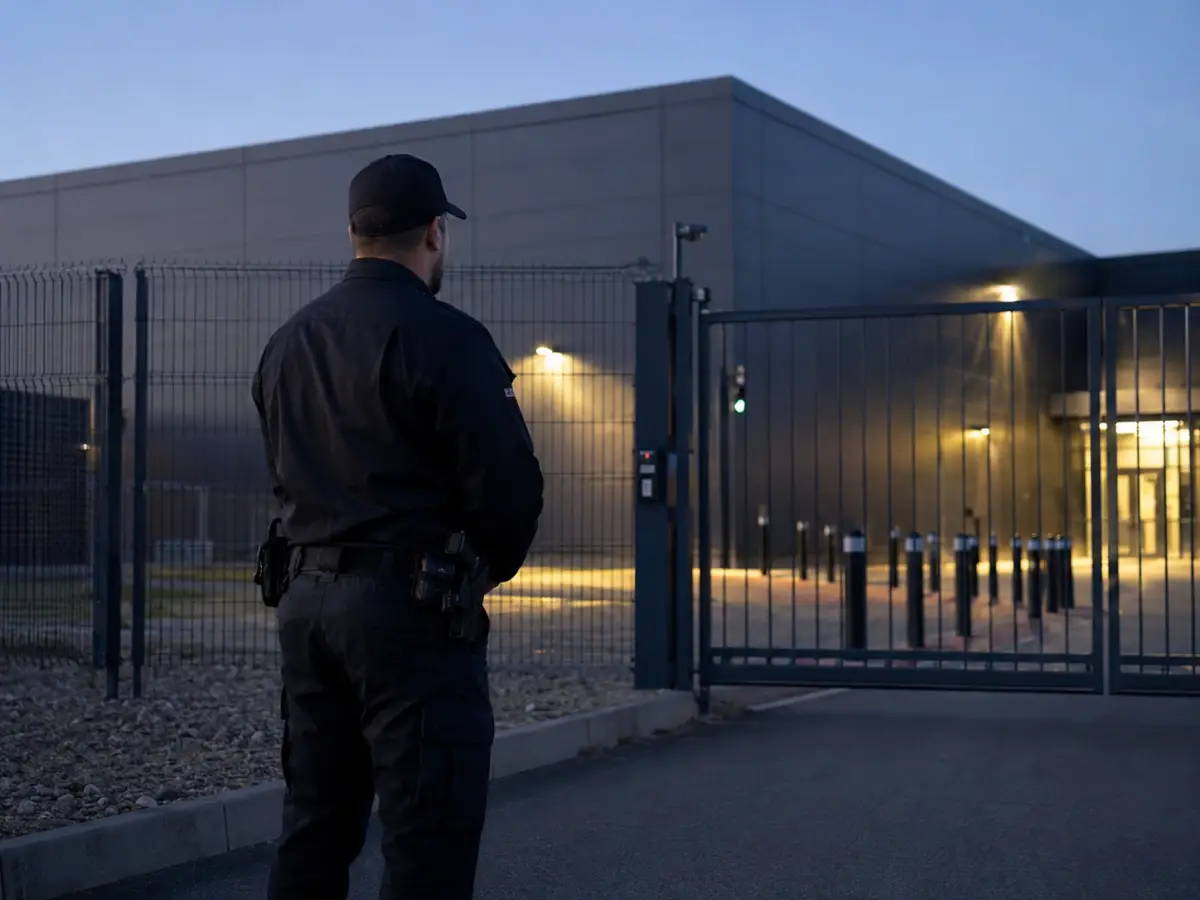
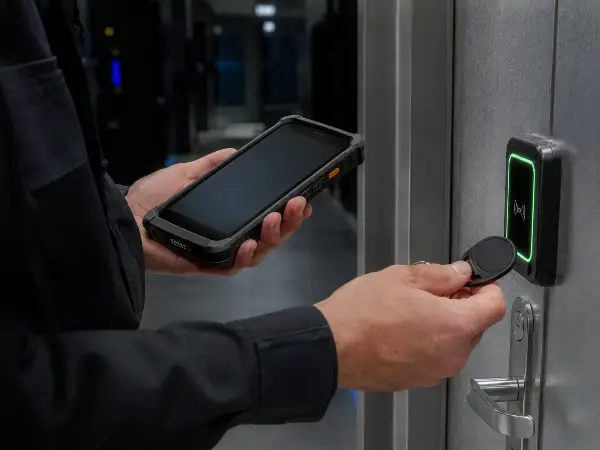
An officer’s job at a facility like this is access control, verification, patrol, and documentation. They check credentials at the gate and at sensitive interior doors, confirm vendors and delivery drivers against the day’s schedule, walk the perimeter and equipment yards on a set cadence, and write up anything that looks off.
The difference between a real program and a warm body is the paper trail. Our officers run patrol rounds on GPS guard-tour systems, file real-time incident reports, and check in with a supervisor every shift, so a client sees proof of the rounds instead of taking them on faith. That documentation is standard across our Houston security services, and our officers work in English and Spanish, which matters on a Houston site where the trades and delivery crews often do too.
Armed or unarmed, and what can a Texas officer legally do?
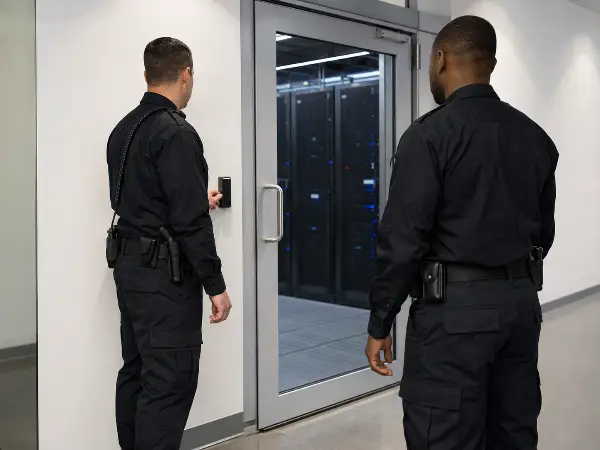
In Texas, an unarmed officer holds a Level II registration and an armed officer holds a Level III commission, and both are licensed by the Texas Department of Public Safety. Level III adds a 45-hour course with a firearms qualification on top of the Level II training. Level IV covers personal protection work.
For most data centers, unarmed Level II officers handle access control and patrols well. A site adds armed Level III officers when it holds high-value hardware, runs sensitive or government-contracted operations, or wants a stronger response posture after dark. Keep one thing straight: a security officer is not a police officer. They observe, deter, verify, and detain within narrow limits, then hand off to law enforcement. A company that blurs that line is a liability, not an asset.
What shapes the cost of data center security in Houston?
The price of on-site security tracks four things: how many posts you staff, how many hours a day, whether officers are armed or unarmed, and how fast you need coverage. A single around-the-clock armed post costs far more than a night-shift gate check, which is why most sites pair a staffed entrance with monitored cameras on the back fence.
Two things we do differently. We don’t require a long-term contract, so a site can run us month to month, or week to week while a project ramps. And we issue the insurance certificate the same day and deploy fast, because a facility that finds a coverage gap on Friday can’t wait until next quarter. Ask any provider for a written scope and a same-day certificate before you sign.
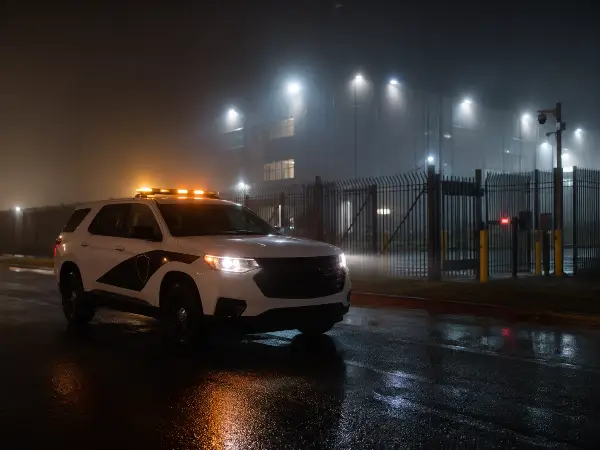
How to vet a data center security company
Ask for four things before you sign: proof of a current Texas license, a sample patrol report, a named account supervisor, and a same-day insurance certificate. Each one screens out a common failure.
A license number you can verify with DPS confirms the company is real and its officers are registered. A sample report tells you whether you’ll get documented rounds or a shrug. A named supervisor means one person owns your account instead of a call center. Same-day insurance proves the company carries real coverage, not a promise. The same checklist works for building security officers in Houston or any facility full of hardware. Our guide to commercial building security covers the ground-level habits that catch most problems.
Reliable Guard & Patrol Service protects sites across Houston, from Downtown and the Energy Corridor to Katy, Sugar Land, and The Woodlands. If you run a data center, colocation site, or any building full of expensive hardware, the officers who cover our construction, warehouse, and commercial accounts can cover yours. Tell us about your site and we’ll scope a post and price it.
FAQs
What is data center physical security?
Data center physical security is the layered mix of people, barriers, and technology that keeps unauthorized people away from servers and from the power and cooling behind them. It runs from the fence line inward through perimeter defense, access control, video surveillance, environmental protection, and trained on-site officers.
Do data centers need armed or unarmed guards?
Most data centers run unarmed Level II officers for access control and patrols, and add armed Level III officers for high-value hardware, sensitive contracts, or a stronger after-dark posture. In Texas both are licensed by the Department of Public Safety, and Level III requires a 45-hour course with a firearms qualification.
Can cameras replace security guards at a data center?
No. Cameras and remote monitoring record and extend coverage, but they can’t physically stop or detain an intruder. An on-site officer is the only layer that intercepts a breach in progress, which is why the strongest programs pair officers with monitored cameras rather than choosing one.
What is the biggest physical security risk to a data center?
The most common physical risks are after-hours intrusion during construction or commissioning, and tailgating, where an unauthorized person follows someone through a secured door. Both are people problems that access-control hardware alone doesn’t solve.
How fast can a Houston data center get security officers on site?
Reliable Guard & Patrol Service issues the insurance certificate the same day and deploys quickly, with no long-term contract required, so a site can run month to month or week to week. That matters when a coverage gap turns up mid-project.
What should I look for in a data center security company?
Ask for four things before signing: a verifiable Texas license, a sample patrol report, a named account supervisor, and a same-day insurance certificate. Each one screens out a common failure, from unregistered officers to call-center account management.