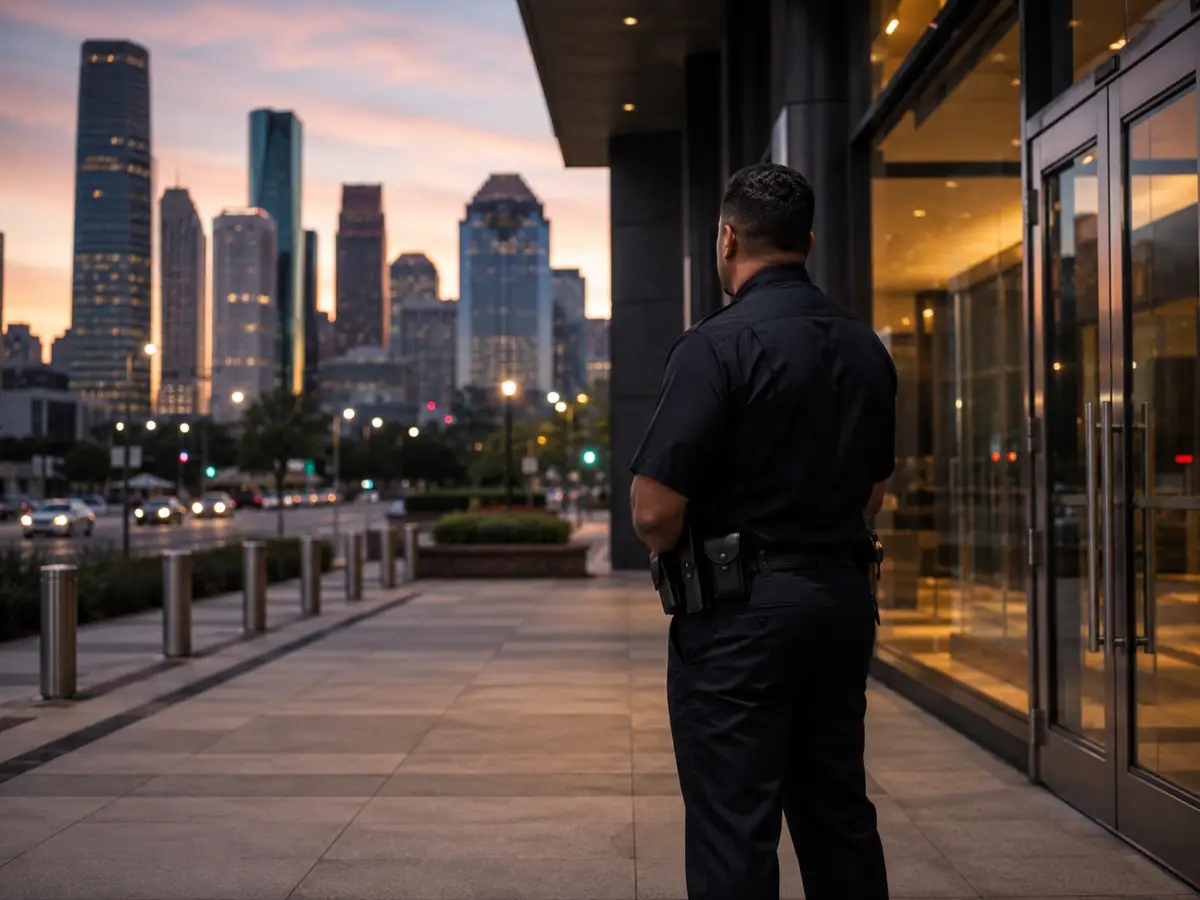
The hours that put a Houston commercial building at risk are the ones when nobody is inside it. After the last person leaves, a pried door or a cut lock can go unnoticed until morning. That gap is what commercial building security in Houston is built to close: a licensed officer posted on the property overnight who can stop the problem in person rather than record it for a report you read the next day.
Commercial building security is on-site protection for offices, warehouses, retail centers, and vacant commercial properties. Licensed officers control access, verify visitors, patrol the grounds and floors, watch entry points after dark, respond to incidents, and file written reports. In Houston, that work is done by Texas-licensed officers, armed or unarmed, on foot or in a marked patrol vehicle.
Below is what a building guard actually does, what Texas lets an armed versus unarmed officer do on your property, and how fast you can put one on site.
What a commercial building security guard does in Houston
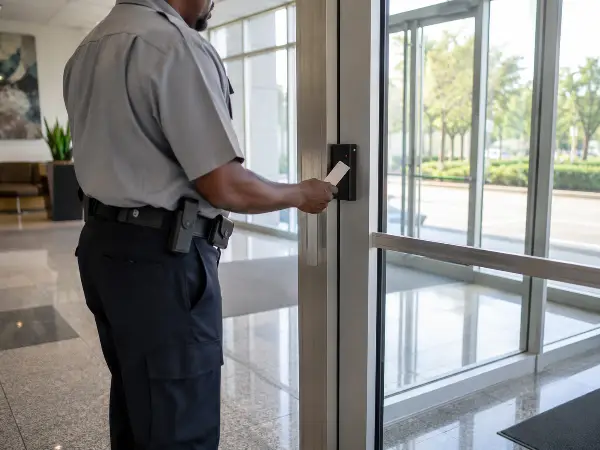
A building guard’s job is to be seen, notice what’s off, and act before a small problem turns into a loss. The daily work is unglamorous and it’s the point: checking doors and gates, verifying who belongs, walking the floors and the perimeter, logging what they see, and being first to respond when something breaks the pattern.
We track every round with a GPS guard-tour system. You get documented patrol logs, real-time incident reports, and supervisor check-ins, so you can see the round happened instead of taking our word for it. That’s the difference between our building security guard services and a guard who signs a clipboard at the front desk and never moves.
Armed or unarmed: which does your building need?
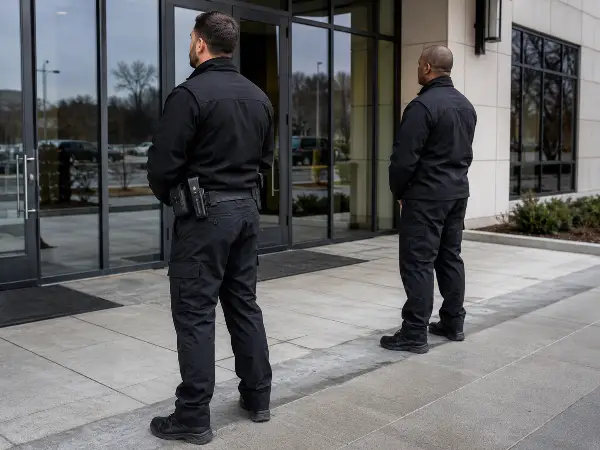
Most Houston commercial buildings are covered well by an unarmed officer. High-cash operations, sensitive facilities, and properties with a history of violent incidents are where an armed officer earns the cost. The choice isn’t about looking tougher. It’s about matching the officer to the real risk at the address.
Texas draws a hard line here. A non-commissioned officer holds a Level II license, the standard unarmed role. An officer who carries a firearm on duty must hold a Level III commissioned license, which requires a longer state training course, a firearms qualification, and the Level II course first. The state’s licensing rules run through the Texas Department of Public Safety. We requalify our armed officers on firearm proficiency every two years, and we background-check, drug-test, and verify the license of every officer before they ever stand a post. Both options sit in our armed and unarmed officer lineup.
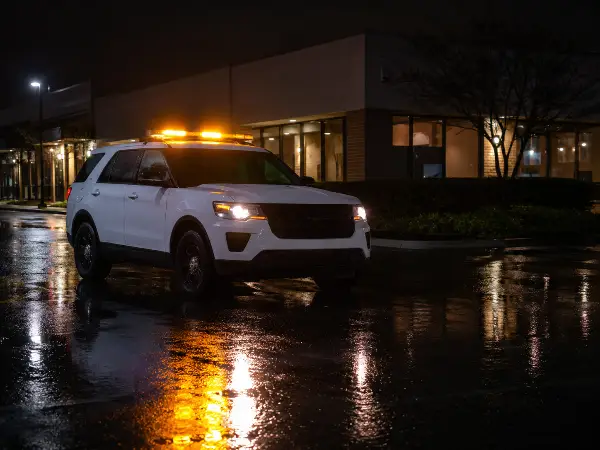
After-hours break-ins, and an 11:20 p.m. call
Overnight is when a building guard earns the contract. An empty property can’t notice a problem or call it in. A posted officer can, and usually settles it before it turns into a loss.
One of our officers was on a distribution warehouse post at 11:20 p.m. when an unfamiliar vehicle pulled up near the loading docks after hours. Someone got out and moved toward a secured storage area next to the dock doors. The officer radioed dispatch and the site supervisor, walked up, identified himself, and told the person to leave the restricted area. He did. A follow-up check confirmed every dock door, gate, and access point was still secure and nothing was missing. No confrontation, no loss, and a written report the client had by morning.
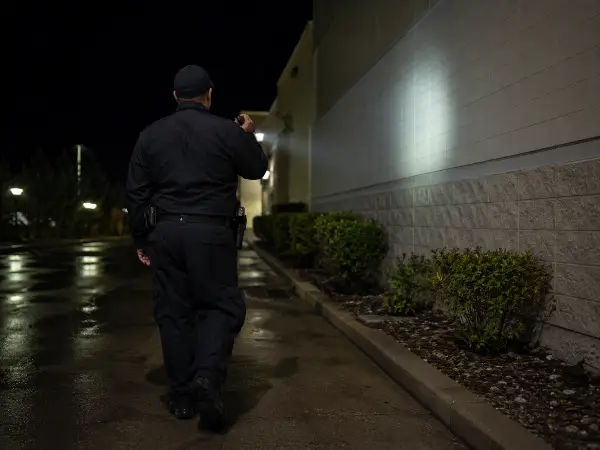
Cameras or a live officer: which actually stops a break-in?
Cameras are evidence. Officers are prevention. If your goal is to not lose anything, a recording is the wrong tool, and the recovery rate shows why: the National Insurance Crime Bureau reports that only about one in five pieces of stolen equipment is ever recovered, and for smaller tools and gear, fewer than 7% come back. A camera can capture a theft in full detail and you still never get the property back.
We’re not against cameras. We’re against selling a camera as if it were security. Take a call one of our officers ran at a vacant Houston commercial building. At 1:45 in the morning, mid-patrol, he caught two people prying at a boarded window on the back wall. He radioed dispatch and police and switched on the patrol vehicle’s lights. Both ran before the window gave way, the only damage was one window cover, and nothing was taken. A camera would have filmed the whole thing. It could not have done the part that mattered, which was walking up and making them leave before they got inside. That’s the trade you’re choosing between.
Do you really need a long-term contract?
No. That’s the single biggest myth we hear from Houston property managers, and it keeps people from calling. We run month-to-month, weekly, short-term, and long-term coverage, and the client picks the term, not us.
Cost and commitment are the two objections that stall most decisions, so we removed both. There’s no long-term contract to sign, and we issue a certificate of insurance the same day, carrying general liability, workers compensation, and commercial auto. If a job runs two weeks or two years, that’s your call to make.
Why Houston buildings choose Reliable Guard & Patrol Service in 2026
We’ve run guard and patrol work in Houston for twenty years and have held Texas DPS license B07315701 since 2018. About 150 officers cover more than 100 active commercial sites. Our officers work in English and Spanish, patrols run 24 hours a day every day of the year, and we take commercial posts only, no residential, HOA, or event work.
Coverage runs across Downtown, the Medical Center, the Energy Corridor, Katy, Sugar Land, Pearland, Conroe, Spring, Humble, and The Woodlands. Our security guard services cover occupied office towers, warehouses, retail centers, and vacant properties between tenants.
Getting an officer on your building doesn’t take a week. It starts with one call and a short site walkthrough, followed by a written proposal, a same-day certificate of insurance, and an officer posted. For most commercial properties in the Houston metro, we can deploy the same day. The real choice in commercial building security isn’t cameras or a guard. It’s whether you want a recording of the loss or no loss at all, and Reliable Guard & Patrol Service is built to deliver the second one.
FAQs
What does commercial building security in Houston include?
It covers access control, visitor verification, interior and perimeter patrols, after-hours monitoring, incident response, and written reporting for offices, warehouses, retail centers, and vacant commercial properties. Reliable runs these posts 24 hours a day, every day of the year, and logs every patrol with GPS.
Are commercial building security guards in Houston required to be licensed?
Yes. Texas licenses security officers through the Department of Public Safety. A non-commissioned (unarmed) officer holds a Level II license, and an armed officer must hold a Level III commissioned license, which adds a longer training course and a firearms qualification on top of Level II.
Should I hire an armed or unarmed officer for my building?
Most commercial buildings are well covered by an unarmed officer. Armed (commissioned) officers make sense for high-cash operations, sensitive facilities, or properties with a history of violent incidents. The right call depends on the real risk at the address, not on appearances.
Is a camera or a security guard better for commercial building security?
Cameras record; officers prevent. Only about one in five pieces of stolen equipment is ever recovered, so footage of a theft rarely gets your property back. A posted officer can interrupt a break-in before entry, which a camera cannot do.
Do you require a long-term contract?
No. Reliable offers month-to-month, weekly, short-term, and long-term coverage, and the client chooses the term. A certificate of insurance is issued the same day, covering general liability, workers compensation, and commercial auto.
How fast can you put a guard on my building?
For most commercial properties in the Houston metro, same day. The process is a first call, a short site walkthrough, a written proposal, a same-day certificate of insurance, and an officer posted.
What parts of the Houston area do you cover?
Downtown, the Medical Center, the Energy Corridor, Katy, Sugar Land, Pearland, Conroe, Spring, Humble, The Woodlands, and the greater Houston metro. Reliable takes commercial posts only and does not serve residential, HOA, or event work.


