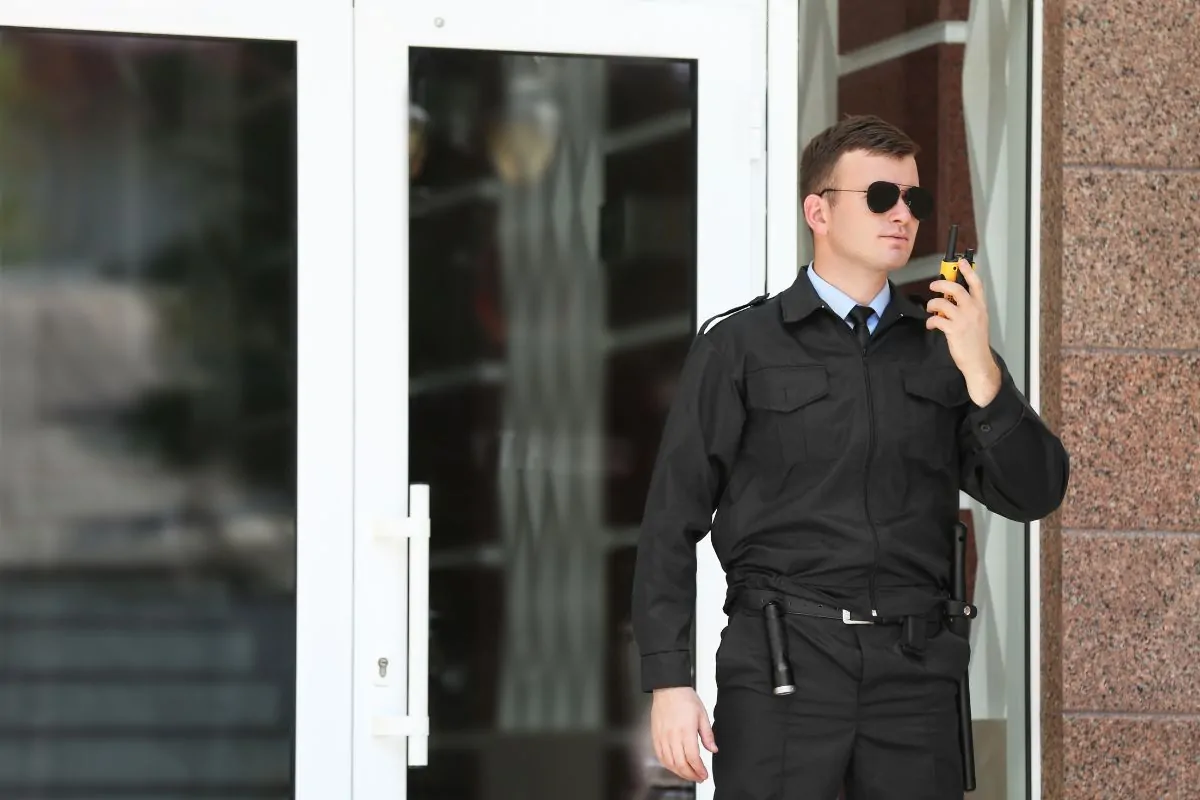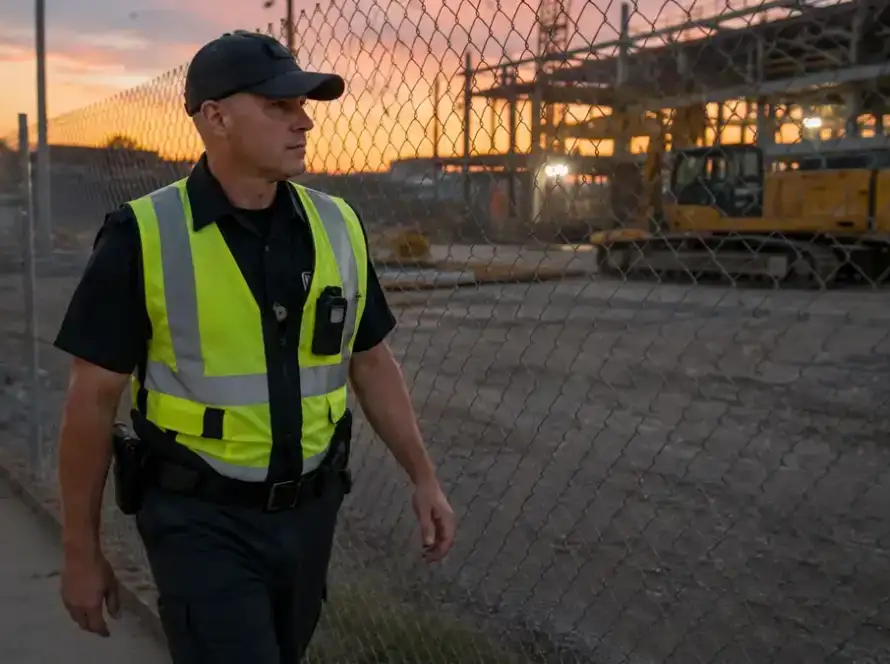
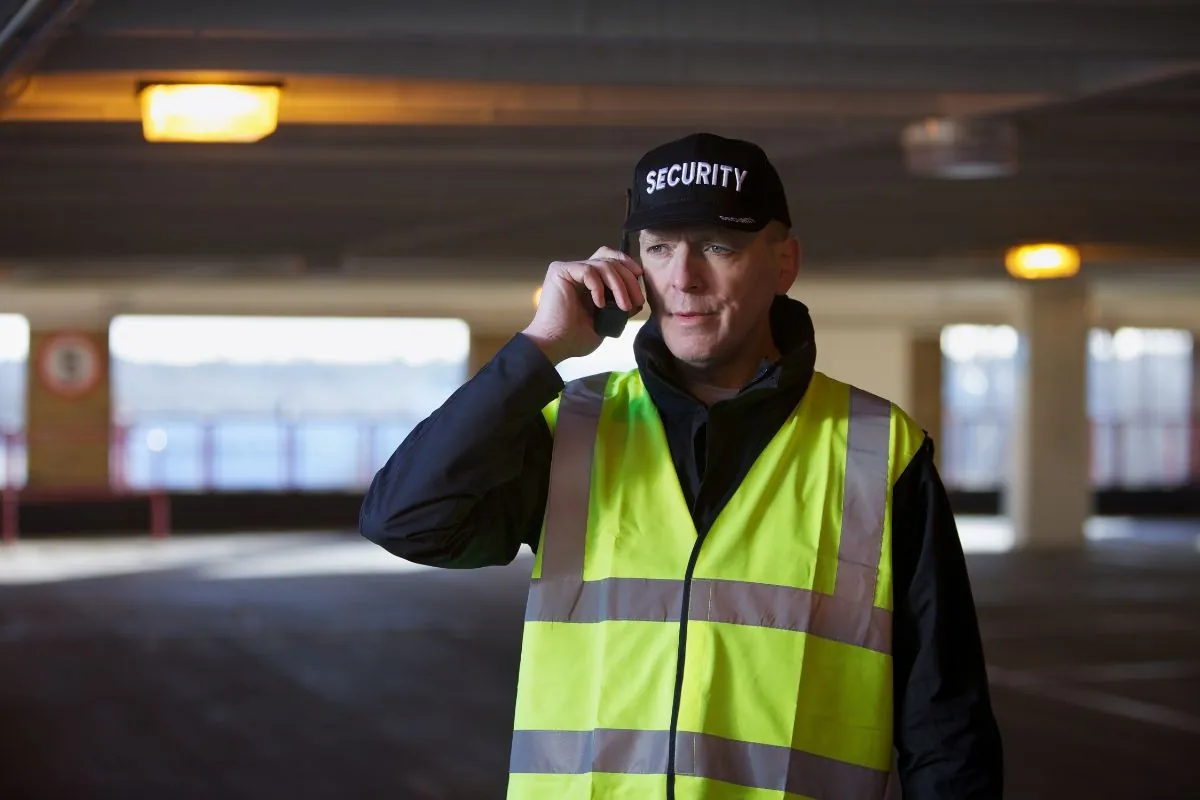
The 4 types of security that protect a physical property are deter, detect, delay, and respond. Deterrence keeps people from trying in the first place. Detection catches a problem while there’s still time to do something about it. Delay slows an intruder down so help can arrive. Response is what your guard does in the first few minutes. A trained officer runs all four at once, which a camera or a fence can’t. We work these four jobs every night across more than 100 sites around Houston, from construction yards in Conroe to warehouses off the Southwest Freeway. This guide walks through each one, shows where a guard fits, and uses real calls our officers have handled. If you’re weighing which type of guard service fits your property, start here.

What are the 4 types of security?
The four types aren’t gadgets. They’re four jobs a security setup has to do: deter, detect, delay, and respond. Security professionals use this model to plan protection for any building or site. Skip one layer and the rest get weaker.
Physical security is the protection of people, buildings, and equipment from real-world threats like theft, trespassing, and vandalism. It works in four layers: deter, detect, delay, and respond. Guards, patrols, access control, lighting, and cameras each cover one or more of those layers. On a commercial property, a guard is what ties them together.
People also use “types of security” to mean digital work like network or data security. That’s a different job for a different specialist. This page is about protecting a physical property in Houston.
1. Deter, so most trouble never starts
Deterrence means making your property a harder target than the one next door. Most people who steal from a job site or a warehouse are opportunists. They pass on the site with a marked truck, good lighting, and an on-site officer walking rounds.
One of our officers was on a construction site at 2:15 a.m. when a pickup started circling the perimeter and stopped near a gated entrance. He hit the patrol truck’s lights and walked toward it. The truck left. Nothing was taken, and he logged the plate and called it in to site management. That’s deterrence working before a crime even starts.
2. Detect, so a small problem doesn’t become a big loss
Detection is catching the problem early, while a loss is still preventable. This is where patrol quality beats camera count. A camera only helps if someone’s watching the right screen at the right second. An officer on rounds is looking, listening, and checking the spots that matter.
We don’t run random drive-bys. Every round is logged on a GPS guard tour system, with time-stamped checkpoints, real-time incident reports, and supervisor check-ins. On one site, an officer on a 3:30 a.m. round found a storage container that had been tampered with and spotted someone pulling out rolls of copper wire. He kept his distance, called police, and fed them updates until they arrived and made an arrest. The copper went back to the site.
3. Delay, so help arrives before the theft is done
Delay buys time. Every extra minute an intruder needs is a minute your officer or the police can use to get there. Locked gates, controlled entry points, delivery checks, and an officer who challenges people all add friction.
At 11:40 p.m. on another site, an officer saw two people carrying materials toward the perimeter fence in a dark corner of the lot. He lit them up with a spotlight and called out. They dropped the materials and ran. An inventory check the next morning came back clean. Knowing what a guard can legally do on your property matters here, and Texas draws clear lines around it.
4. Respond, and what the first five minutes decide
Response is what actually happens when something goes wrong. A camera records it. An officer acts on it. Fast, documented response is the difference between a near miss and a police report with a loss attached.
Two calls show the range. At 1:45 a.m., an officer at a vacant commercial building saw two people trying to pry open a boarded window. He called dispatch and police, hit his lights, and they fled before getting in. At a distribution warehouse at 11:20 p.m., he found an unauthorized vehicle by the loading docks and someone trying to reach a secured storage area; he identified himself, the person left, and he documented it and checked every dock door. In both, the property stayed intact because someone was there to act. This is the day-to-day of what a guard does on your site.

Do security guards really deter crime, or is a camera enough?
I’ll push back on a common sales pitch: another camera usually isn’t the answer. A camera tells you what you lost. A guard keeps you from losing it. The evidence backs presence over playback. Research from the National Institute of Justice found that when a marked patrol stopped and stayed visible at a trouble spot for 10 to 16 minutes, the chance of a fresh problem there dropped to about 4 percent, against 15 percent for a quick pass with no stop. Presence, repeated and a little unpredictable, is what does the work.
Our own calls say the same thing. Every prevented loss above came from an officer who was there and moving, not from footage someone watched later. A circling truck, a cut into a copper container, materials at a fence, a pried window, an after-hours vehicle at a dock: an officer on rounds stopped each one on site.
How often should a guard patrol your property?
Often enough to stay unpredictable, and long enough to be seen. On most commercial sites that means several documented rounds a night on no set clock, not one lap and a parked truck. The same federal research found the deterrent effect fades over the next couple of hours, so rounds have to repeat.
We log every round on a GPS guard tour system, so you get a record of the time, the route, and the checkpoints hit. If you want the detail on patrol frequency, we break it down separately.
Where the 4 types matter most for Houston sites in 2026
The four layers look different on a job site than in a shopping center, so the coverage should too. Here’s how they land across the properties we cover most.
On construction sites, the targets are equipment, copper, and materials, and the risk spikes after hours. Access control at the gate plus documented rounds is the core of good construction site security.
In warehouses and distribution, the loss is cargo, and it’s rising. Verisk’s CargoNet counted 3,625 cargo theft events in 2024, up 27 percent from the year before, with an average loss over $202,000 per hit. Guards at the docks verify deliveries and drivers, which is where warehouse security matters most.
In retail and shopping centers, it’s shoplifting, organized theft, and after-hours break-ins, so a visible officer near entrances does a lot of the work. Vacant buildings draw squatters and copper thieves, which is why an empty property still needs eyes on it.

Armed or unarmed: matching the guard to the risk
Most Houston commercial sites are fine with a trained unarmed officer. Armed makes sense when there’s cash on site, high-value goods, or a history of violence nearby. In Texas, an unarmed officer is non-commissioned; an armed officer carries a state commission and has to pass firearm proficiency on a set schedule. The Texas Department of Public Safety licenses both the company and the officers who work for it. If you’re not sure which fits, we walk the site and tell you straight, and you can read our take on armed or unarmed coverage first.
Do you need a long-term contract to hire security?
No, and that’s the myth we correct most often. You don’t need a long-term contract to put a guard on your property. We run month-to-month, short-term, weekly, and long-term, whatever fits the job. We can issue a certificate of insurance the same day and start coverage fast, 24 hours a day, holidays included. You should be able to leave if the service slips, so we don’t lock you in to keep you.
The 4 types of security aren’t four products to buy. They’re four jobs, deter, detect, delay, and respond, that a trained officer does at the same time. Cameras and fences help, but they don’t act. If you run a site anywhere from Katy to Pearland and want to see how the four look on your property, call us at (713) 783-1344 for a walk-through and a plan built around your hours.
FAQs
What are the 4 types of security?
The four types of security are deter, detect, delay, and respond. Deterrence stops most attempts before they start, detection catches a problem early, delay slows an intruder down, and response is what a guard does in the first few minutes. A trained officer covers all four at once, which cameras and fences can’t.
Do security guards deter crime better than cameras?
Often, yes. A camera records an event; a guard prevents it. Research from the National Institute of Justice found visible patrol stops of 10 to 16 minutes cut the chance of a new incident at a trouble spot to about 4 percent, versus 15 percent for a drive-through. Presence acts in real time; footage doesn’t.
How often should a security guard patrol a property?
On most commercial sites, several times a night on an unpredictable schedule. Deterrence from a visible round fades within about two hours, so patrols need to repeat and vary. We log every round on a GPS guard tour system with time-stamped checkpoints, so you can see exactly what was covered.
What types of security does a Houston business actually need?
Most Houston commercial properties need the four physical layers: deter, detect, delay, and respond, delivered by trained officers and backed by access control and lighting. Construction sites, warehouses, and retail centers each weight them differently. Armed coverage is for cash, high-value goods, or a history of violence.
Do you require a long-term contract?
No. We run month-to-month, weekly, short-term, or long-term, whatever fits your site. We can issue a certificate of insurance the same day and start coverage 24 hours a day, holidays included. You’re not locked in.
Are security companies required to be licensed in Texas?
Yes. The Texas Department of Public Safety licenses security companies and the officers who work for them, and armed officers carry a separate state commission with firearm-proficiency requirements. Reliable Guard & Patrol Service Inc. holds Texas DPS license B07315701.
How fast can a guard get to my property?
In most cases we can deploy the same day and issue proof of insurance the same day. We cover the Houston metro 24 hours a day with no holiday gaps, including Sugar Land, Katy, the Energy Corridor, the Medical Center, Pearland, Spring, Conroe, Humble, and The Woodlands.