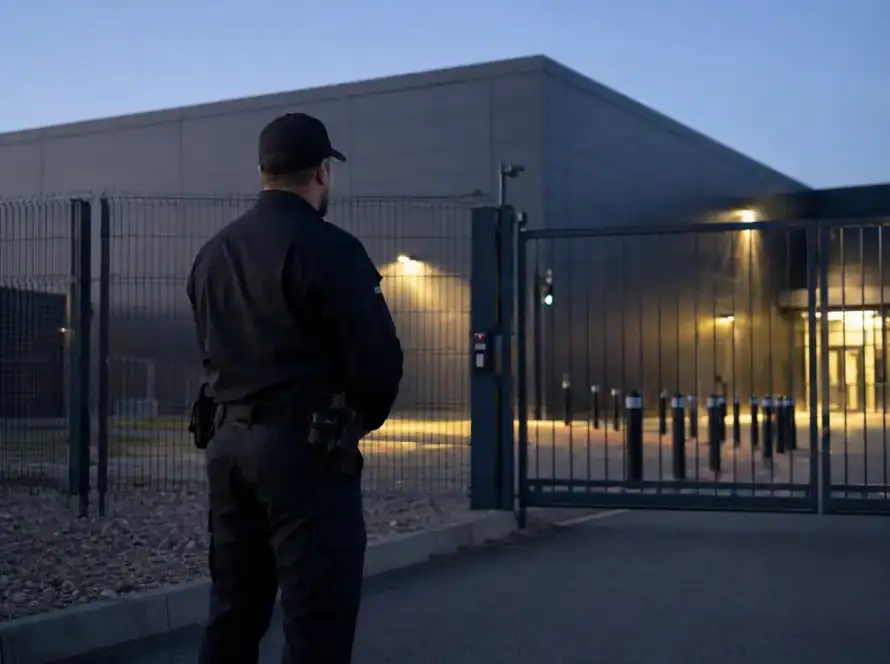
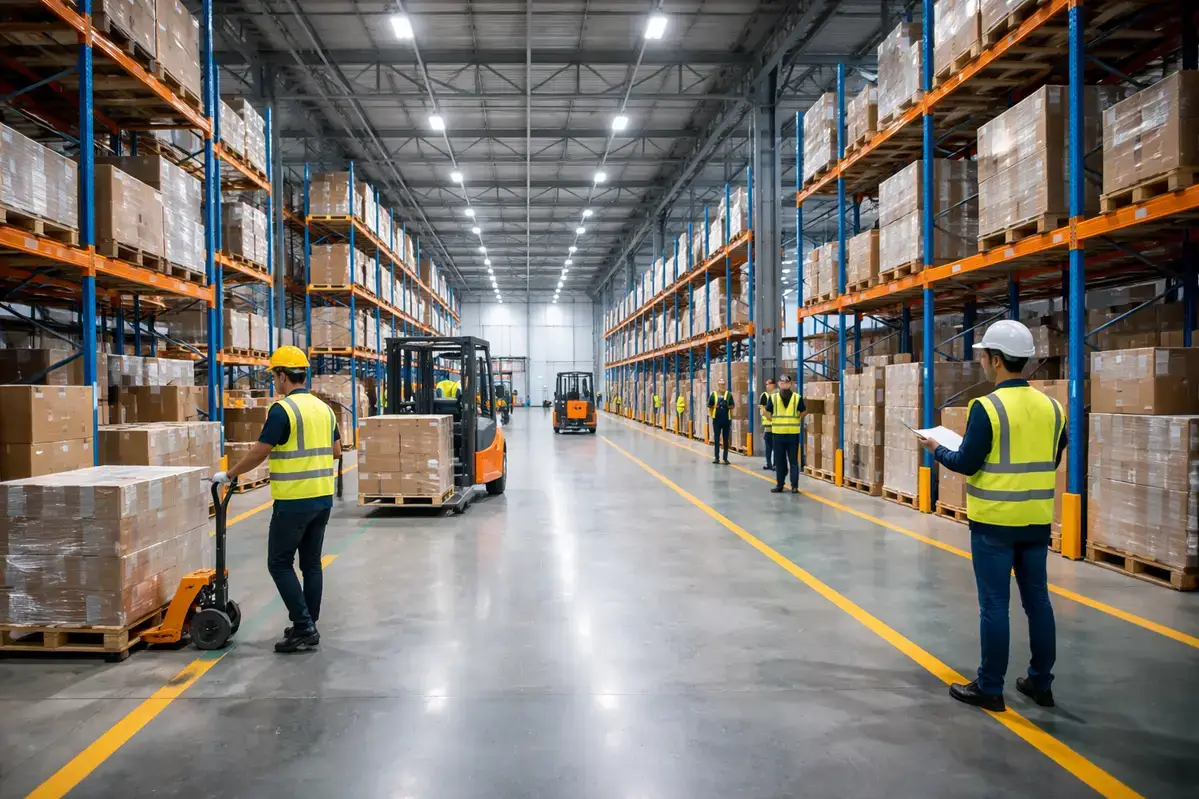
OSHA renewed its National Emphasis Program on warehousing in mid-2026, and it now runs to 2031. For Houston warehouses that means programmed inspections built around 7 hazard areas: powered industrial vehicles and traffic management, material handling and storage, walking-working surfaces, exit routes and egress, fire protection, heat, and ergonomics. 5 things decide how that inspection goes: certified forklift training, a real lifting program, clear aisles and exits, access control that keeps people out of operational zones they have no business in, and a written emergency response plan. 4 of those 7 OSHA focus areas are conditions a posted guard can check and document on every round.
Warehouse safety tips are specific, repeatable actions that warehouse managers and safety directors use to prevent workplace injuries, reduce workers’ compensation costs, and maintain OSHA compliance. The average medically consulted warehouse injury costs $43,000 according to the National Safety Council, making prevention far cheaper than reaction.
I’ve worked with warehouse operators who thought they had safety covered. They had posters on the wall and a binder in the break room. Then an OSHA inspector showed up, or someone got hurt, and the whole thing fell apart. The gap between “we have a safety program” and “our people don’t get injured” is wider than most managers realize.
This article won’t cover office ergonomics, retail safety, or construction site protocols. Those are different animals. What it will cover: the specific risks inside warehouse environments, the five changes that produce the biggest reduction in incidents, and the compliance updates you need to know about for 2026.
What Are the Biggest Warehouse Safety Risks?
Before you can fix anything, you need to know what’s hurting people. The Bureau of Labor Statistics reported 32 fatal occupational injuries in warehousing and storage in 2024, up from 28 the year before. That’s a trend moving the wrong direction. And fatalities are just the tip. For every death, thousands of recordable injuries go into OSHA logs across the country.
Here’s what causes the most damage.
Forklifts and Powered Industrial Trucks
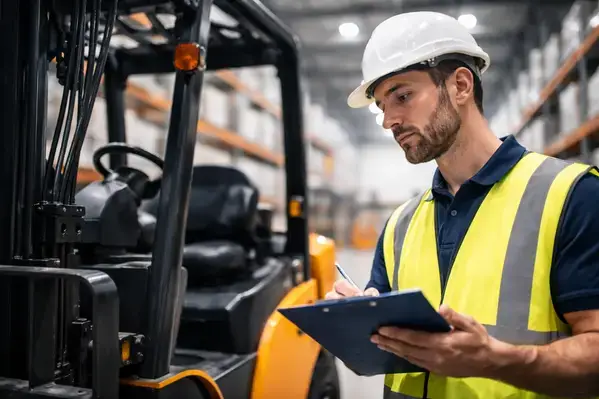
Forklifts kill roughly 87 workers per year and injure about 95,000 more. That makes them the single most cited hazard in OSHA warehouse inspections. The problem isn’t usually the equipment. It’s training gaps, skipped pre-shift inspections, and operators who never received proper certification. OSHA’s National Emphasis Program on Warehousing (active since October 2023 and continuing through 2026) specifically targets powered industrial truck compliance.
Carbon Monoxide from Mobile Equipment
Gas and diesel-powered forklifts and trucks produce carbon monoxide exhaust. In poorly ventilated warehouses, CO builds up fast. Early symptoms (headaches, dizziness, nausea) get mistaken for fatigue. By the time someone notices impaired vision or coordination, exposure levels are already dangerous. If your facility runs combustion-powered equipment indoors, ventilation testing isn’t optional.
Loading Dock Hazards
Loading docks are where forklifts, pedestrians, and moving freight all converge in tight spaces. Forklifts driving off dock edges, falling freight, and trailer creep (when a trailer pulls away from the dock during loading) cause injuries that tend to be severe. This is one area where having a trained warehouse security guard on site makes a measurable difference in controlling foot traffic and enforcing dock protocols.
Pedestrian and Equipment Conflicts
Warehouses mix heavy machinery and foot traffic on the same floor. That’s inherently risky. Operators need to maintain eye contact, yield to pedestrians, and slow down when sight lines are blocked. Pedestrians need to understand how forklifts move (they steer from the rear, which means the tail swings wide) and stay in marked walkways. Most pedestrian-equipment incidents happen when one party assumes the other sees them.
Conveyor Pinch Points
OSHA flags conveyor injuries from pinch points, in-going nip areas, falling products, and repetitive motion. Proper guarding, lockout/tagout procedures during maintenance, and adequate lighting around conveyor zones reduce these incidents. This isn’t glamorous work, but skipping conveyor inspections is how people lose fingers.
Hazardous Material Storage
Improperly stored chemicals, solvents, and compressed gases turn a warehouse into a liability. Stack loads evenly. Keep heavier items on lower shelves. Remove one item at a time. Keep aisles around storage racks clear. These sound basic because they are, and that’s exactly why they get ignored once operations ramp up.
Ergonomic Strain and Repetitive Motion
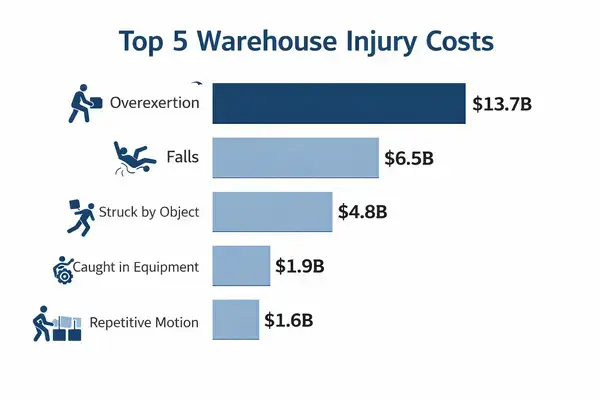
Liberty Mutual’s 2025 Workplace Safety Index puts overexertion as the number one cost driver for serious injuries, totaling $13.7 billion across U.S. employers. A single heavy lift won’t hurt most people. Doing it 200 times a day, five days a week, for months? That’s how you end up with the chronic back and knee injuries that 10% of the U.S. population deals with. Lifting aids, better workstation design, and slip-resistant footwear aren’t expenses. They’re investments.
Fire Risks in Warehouse Environments
Warehouses full of cardboard, packing material, and pallets burn fast. Charging stations for electric equipment add another ignition source. Fire extinguishers, sprinkler systems, and employee training on evacuation are non-negotiable. But here’s what most articles skip: keeping emergency exits clear is just as important as having the extinguisher. Fires in warehouses spread quickly because of how tightly goods are stored, and blocked exits turn a manageable situation into a catastrophe.
Why Does Warehouse Safety Matter in 2026?
There are roughly 1.83 million Americans working in warehousing and storage right now, according to BLS data from late 2025. The industry’s fatal injury rate runs more than double the private industry average. Those aren’t just statistics for a PowerPoint deck. They represent real costs that hit your P&L.
The National Safety Council pegs the average medically consulted workplace injury at $43,000. Total U.S. work injury costs reached $176.5 billion in 2023 (the latest full-year data), with $53.1 billion in wage and productivity losses and $36.8 billion in medical expenses. Liberty Mutual’s top 10 injury causes alone cost employers $50.87 billion annually.
And then there’s OSHA enforcement. The National Emphasis Program on Warehousing launched in October 2023 and is still going strong. Inspectors are specifically targeting material handling, powered industrial trucks, fire protection, and egress. If your facility isn’t ready for an unannounced visit, you’re gambling with five-figure fines.
5 Warehouse Safety Tips That Actually Work
These aren’t theoretical. They’re the five changes I’ve seen produce the biggest drop in incidents across real operations.
1. Get Serious About Forklift Certification and Pre-Shift Checks
The most violated OSHA standard in warehouses is forklift safety. Roughly 95,000 workers are injured every year while operating forklifts. Don’t just train operators once during onboarding and forget about it. Run refresher courses. Require daily pre-shift inspections and document them. OSHA’s January 2025 PPE fit update means equipment (including harnesses used on certain lift types) must actually fit each worker. Generic “one size fits all” gear doesn’t cut it anymore.
Connect training to consequences. Show your team the injury data. Show them what a $43,000 claim does to the company’s insurance premiums. Training that stays abstract stays ignored.
2. Build a Real Ergonomics and Lifting Program
“Lift with your legs” is the most repeated and least effective safety advice in the industry. It’s not wrong, but it’s wildly incomplete. Overexertion costs employers $13.7 billion per year (Liberty Mutual 2025), and the old one-liner hasn’t put a dent in those numbers.
What works: job-specific ergonomic assessments for each warehouse task. Lifting aids where repetitive motion exists. Workstation redesign to reduce reaching, bending, and twisting. Daily stretching routines before shifts. OSHA’s ergonomic and lifting guidelines give you a framework, but you need to adapt it to your specific operation. A pick-and-pack station has different strain patterns than a loading dock.
3. Keep Aisles, Pathways, and Exits Obsessively Clear
Good housekeeping prevents slips, trips, falls, and (worst case) blocks people from getting out during a fire. Trips and falls are among the most common injuries in every industry, and warehouses pack more trip hazards into less space than almost any other work environment.
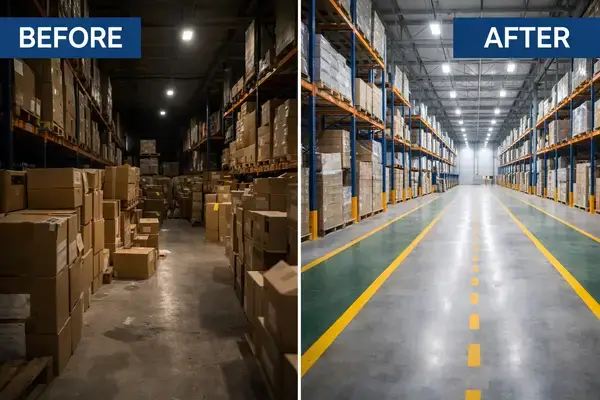
Every emergency exit must be marked and free of debris at all times. Not most of the time. All of the time. Warehouses are especially prone to fast-spreading fires because of dense storage configurations. A blocked exit path during a fire is how a property loss becomes a fatality. If you need help evaluating how your warehouse security setup supports safe egress, that’s a conversation worth having with your security provider.
4. Integrate Access Control and Surveillance with Safety Protocols
This is the tip most generic safety articles leave out entirely, and it’s a missed opportunity.
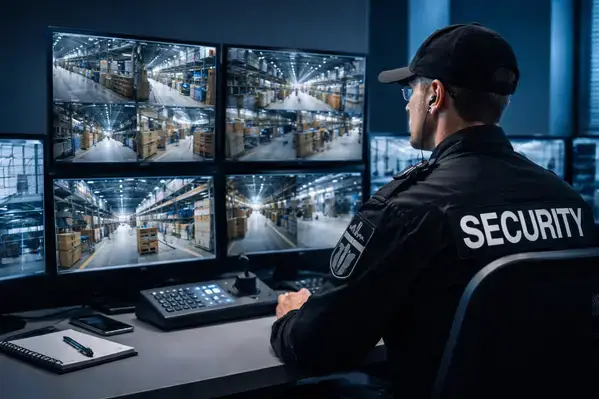
Access control systems don’t just prevent theft. They control who enters operational zones, keep unauthorized pedestrians out of forklift areas, and create accountability for who was where when an incident occurred. Surveillance cameras document near-misses that would otherwise go unreported. When you review footage, you find the patterns that lead to injuries before someone gets hurt.
A basic CCTV and access control system runs $15,000 to $30,000 for a small warehouse. AI-integrated systems with professional warehouse security guard services range from $50,000 to $100,000+, but the ROI from reduced shrinkage, lower insurance premiums, and documented OSHA compliance often pays for itself within 18 months. The security industry is moving toward AI-powered predictive analytics for warehouses, but the technology still produces false positives from dust and lighting conditions. Human guards remain necessary for physical intervention and training verification.
5. Create Heat, Egress, and Emergency Response Protocols
OSHA is actively advancing a federal Heat Illness Prevention Standard that would apply to indoor warehouse environments. If you’re in Texas, the Southwest, or anywhere temperatures climb inside your facility, this should already be on your radar. Don’t wait for the final rule to start monitoring indoor temperatures and providing hydration stations.
Beyond heat: every warehouse needs clear emergency procedures for fires, chemical spills, and severe weather. Run drills regularly. Not once a year. Quarterly at minimum. Establish communication protocols so every worker knows exactly what to do and where to go. Companies that work with an experienced safety-focused team to build these plans tend to catch gaps that internal reviews miss. Regularly review and update your plans as your operation changes, because a plan written for 50 employees and 30,000 square feet doesn’t work when you’ve scaled to 120 employees and 80,000 square feet.

Do Regular Safety Audits Actually Reduce Incidents?
Yes, but only if you act on what they find.
Audits assess whether your safety practices match your written policies. Inspections identify specific hazards: faulty racking, damaged equipment, missing signage, blocked exits. Together, they create a feedback loop. The companies I’ve seen get the best results run monthly walkthroughs (not just annual audits) and assign corrective actions with deadlines and names attached. A finding without an owner is just a piece of paper.
One underreported risk: racking and shelving failures. Forklift accidents get all the attention, but a warehouse rack collapse can cause $250,000+ in damage, injuries, and downtime. If you’re not inspecting racks for damage from forklift impacts, overloading, and improper installation, you’re missing one of the most expensive hazards in your building. Businesses that pair their warehouse security strategy with regular physical audits catch these problems early.
How Can Technology Improve Warehouse Safety in 2026?
Training technology has come a long way. Online platforms and 3D animated content let workers learn about hazardous scenarios without actual risk. That’s useful for onboarding, but it doesn’t replace hands-on, site-specific training.
On the security side, AI-powered surveillance can flag unusual movement patterns, detect unauthorized access, and identify near-miss events from camera footage. But don’t believe vendor claims of “99% detection accuracy” at face value. Real warehouses have dust, variable lighting, and constant movement that create false positives. The technology works best as a supplement to trained security personnel who understand warehouse operations, not a replacement.
OSHA’s expanded electronic submission requirements for Forms 300 and 301 (for facilities with 100+ employees) mean your safety data is more visible to regulators than ever. Good technology helps you track, report, and respond. Bad technology gives you a dashboard nobody looks at.
Where A Posted Guard Fits OSHA’s Inspection List
Most warehouse safety spending goes to training, equipment and signage. Those matter. But 4 of the 7 hazard areas OSHA inspects are conditions that change hour to hour, and an annual audit does not catch them.
Exit routes and egress. This gets cited constantly and it is almost always a housekeeping failure, not a design failure. A pallet parked in front of an exit door at 2pm is a violation at 2pm. A guard walking a fixed route logs it and it gets moved that shift, instead of being found 3 months later by an inspector.
Powered industrial vehicle traffic management. OSHA looks at how pedestrians and forklifts share space. Access control decides who gets into an operational zone at all. A driver waiting on a load, a vendor rep, a contractor who wandered past the dock: every one of them is a pedestrian in a forklift aisle. Controlling that entry point is a safety function, not only a theft function.
Walking-working surfaces. Spills, damaged racking, blocked aisles, cords run across a walkway. All of it is visible on a patrol round and all of it is correctable the same day.
Documentation. Facilities underestimate this one. When an inspector asks whether you knew about a hazard and what you did about it, the answer needs a record. GPS-tracked rounds and written incident reports produce exactly that: a timestamped log showing a condition was found, reported and corrected. It is also the first thing your insurer asks for after a claim.
The other 3 areas, material handling and storage, fire protection, and ergonomics, are engineering and training problems. A guard layer does not solve them, and anyone telling you otherwise is selling.
Frequently Asked Questions
How much does a warehouse injury cost a business in 2026?
The average medically consulted workplace injury costs $43,000 according to the National Safety Council (2023 data, the most recent full-year figures available). Overexertion injuries alone cost U.S. employers $13.7 billion annually per Liberty Mutual’s 2025 Workplace Safety Index. These costs include medical expenses, lost wages, and productivity losses.
What are the most common warehouse safety hazards?
The most frequently cited warehouse safety hazards include forklift and powered industrial truck incidents, slips and falls from cluttered aisles, ergonomic injuries from repetitive lifting, loading dock accidents, conveyor pinch points, and fire risks from densely stored materials. Forklift safety remains the most violated OSHA standard in warehouse inspections.
What changed with OSHA warehouse inspections in 2025 and 2026?
OSHA renewed the warehousing National Emphasis Program in mid-2026 and it now runs to 2031. Two things changed from the 2023 version: retail establishments such as home centers, supermarkets and warehouse clubs came out of scope, and the mandatory heat and ergonomic screening requirement was dropped, though both hazards are still inspected. Inspectors cover powered industrial vehicles and traffic management, material handling and storage, walking-working surfaces, exit routes and egress, fire protection, heat, and ergonomics. General warehousing sits under NAICS 493110, with refrigerated, farm product and other storage under 493120, 493130 and 493190.
Does OSHA require specific training for warehouse security guards?
Security guards who patrol operational warehouse areas must receive training on powered industrial trucks, ergonomic hazards, and other site-specific risks under OSHA’s National Emphasis Program. Generic security licensing alone isn’t sufficient. Guards need the same hazard awareness training as warehouse employees if they work in active operational zones.
Can AI security cameras replace human guards for warehouse safety?
No. AI-powered surveillance can flag unusual movement and detect unauthorized access, but real warehouse conditions (dust, variable lighting, constant activity) produce false positives. AI cameras can’t perform physical interventions, verify OSHA training compliance, or manage emergency evacuations. The technology works best as a supplement to trained security personnel, not a replacement.
What is the ROI of investing in warehouse safety programs?
Liberty Mutual data shows serious workplace accident rates have dropped 40% over 25 years among companies that invest in safety, while workers’ compensation benefits have increased 30% in the same period. A basic safety investment (proper training, PPE, housekeeping) typically costs far less than a single $43,000 injury claim plus the associated insurance premium increases and lost productivity.
How often should warehouses conduct safety audits?
Monthly walkthroughs produce the best results, paired with at least one comprehensive annual audit. Each walkthrough should include racking inspections, forklift area checks, exit route verification, and PPE compliance reviews. Assign corrective actions with specific deadlines and named owners after every audit. A finding without follow-up is just paperwork.