
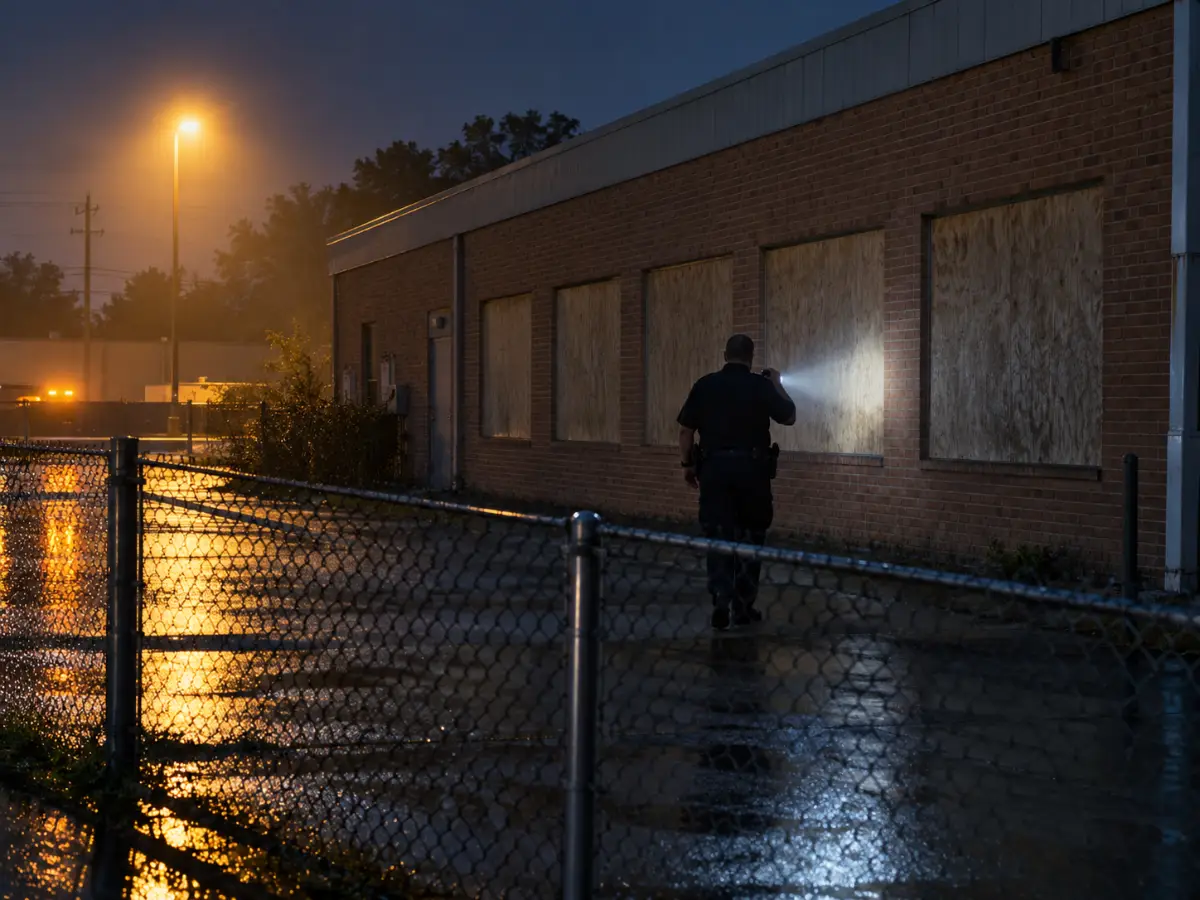
Vacant building security in Houston means keeping an empty commercial building shut, checked and on record until the next tenant or buyer moves in. The risk starts the first night the lights stay off. In FBI crime data for 2019, 55.6% of nonresidential burglaries with a known time happened at night. And once a building sits vacant more than 60 days in a row, the standard commercial property form stops paying for vandalism and theft.
We patrol vacant commercial buildings across Houston. The day yours empties, 3 sets of rules start running: your insurer’s, the city’s and the law on removing people who don’t belong there. Guards help with all 3. They can’t change any of them, and that’s where owners get caught.
What is vacant building security?
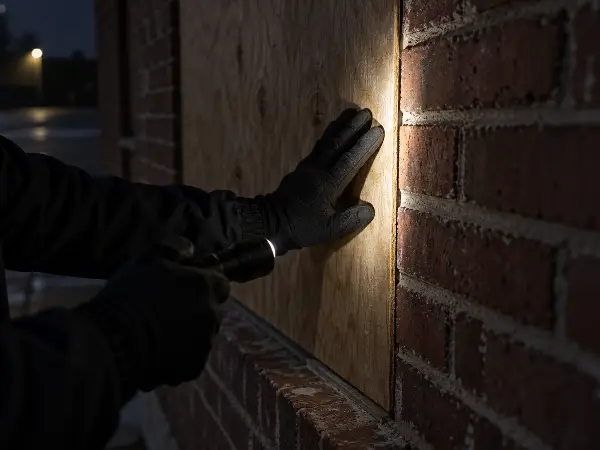
Vacant building security is a plan to protect an empty commercial building from break-ins, copper theft, squatters, dumping and fire until it’s occupied again. It pairs physical steps, like boarding and fencing, with scheduled guard rounds that check every opening and record the building’s condition. The record matters as much as the rounds.
On our vacant posts, the officer works a set route and logs each checkpoint with a GPS guard tour system. Each round checks every opening, including the boarded ones, plus signs of entry and building problems like a roof leak. Anything wrong goes into a real-time incident report, and a supervisor checks in on the post.
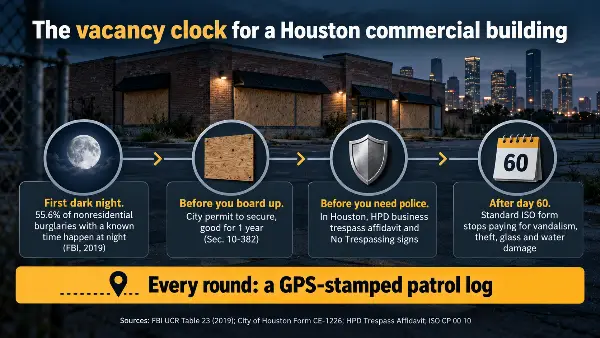
The vacancy clock: what changes after a Houston building empties
The rules start when the building stops being used, not when the lease ends.
| When | Who sets it | What changes |
|---|---|---|
| The first dark night | Intruders | No one inside hears a pry bar. Nonresidential burglaries lean toward night. |
| Before you board it up | City of Houston | Securing a vacant building takes a city permit, good for 1 year. |
| Before you need police | Houston Police Department | A business trespass affidavit lets officers enforce trespass while you’re away. |
| After day 60 | Your property insurer | The standard form stops paying for vandalism, theft, glass breakage and water damage. |
| Every round | Your guard company | A GPS-stamped record of what was checked and when. |
Patrols cover the first row and produce the last. The middle 3 are owner paperwork, and each is easier before a break-in than after.
Does a security guard keep a vacant building insured?
Not by itself. The standard commercial property form measures vacancy by how much of the building is in use, and guarding doesn’t enter into it.
ISO form CP 00 10 counts an owner’s building as vacant unless at least 31% of its square footage is in use. That use has to be normal business, by tenants or by the owner. After more than 60 days of vacancy in a row, the form won’t pay for 6 kinds of loss:
- Vandalism
- Sprinkler leakage, unless the system was protected from freezing
- Building glass breakage
- Water damage
- Theft
- Attempted theft
Every other covered loss gets cut by 15%. Read that list again. It’s the damage an empty building attracts.
Patrols aren’t tenants, so the building stays vacant on paper. The fix is a call to your agent before day 60. Ask about a vacancy permit endorsement, which suspends some or all of those limits for a set period, usually for extra premium. When the underwriter asks what protection is in place, a GPS-stamped round log answers in writing. Policies vary, so read the vacancy condition in yours.
Watch for 2 details. The same form says buildings under construction or renovation aren’t considered vacant. If crews are working, you’re running a job site, and that calls for construction site security. And a building can count as vacant with tenants still in it. If less than 31% of the square footage is in normal business use, the form treats the whole building as vacant.
Do you need a permit to board up a vacant building in Houston?
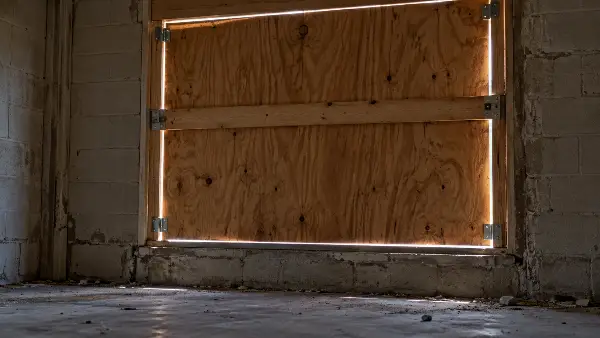
Yes. City Code Section 10-382 requires the owner of a vacant building to get a permit to secure it against unauthorized entry. The rules are on the city’s Form CE-1226:
- Each permit covers 1 building for 1 year. Buy it at the Houston Permitting Center, 1002 Washington Avenue, and renew it at least 30 days before it expires.
- The form, revised May 2025, lists the permit at $251.62 plus a $33.10 administrative fee.
- Boards must be exterior-grade plywood at least 1/2 inch thick.
- Trash and anything that burns comes out before the building is sealed.
- In the city’s words, “Attachment devices shall not be available for dismantle or manipulation from the exterior of the building.”
Boards slow people down. Someone still has to show up. On one of our vacant posts, a boarded rear window was the only thing between 2 people and the inside at 1:45 a.m. It held while our officer called it in and turned on the patrol vehicle’s emergency lights, and they left without getting in. Nothing was taken. The full write-up sits on our building security guard services page.
Getting squatters and trespassers out of a Texas commercial building
Texas has a fast-track squatter law, but it covers homes, not commercial buildings. For an empty store, office or warehouse, the tools are the regular eviction route, criminal trespass law and, in Houston, an HPD trespass affidavit.
SB 1333 took effect September 1, 2025. It lets an owner of “residential real property” ask the sheriff or a constable to remove a squatter directly, instead of filing an eviction case. Commercial owners don’t get that shortcut. They still have the standard route, a forcible entry and detainer case in justice court under Property Code Chapter 24.
Then there’s criminal trespass under Texas Penal Code 30.05: entering or staying without consent after notice. Signs at the entrance give notice that entry is forbidden. So does a spoken warning from “someone with apparent authority to act for the owner.” That’s why our officers give the warning out loud, on your behalf, and log the time.
Inside Houston city limits, file HPD’s trespass affidavit for business property. It asks HPD to enforce trespass laws in your absence. The owner or an authorized agent signs it before a notary. Turn it in at the HPD station that covers the property. You’ll also need No Trespassing signs at every likely entrance. The form doesn’t mention vacant buildings, so confirm coverage with the station. Outside the city, ask the agency that covers the property.
If someone shows a lease or deed, have the officer note it. Presenting a fake one to enter or stay on property became a Class A misdemeanor on September 1, 2025, under Penal Code 32.56. Physical removal is a separate question, and the law on how much force a guard can use is narrower than owners tend to expect.
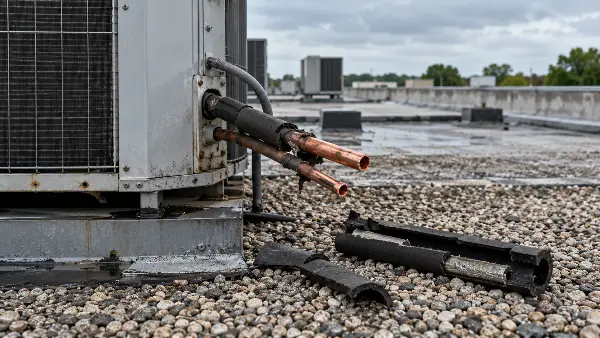
Copper theft is a felony in Texas
Stealing copper, brass, bronze or aluminum worth less than $20,000 is a state jail felony under Texas Penal Code 31.03(e)(4)(F). Above that, the regular value ladder applies, so stolen copper is a felony at any amount.
In an empty building, the targets are wiring, plumbing and HVAC lines. A felony case leans on the report, so our officers record what was disturbed, where and when. On a 3:30 a.m. construction site round, our officer spotted copper wire being hauled from a tampered storage container. The officer stayed on with dispatch from a safe distance until police made the arrest.
Arson, fire watch and what a patrol covers
Fires in secured vacant buildings are far less often set on purpose, and a patrol is not a fire watch. The National Fire Protection Association’s 2018 report estimated an average of 30,200 structure fires a year in vacant properties from 2011 to 2015. Of those, 50% were set on purpose. Across all structure fires, only 10% were intentional. In unsecured vacant properties, 61% were. In secured ones, 35%.
That gap is why every round checks for fresh signs of entry.
If the sprinkler or fire alarm system is down, call the Houston Fire Marshal’s Office and ask what’s required. Fire watch is a separate service, and we don’t provide it.
What vacant building security in Houston looks like in 2026
For a vacant commercial building, start with an unarmed officer on a documented patrol route. Size the coverage to the risk, and pick a contract that ends when the vacancy does.
- Patrols run on foot or by vehicle, depending on the site.
- A building with copper in the walls or a history of break-ins may need an officer posted overnight. We staff posts 24/7.
- Armed coverage is for high-risk sites, cash handling and sensitive facilities.
- Our officers speak English and Spanish, which matters when you’re telling someone to leave.
- Terms run weekly, month to month or longer, and we issue our certificate of insurance the same day.
Our guide to how many security guards you need treats vacant buildings as their own case. Cameras help as backup, and monitored systems can sound a warning. A camera still can’t test a board, check the back door at 2 a.m. or report a roof leak. We lay out that trade-off in security guards vs remote video monitoring.
If you’re planning vacant building security in Houston, start with 2 dates: the day the building emptied and day 60. Send both to Reliable Guard & Patrol Service, and we’ll put a written proposal for patrol coverage in front of you at no charge. Our Texas DPS license number is B07315701.
FAQs
What is vacant building security in Houston?
In Houston, vacant building security protects an empty commercial building until it’s in use again. It covers boarding and locks, scheduled guard rounds and a record of every check. The city also requires a permit to secure the building, good for 1 year, under City Code Section 10-382.
Does insurance cover a vacant commercial building after 60 days?
On the standard ISO commercial property form, coverage narrows once a building has been vacant more than 60 days in a row. The form stops paying for vandalism, sprinkler leaks, glass breakage, water damage, theft and attempted theft. Other covered losses are cut by 15%, so ask your agent about a vacancy permit before day 60.
Do I need a permit to board up a vacant building in Houston?
Yes. City Code Section 10-382 requires a permit to secure a vacant building, sold at the Houston Permitting Center. Each permit covers 1 building for 1 year and needs renewal at least 30 days before it runs out. Boards must be exterior-grade plywood at least 1/2 inch thick, with hardware that can’t be reached from outside.
Does the Texas squatter law apply to commercial buildings?
No. SB 1333, in effect since September 1, 2025, lets a sheriff or constable remove squatters from residential property without an eviction case. Commercial owners use trespass law, an eviction case in justice court and, in Houston, an HPD trespass affidavit.
Is a security patrol the same as a fire watch?
They’re different services. A patrol checks openings, signs of entry and the building’s condition on a schedule. If the sprinkler or fire alarm system is down, ask the Houston Fire Marshal’s Office what’s required. Reliable Guard & Patrol Service doesn’t provide fire watch.
Can I get vacant building security in Houston without a long-term contract?
Reliable Guard & Patrol Service offers vacant building security in Houston on weekly, month-to-month or longer terms. Coverage can end when the building leases or sells. Its certificate of insurance goes out the same day you ask.


