In Texas, a security officer can record you without asking first. The state runs on one-party consent, so anyone who takes part in a conversation is allowed to record it under Texas Penal Code 16.02. That one rule shapes how body cameras get used on private security jobs across Houston. Are the cameras required? No. Most Texas guard companies don’t issue them, and no state agency mandates them for private security the way a few states now do for police.
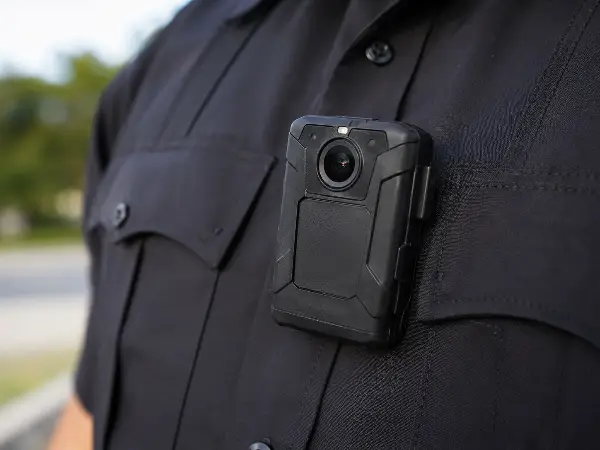
Body cameras in private security are small, chest or shoulder mounted video recorders worn by guards on duty. They capture what an officer sees during patrols, access checks, and incidents. Footage sits on the device or in the cloud, then gets pulled when a client, an insurer, or a court needs a clear record of what happened.
Here’s the practical version for Houston property owners, from a company that patrols more than 100 sites across the metro.
Do security guards wear body cameras?
Some do. Most still don’t. Adoption is climbing, but the camera is the cheap part of the decision, and the storage bill behind it slows a lot of companies down.
There’s a real safety reason behind the interest. Guards absorb a lot of hostility on the job. A federal Bureau of Justice Statistics report on workplace violence put nonfatal violence against security guards at roughly 95 incidents per 1,000 workers a year from 2015 to 2019, several times the rate for the average worker. A camera on the chest is one answer to that risk. So is a second officer, better lighting, and a marked vehicle.
Police body cameras are now common, and a handful of states require them for officers. Private security is different. Here, it’s a business choice, usually driven by what a specific client wants on a specific site.
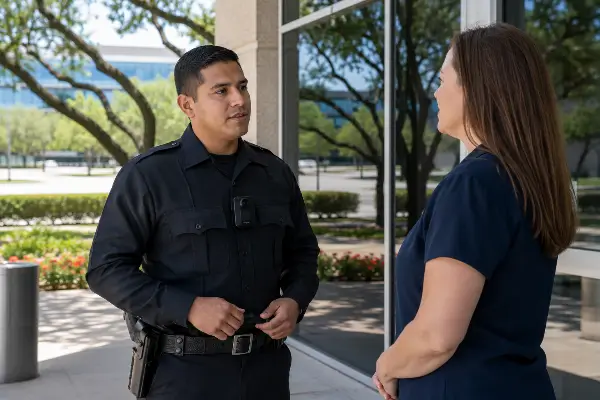
Is it legal for a security guard to record you in Texas?
Yes, within limits. Because Texas is a one-party consent state, an officer who is part of an interaction can record that interaction, video and audio, without telling you. The officer is the consenting party.
The line to watch is audio of conversations the officer is not part of. Recording a private conversation between other people, where those people reasonably expect privacy, without anyone’s consent, is unlawful interception under Penal Code 16.02. That’s a second-degree felony in Texas, not a paperwork problem. Video is looser: recording in areas open to public view, like a parking lot, a loading dock, or a store floor, is generally legal because there’s no reasonable expectation of privacy there. Restrooms, changing rooms, and similar private spaces are off limits.
Signs telling people that recording may take place aren’t strictly required in most public-facing spots, but they’re smart. They cut arguments before they start and they support the deterrent effect. This is general information, not legal advice, so confirm the current statute or ask an attorney about your site. A good officer knows what a security guard can and can’t do before a camera ever turns on.
Do you need a license to wear a body camera in Texas?
No. There’s no separate body camera license or endorsement for private security in Texas. That surprises people who’ve read about the UK, where reviewing surveillance footage needs its own license.
What Texas does require is a valid license through the Texas DPS Private Security program. Whether an officer is commissioned (armed) or non-commissioned (unarmed) sets their training level, not their right to record. Every Reliable officer is licensed through Texas DPS, works armed or unarmed based on the site, and is trained to document an incident whether or not a camera is running.
Where body cameras actually help Houston sites in 2026
Here’s where I’ll part ways with the camera vendors. On a construction site or a vacant building, a body camera doesn’t stop the theft. It records it.
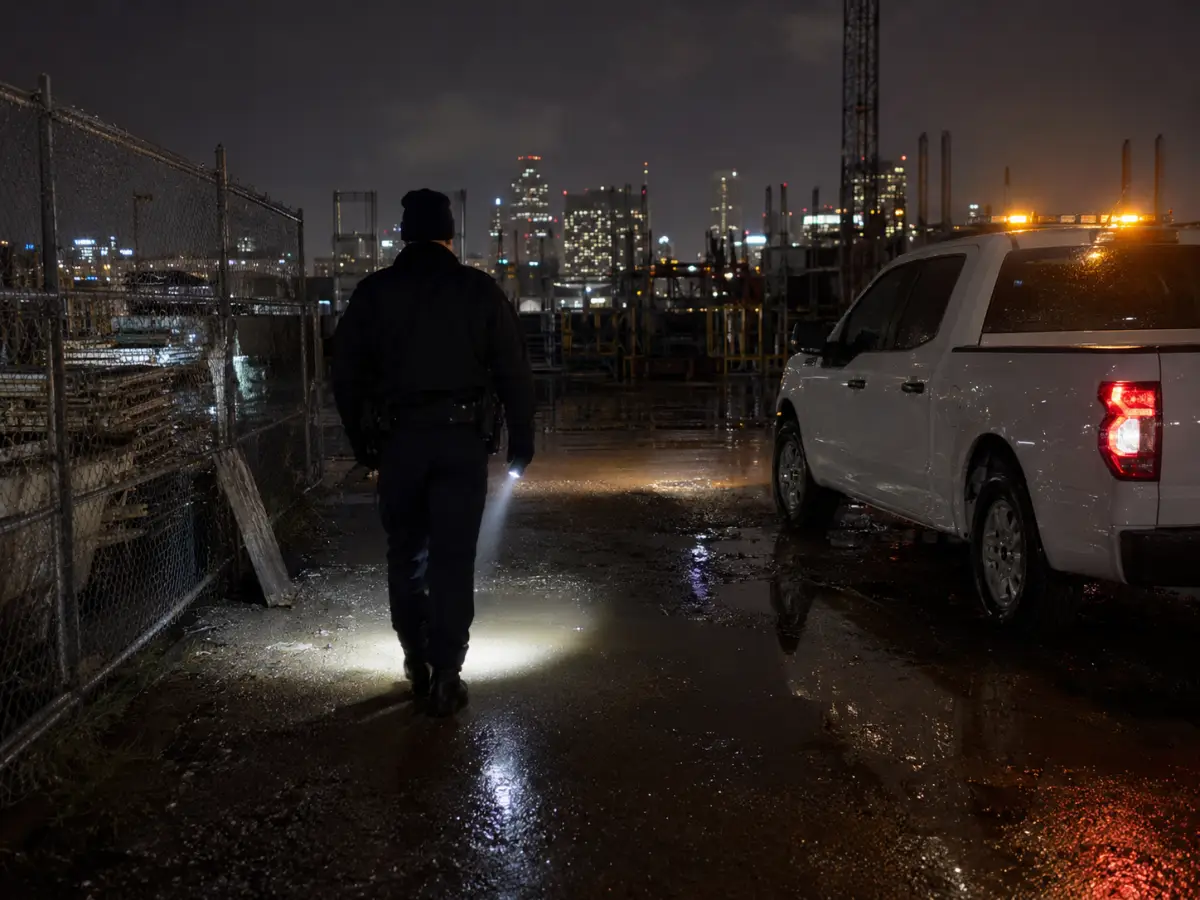
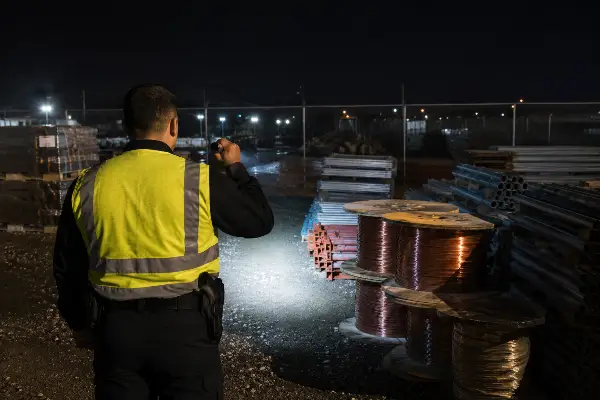
Deterrence happens earlier, before contact, and it comes from presence. One of our officers on a 3:30 a.m. construction patrol found a man pulling rolls of copper wire from a storage container. The officer held a safe distance, called Houston police, and kept eyes on the suspect until units arrived and made the arrest. The wire went back to the site. No chest camera made that call. A marked patrol vehicle, a spotlight, and a written incident report did.
Footage earns its place after the moment, when accounts disagree. That’s the honest split, and it maps to the sites we cover:
- Construction sites. Copper and equipment are the targets. The National Insurance Crime Bureau puts metal theft at around $1 billion a year, and copper is the material thieves go after most. Patrols deter the hit; footage helps identify a crew that already got in. This is the core of construction site security.
- Warehouses and docks. Cargo, inventory, and employee theft. Footage settles dock disputes and access questions fast, which is why it fits warehouse security.
- Retail and shopping centers. The National Retail Federation put total retail shrink at about $112 billion in 2022, with external theft around 36% of it. A visible officer with a camera lowers the temperature of a confrontation and records it if it turns.
- Vacant buildings. Copper strippers and squatters. A documented patrol presence does more here than any recording.
Body cameras or security cameras, which does your site need?
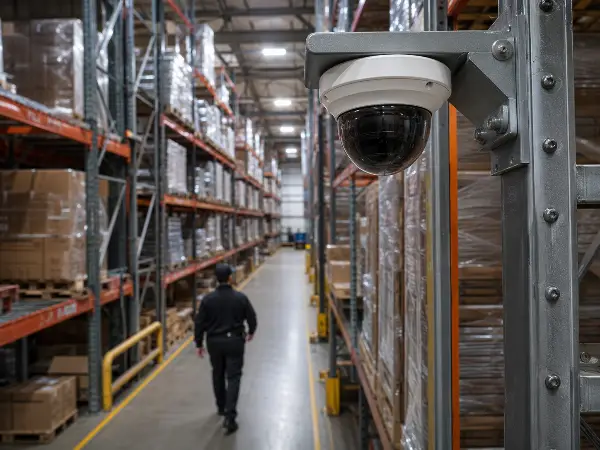
They solve different problems. Most Houston sites need fixed cameras plus a patrol, and add body cameras only for specific risks like frequent public confrontations. Fixed security cameras watch a spot around the clock. A body camera moves with the officer and captures the interaction up close. A patrol puts a person on site who can decide and act.
| Tool | What it does best | Deterrence | Ongoing cost | Best for |
|---|---|---|---|---|
| Body-worn camera | Captures the officer’s-eye view of an incident | Moderate, at close range | High (storage, redaction, management) | Retail floors, public-facing posts, high-contact sites |
| Fixed camera (CCTV) | Constant coverage of a fixed area | Low to moderate | Low to moderate | Entrances, docks, perimeters, parking |
| Guard patrol | Judgment, response, documentation | High, presence stops most attempts | Staffing | Construction, vacant property, after-hours risk |
What really drives a body camera program
The camera itself is the small part. The recurring work is everything behind it: cloud storage, how long you keep footage, the time it takes to redact and share clips, and day-to-day management. That’s what small operations miss when they price one device and stop there. Plan for the whole program, not the gadget, or the cameras end up in a drawer by the second month.
How Reliable Guard & Patrol Services covers Houston
Reliable has provided Houston security guard services for 20 years, with about 150 officers and a license through Texas DPS since 2018. We staff armed and unarmed posts in English and Spanish, deploy the same day, and write contracts month to month or weekly, so there’s no long-term lock-in (that myth stops a lot of owners from calling).
Our officers run GPS guard-tour systems, file real-time incident reports, and check in with supervisors through the shift, which is how we keep a clean record of every round across Downtown, the Medical Center, Energy Corridor, Katy, Sugar Land, Pearland, Conroe, Spring, Humble, and The Woodlands. When a client asks about body cameras, we help them decide where the footage earns its keep and where a marked patrol and solid reporting already do the job. Reach out for a free proposal, and we can put a licensed officer on your site, often the same day.
FAQs
Do security guards wear body cameras in Texas?
Some do, but it isn’t required. No Texas agency mandates body cameras for private security. Whether an officer wears one usually comes down to the client and the site.
Is it legal for a security guard to record audio in Texas?
Yes, when the officer is part of the interaction, because Texas is a one-party consent state under Penal Code 16.02. Secretly recording a private conversation the officer is not part of can be a second-degree felony.
Do security guards need a license to use a body camera in Texas?
No separate camera license exists. The officer needs a valid Texas DPS Private Security license, commissioned for armed work or non-commissioned for unarmed.
Can a security guard record you on private property?
Generally yes in areas open to view, like lobbies, lots, and docks. Private spaces with a reasonable expectation of privacy, such as restrooms, are off limits.
Are body cameras better than CCTV for construction sites?
They do different jobs. Patrols deter theft best, while cameras document it. On an active job site, stopping a break-in matters more than filming it, so a visible patrol usually comes first.
Where are body cameras most useful for security guards?
On public-facing, high-contact posts like retail floors and building lobbies, where officers deal with people all shift. On construction sites and vacant property, a visible patrol tends to prevent more than a camera records.
Does Reliable provide armed and unarmed guards in Houston?
Yes. Reliable staffs both, all licensed through Texas DPS, with same-day deployment and month-to-month contracts across the Houston metro.