Loading dock security in 2026 is won or lost at the release desk. The loss growing fastest comes through the front gate. A driver shows up on time with a license and a pickup number. He leaves with a load a real carrier was booked to haul.
Cameras record that driver. A night patrol never meets him, because he comes in daylight. What stops him is a release check run against records he can’t edit. It also takes an officer with written authority to keep the trailer at the door.
The numbers point the same way. In Q2 2026, Verisk CargoNet counted 26% fewer cargo theft incidents in the U.S. and Canada than a year earlier. Estimated losses more than doubled. Fictitious pickups held almost flat while the total dropped.
What Is Loading Dock Security?
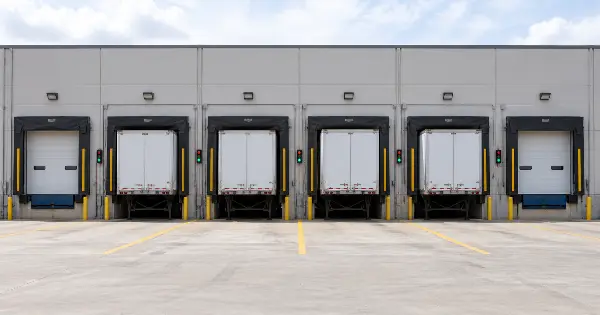
Loading dock security is the set of people, procedures and equipment that controls who and what crosses a facility’s shipping and receiving doors. It covers trailer and door control, access for drivers and visitors, seal and paperwork checks, and the release decision: confirming that the carrier and driver taking a load are the ones the shipper booked.
Most dock security advice covers the first 3 of those and gives the release decision a line, if that. That’s backwards for 2026. Locks and cameras work against someone who has to break in. A fictitious pickup doesn’t break anything.
Where Docks Lose Freight In 2026
Docks now lose the most freight at pickup, in daylight, to thieves who look like the carrier. There are fewer thefts than a year ago, and each one costs more.
Verisk CargoNet counted 677 supply chain theft incidents in the U.S. and Canada in Q2 2026, down 26% from Q2 2025. Estimated losses rose from $135.7 million to $304.6 million. The average theft with a reported value came to $564,009, though CargoNet notes that a small number of multimillion-dollar losses pulled that average up.
Fictitious pickups barely moved. CargoNet logged 158 in Q2 2026, against 165 a year earlier. By our math from its counts, that took fake pickups from about 18% of all incidents to about 23%. The thieves who come with paperwork kept working while the rest of the field slowed down.
The American Transportation Research Institute (ATRI) looked at where those losses land. Logistics providers in its 2025 study said 50.5% of their thefts happened at the customer’s pickup location. And 62.5% were strategic thefts, such as fictitious pickups, account takeovers and double brokering. The sample was small, 28 companies reporting on 2023, so read it as direction, not a census. The direction points at the shipper’s dock.
Is Checking The Driver’s License Enough?
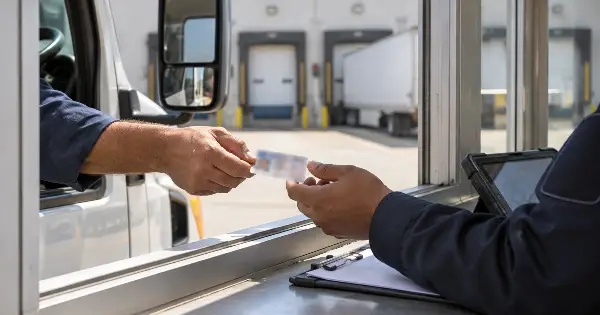
No. In 3 cases reported or charged in 2026, thieves brought identification or a real carrier’s name, and the dock released the freight. What failed each time was a release process that took the driver, the paperwork or the broker at their word.
| Case | What was taken | What got it released | The check that catches it |
|---|---|---|---|
| Bradford County, Pa., June 25, 2026 | About 40,000 pounds of tungsten oxide, valued by police at about $2.86 million | A New York license police call fraudulent, a California license in a false name, and fraudulent truck registration | A callback to the booked carrier on the number in its federal record. The real carrier flagged the theft the next day. |
| Philadelphia-area warehouse, June 5, 2026 | 18 pallets of bourbon, about 10,800 bottles, valued at about $500,000 | A driver’s license, plus a call to the shipping broker, who said a truck was coming | The driver’s name checked with the carrier’s own dispatch, on a number the dock looks up itself |
| Sites in Pa., Va. and N.J., October 2025 to April 2026 | 6 loads of lamb, cheese, beef, copper and cigarettes | Leased tractors carrying real carriers’ names and registration numbers, and bid details hackers phished from a broker | A call to each real carrier on its federal record number: did you send this truck and this driver? |
Sources: Pennsylvania State Police and Greenfield, Indiana, police; company statements reported by The New York Times and FreightWaves; the Manhattan District Attorney’s Office.
The ring case shows how far the setup goes. Manhattan prosecutors say the crew leased tractors and fixed real carriers’ names and registration numbers to them. Hackers had phished the bid details from a broker, so the crew knew which loads to collect. On paper, every truck matched.
CargoNet called impersonation-based theft “the most significant tactical development in Q1 2026.” Its vice president of operations put the fix this way: “We need robust identity verification throughout the lifecycle of a shipment, from booking to delivery.” The dock is the one point in that lifecycle where a person can still stop the truck.
The number on the truck door also proves less than it used to. On March 19, 2026, FMCSA warned carriers not to sell, buy or lease USDOT or MC numbers. It also said it will inactivate a USDOT number it finds in use by anyone other than the assigned legal person. A matching door number tells you the lettering is right. It doesn’t tell you who’s driving.
The 5 Checks We Run Before A Trailer Leaves
On our logistics posts, officers clear every pickup with 5 written checks before the trailer moves, starting with the carrier callback. If any check fails, the trailer stays at the door.
- Carrier: look the carrier up on the SAFER Company Snapshot and call the phone number listed there. Skip any number printed on the paperwork or offered by the driver.
- Driver: match the name on the commercial driver’s license to the name the carrier’s dispatch gives on that call.
- Equipment: record the tractor number, trailer number, plate and the USDOT or MC number on the door, and match all 4 to the booking.
- Seal: record the seal number when it goes on and again before the truck leaves, with a photo of the seal on the door.
- Release: log the name and time of whoever approved the load, or the name and reason behind a refusal.
The order matters. The callback goes first because it’s the one check a thief can’t prepare for. He can bring a forged license, a pickup number from a phished email and door lettering that matches the booking. He can’t make the real carrier’s phone answer for him.
One caution on the lookup. SAFER shows the date a carrier last filed its registration update, the MCS-150 form date. If that date is only days old, the phone number may have changed with it. Confirm on the number you used for that carrier’s last load.
The 5-field pickup log on our logistics facility page shows what each field records and how it lines up with cargo insurance pickup conditions.
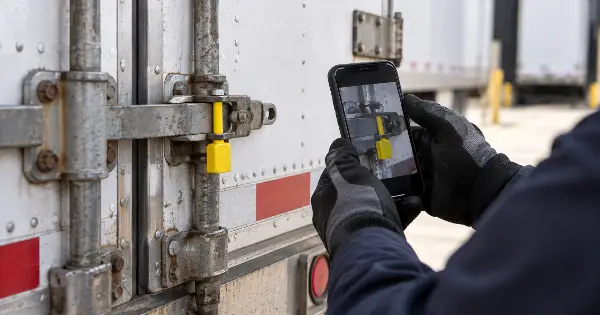
When A Check Fails, The Trailer Stays
A failed check means the officer holds the release, calls the shipper and logs the reason. The officer doesn’t need to win an argument with the driver. The trailer only needs to stay at the door.
That works only if the post orders say so in writing. Without a written order, an officer facing a backed-up yard and an impatient dock lead will release the load. Refusal authority belongs in the post orders attached to your contract. So does the name of the person the officer calls to confirm a release.
The post orders our officers inherited on logistics sites listed patrol rounds and said nothing about who may take a trailer. We now write them with the pickup first and the perimeter second.
What Each Dock Control Stops, And What It Misses
Every dock control covers one way to lose freight and misses another. Pick layers by the loss you’re seeing, not by the equipment catalog.
| Control | What it stops | What it misses |
|---|---|---|
| Vehicle restraint or dock lock | A trailer pulling away from the door mid-load | A load released on purpose to the wrong driver |
| Closed-door rule with door interlocks | Walk-in theft through a door with no trailer at it | Anything that leaves through the release desk |
| High-security seal, logged and photographed | Tampering between your dock and the delivery | A sealed trailer hauled away by the wrong carrier |
| Cameras | A record for police and insurers | The refusal itself, since a camera can’t hold a truck |
| Perimeter patrol | After-hours entry at fences, yards and dock doors | Pickup fraud during business hours |
| Verification post with refusal authority | The wrong carrier or driver at release | The yard and fences overnight, if it’s the only post |
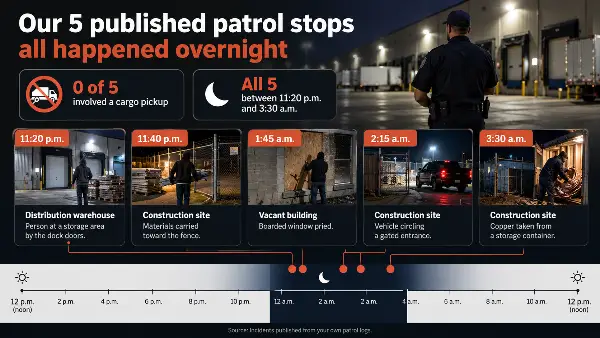
Our own incident log shows the gap in the patrol row. We publish 5 stops from our patrol records. All 5 happened between 11:20 p.m. and 3:30 a.m. Each was someone with no appointment, at a gate, a fence, a container, a boarded window or a dock-side storage area. None of the 5 involved a cargo pickup.
Patrols catch what they’re built to catch. Release fraud at 10 a.m. needs a different post.
A camera’s job at the dock is evidence. We’ve written about where cameras alone fall short, and the same limit shows up here: footage can’t refuse a release.
The after-hours side still matters, and it has its own night-hours checklist.
Loading Dock Security In Texas And Houston
Texas cargo theft counts dropped in early 2026, but the state still ranks near the top for cargo theft. Houston docks face the same pickup fraud as the rest of the country.
CargoNet counted 80 Texas incidents in Q1 2026, down 22% from 102 a year earlier. It said Q2 declines were “especially apparent in California and Texas.” ATRI’s study put 12% of 2023 cargo thefts in Texas and listed Houston among cities with spikes in recent years. Lower statewide counts don’t help the dock that releases a single load to the wrong driver.
Houston docks add their own details. Our officers work in English and Spanish, so the callback and a refusal can happen in the language the driver and dock crew use. Sites tied to Port Houston may need officers who hold a TWIC card for restricted areas. Most dock posts we staff are unarmed Level II officers. We save armed coverage for high-value freight or a site with a threat history.
For a Houston-area warehouse or distribution center, our warehouse security guard service builds the post around your dock hours and release volume.
A dock that releases freight on 2 shifts needs a verification post on both. Our guide to how many officers a site needs shows how that headcount adds up.
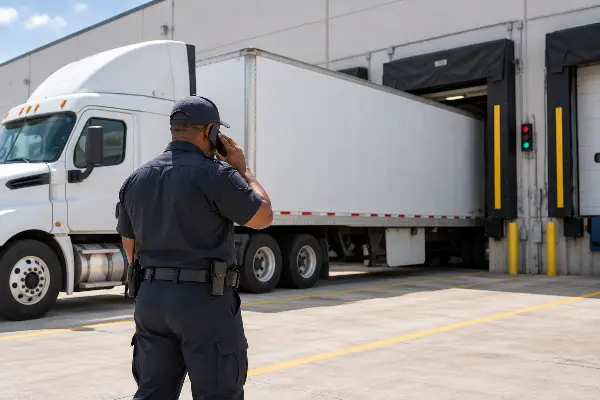
Can A Texas Security Officer Stop A Driver From leaving?
An officer can refuse to release your freight. Stopping the driver is a different act, because in Texas a licensed security officer’s arrest power is the same as a private citizen’s.
Refusing a release is your company’s call, carried out by the officer under your post orders. Holding a person is a legal act with narrow limits under Texas law. Our Houston security guards page lays out what an officer may do and when. On a failed pickup, the officer keeps the trailer at the door, calls the shipper and police, and records the driver, truck and plate. Force is a last resort, governed by the Texas Penal Code rules in our use of force guide.
What To Do In The First Hour After A Fictitious Pickup
Call the real carrier first, then police, and hand over the plate, tractor and trailer numbers from your log. Those numbers are what police use to find the truck.
- Call the booked carrier on the number from its FMCSA record and confirm the load isn’t theirs.
- Call police with the tractor number, trailer number, plate, seal number and a description of the driver.
- Tell the shipper, the broker and your cargo insurer the same day.
- Save the gate log, camera footage and seal photos without editing them.
- Check the week’s other bookings for the same carrier name, phone number or pickup number.
Speed paid off in the tungsten case. Police in Greenfield, Indiana, stopped the truck on June 27, 2 days after the pickup. License plate cameras had flagged it, and the load went back to its owner. Plate cameras need a plate to look for, which is why the equipment line in the log matters.
Better loading dock security in 2026 starts with the question your release desk asks. If your docks release freight during the day and your security plan was written for the night, fix that first. Tell us your dock count and the hours freight moves. We’ll send a free written proposal with post orders that start at the pickup. Call (713) 783-1344.
FAQs
What is the biggest loading dock security risk in 2026?
A fictitious pickup, where a thief poses as the carrier and the dock hands over the load. CargoNet recorded 158 fictitious pickups in Q2 2026, close to the 165 a year earlier. Total theft incidents fell 26% over the same span. That makes fake pickups a bigger share of a smaller total.
How do you verify a truck driver at a loading dock?
Find the carrier in FMCSA’s SAFER database and phone the number shown there. Match the driver’s name to what the carrier’s dispatch tells you. Then check the tractor, trailer, plate, door number and seal against the booking. A door number alone proves little, because FMCSA warned carriers on March 19, 2026 not to sell, buy or lease USDOT or MC numbers.
Is a driver’s license check enough for loading dock security?
No. In a June 25, 2026 tungsten oxide theft in Pennsylvania, police say the driver carried a fraudulent license and fraudulent truck registration. The dock released the load anyway. Only a callback to the real carrier shows whether that carrier sent the driver.
Do loading docks need security guards if they have cameras?
Cameras give you evidence after the fact, but a camera can’t refuse to release a trailer. An officer on a verification post can hold the load when a check fails. Patrol and verification are separate jobs. All 5 incidents we publish from our patrol logs happened between 11:20 p.m. and 3:30 a.m., and none involved a cargo pickup.
Can a security guard refuse to release a load in Texas?
Yes, when the site’s post orders give the officer written authority to refuse. The refusal is the site’s decision, carried out by the officer. Detaining the driver is a separate matter, because a Texas security officer’s arrest power is the same as a private citizen’s.
How common is cargo theft in Texas?
Texas counts fell in early 2026. CargoNet recorded 80 Texas incidents in Q1 2026, down 22% from 102 a year earlier. Over time Texas still ranks high, with 12% of 2023 cargo thefts in ATRI’s 2025 study, and ATRI lists Houston among cities with recent spikes.
What should you do right after a fictitious pickup?
Call the booked carrier on the number from its FMCSA record to confirm the load isn’t theirs. Then call police with the tractor, trailer, plate and seal numbers from your log. Notify the shipper, broker and cargo insurer the same day, and keep the gate log and video unedited. In a June 2026 case, Indiana police used license plate cameras to find the stolen truck 2 days after the pickup.