Even the companies that sell security drones admit the thing most buyers miss. A drone can’t put itself between a thief and a copper spool. It can watch. It can’t act. That one gap decides where drones in security actually belong, and where a licensed officer still does the work.
Drones have earned a real place on big sites. They cover ground fast, see in the dark, and get eyes on an alarm in under two minutes. But they fly under strict FAA rules, they can’t legally detain anyone, and a civilian security drone can’t be armed. For most Houston commercial properties, the better setup pairs aerial cameras with officers who can respond on foot or by vehicle. Here’s what drones do well, where they stop, and how that maps to protecting a job site, a warehouse, or a vacant building.
What is a security drone?
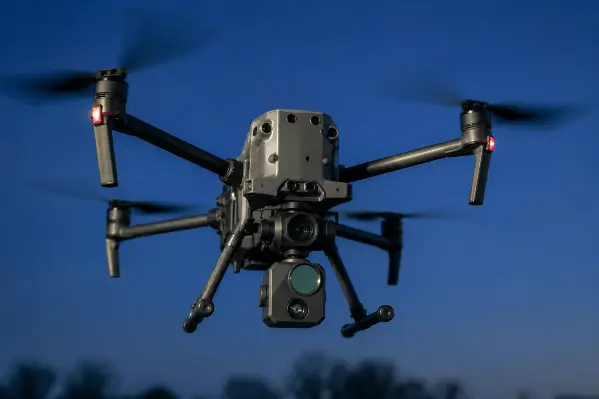
A security drone is an unmanned aircraft fitted with cameras and sensors that a trained operator flies to watch property, verify alarms, and stream live video to a security team. Most carry a high-resolution zoom camera and a thermal sensor, so they can pick up a person by body heat at night, then zoom in to confirm what’s going on.
They come in two setups. Some are hand-launched and flown by a pilot on site. Others sit in a weatherproof dock and launch on their own when a sensor trips. The dock version is what most drone-as-first-responder programs use.
How drones in security are used in 2026
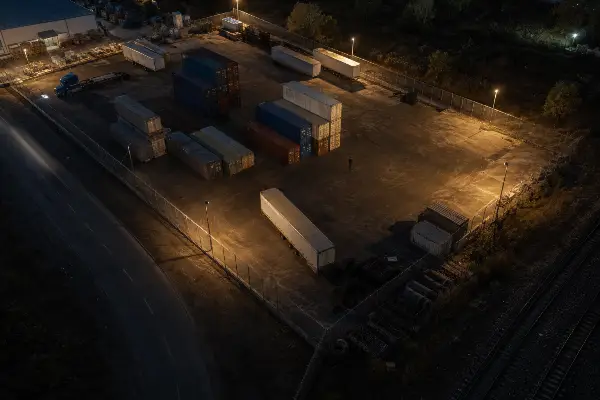
Drones handle the parts of security that eat an officer’s time: covering distance and getting a first look. The market for security and safety drones is growing about 20 percent a year, and the fastest growth is in autonomous patrol systems, according to industry market research. Four uses drive most of that adoption.
Covering large perimeters. One drone can sweep a fence line that would take an officer 30 minutes to walk. On construction sites and storage yards, that speed counts most after dark.
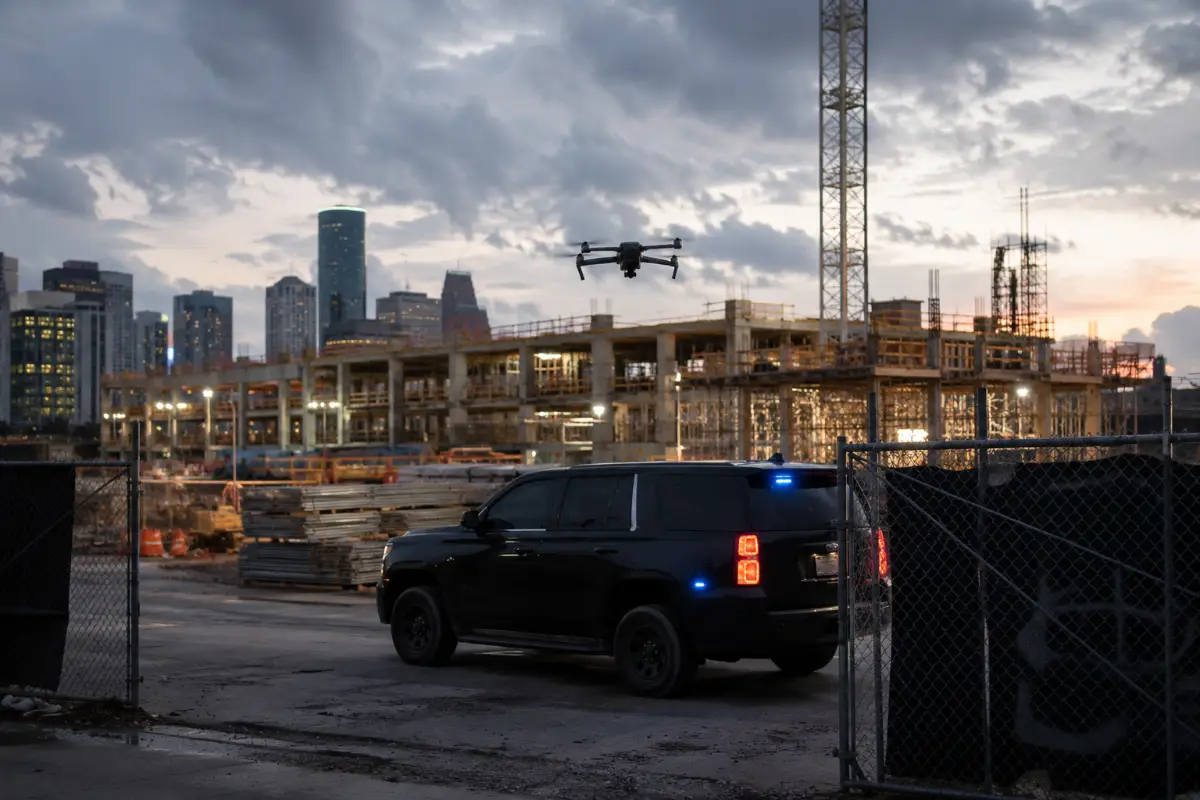
Verifying alarms. When a motion sensor trips, a docked drone can launch and stream video before anyone drives out. The Chula Vista Police Department has flown this kind of call more than 25,000 times since 2018. The drone arrived first on 17,170 of them, averaging about 97 seconds to the scene, and on 4,629 calls no officer had to respond at all because the drone confirmed there was nothing to act on.
Working at night. A thermal camera reads heat, not light, so it can flag a person crouched behind equipment in full dark. That matters on a poorly lit lot at 2 a.m.
Keeping records. Flights save time-stamped video and flight paths, which helps piece together what happened after an incident.
Notice the pattern. Every use here is a way of seeing. Not one of them acts.
Where drones hit a legal wall
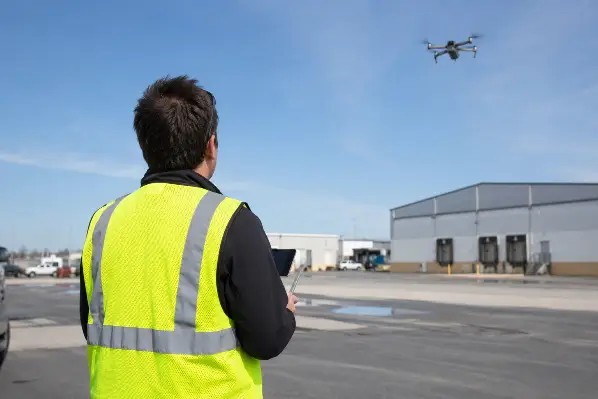
Drones can’t fly wherever an operator wants. Under the FAA’s Part 107 rules, a security drone has to stay within the operator’s or a spotter’s line of sight, which caps how far it can range from its base. Going beyond that needs a special waiver. Night flights are allowed, but only with anti-collision lights visible for three statute miles and extra pilot training.
The rule that would open up longer autonomous flights, Part 108, still isn’t final. The FAA proposed it in August 2025 and blew past its own February 2026 deadline to finish it, largely over a fight about whether a drone should get right-of-way over a crewed aircraft. Until it lands, most security drone programs stay boxed in by the line-of-sight limit.
Two more limits matter for private security. A civilian security drone can’t be armed. And Texas privacy law restricts using a drone to surveil a person or their property, which shapes where a camera can even point. An officer walking a client’s own site runs into none of these walls.
Can a drone replace a security guard?
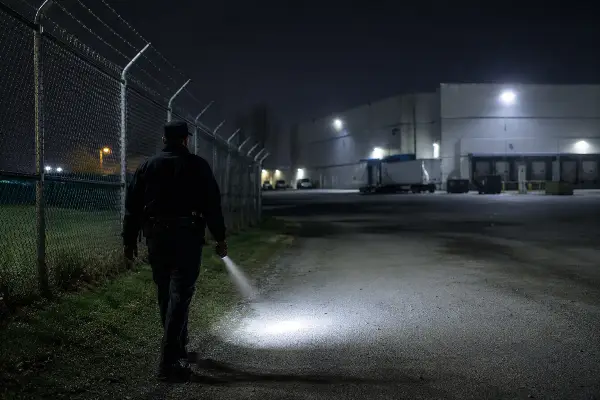
No. And the clearest voices on that are the drone companies themselves. Their own materials describe drones as a way to close coverage gaps, not to do what guards do: step in physically, check a credential, calm a tense situation, or hold someone for police. A camera in the sky changes what you know. It doesn’t change what you can do about it.
Take the copper wire case. A drone could have recorded a man prying open a storage container at 3:30 a.m. It couldn’t have lit him up with a spotlight, closed the distance, and held him until officers arrived. On that job, a Reliable Guard & Patrol Service officer did exactly that, and the wire was back with the site manager the same night.
The staffing pitch, and what it misses
Drone vendors like to pitch on staffing. Guard turnover runs high across the industry, and drones get sold as the fix that never calls in sick. There’s something to that. But a machine that only watches is worth little the moment someone’s loading your materials into a truck. Coverage isn’t response. A person still has to reach the spot and deal with whoever’s there.
Reliable’s answer to the staffing problem is vetting and supervision, not a smaller headcount. Every officer is screened before a shift and backed by a dedicated account supervisor, so the coverage a client pays for is the coverage that shows up.
Drones or guards, which does your site need?
For most Houston commercial sites, the honest answer is guards first, cameras as backup, and drones only on very large or remote properties that can justify the program. Here’s how the two stack up on the jobs that actually come up.
| Job | Security drone | Licensed officer |
|---|---|---|
| Cover a large perimeter fast | Yes, aerial view in minutes | Slower on foot, fast by patrol vehicle |
| See in total darkness | Yes, with thermal | Needs light or a flashlight, still responds |
| Verify an alarm before dispatch | Yes | Yes, if already on site |
| Physically stop a theft in progress | No | Yes |
| Detain a suspect for police | No, not legal | Yes, within Texas law |
| Check IDs, badges, and deliveries | No | Yes |
| Deter by visible presence | Limited | Strong, a marked officer changes behavior |
| Carry a firearm for high-risk sites | Not allowed | Yes, with a Level III officer |
| Operate without FAA flight limits | No | Yes |
The split is clear. Drones win on coverage and speed of eyes-on. Officers win on every step that involves doing something about it.
What a licensed Houston guard does that a drone can’t
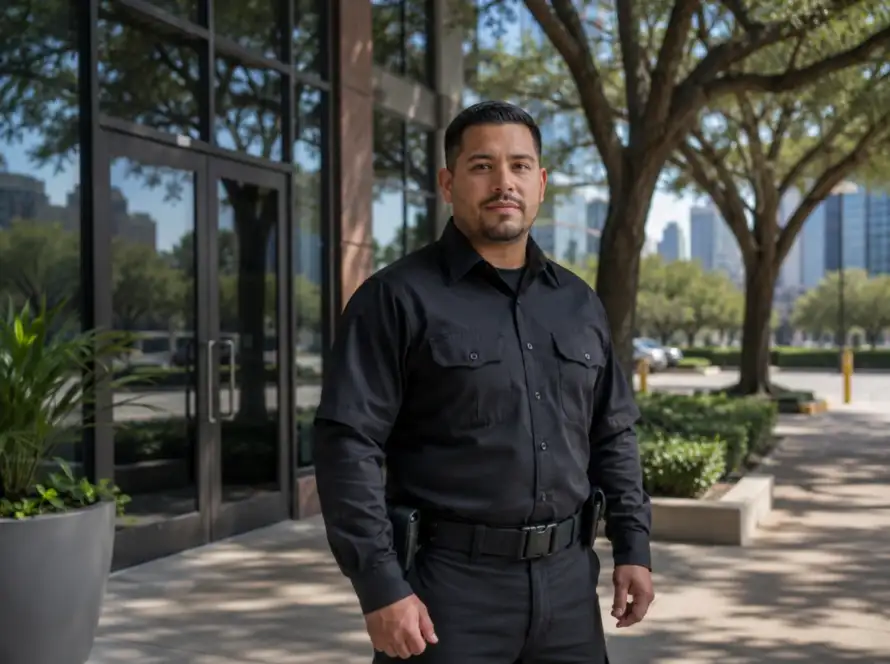
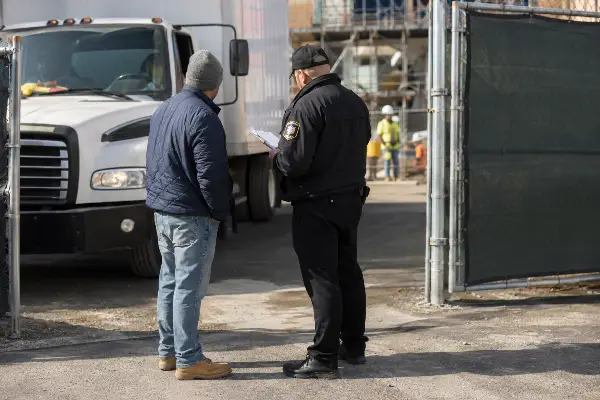
The gap between watching and acting comes down to training and legal authority. In Texas, security officers are licensed by the Texas Department of Public Safety. An unarmed officer holds a Level II license. An armed, commissioned officer holds a Level III license, which takes at least 45 hours of training plus a live firearms qualification. That license is what lets an officer legally detain a trespasser or carry a firearm on a client’s property. No drone holds one. Guards also work within clear legal limits, and a good company trains to them.
This is the model Reliable Guard & Patrol Service runs on Houston job sites. The company fields about 150 licensed officers across more than 100 area sites, holds Texas DPS license B07315701, and carries a 5.0 rating across 144 Google reviews. Every officer clears a background check, drug test, license verification, and reference check before a shift, and armed officers requalify on the firearm every two years.
Patrols are tracked with a GPS guard-tour system that logs each checkpoint, so a client sees documented rounds instead of a promise. The company doesn’t run random drive-bys.
The difference shows up in the incident log. An officer on a 2:15 a.m. round spotted a pickup circling a construction site, hit the patrol lights, and the truck left before anyone touched the fence. On another site, two people were hauling materials toward the perimeter at 11:40 p.m.; the officer lit the area, called out, and they dropped the load and ran. A drone could have flagged each of these. An officer ended them.
For a construction site, a warehouse, or a vacant building sitting empty between tenants, that difference is the whole point.
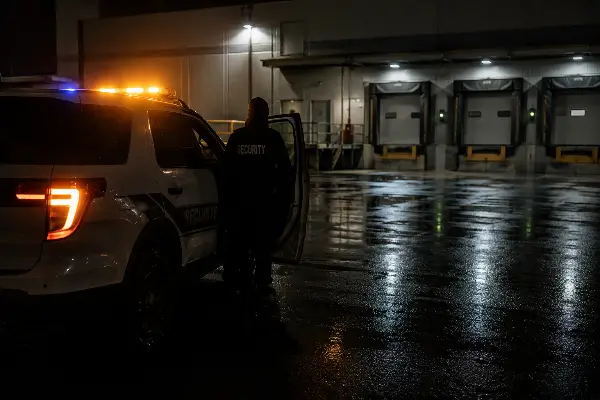
Getting guards on a Houston site, same day
Reliable covers most of the Houston metro, same day. That includes Downtown, the Medical Center, the Energy Corridor, Katy, Sugar Land, Pearland, Conroe, Spring, Humble, and The Woodlands, 24 hours a day, holidays included. There’s no long-term contract requirement, so coverage can run week to week, short term, or ongoing, based on what the site needs. Proof of insurance goes out the same day, and most jobs start with a free proposal and, where it helps, a site walk.
Where drones fit, and where they don’t
Think about the minutes between the moment something trips and the moment it’s resolved. A drone can shrink the first part. It tells you fast whether the movement at the back fence is a raccoon or a person. Someone still has to handle the second part, on the ground, with the training and legal standing to act.
That’s the honest role of drones in security. They narrow the question. They don’t answer it. On a sprawling site, that’s worth a lot. On the average Houston property, a licensed officer is still the one who ends the incident. Put a camera in the sky if the site calls for it, and put a guard where the theft actually happens.
FAQs
What are drones in security used for?
In security, drones are used mainly to see: covering large perimeters from the air, verifying alarms before a team drives out, and scanning in the dark with thermal cameras. They don’t respond physically. A trained operator flies them within FAA line-of-sight limits and streams the video to the security team.
Can a security drone replace a security guard?
No. Drones can watch and record, but they can’t detain a suspect, check a badge, or physically stop a theft, and civilian security drones can’t be armed. Even drone makers describe them as a supplement to guards, not a replacement.
Are drones in security legal in Texas?
Yes, with limits. Operators follow the FAA’s Part 107 rules and keep the drone within visual line of sight unless they hold a waiver, and Texas privacy law restricts using a drone to surveil a person or private property. Officers patrolling a client’s own site don’t face those flight restrictions.
How fast can a drone respond to an alarm?
Fast at seeing, not at doing. In Chula Vista’s program, drones reached the scene in about 97 seconds on average and arrived before officers on 17,170 calls. The drone still only confirms what’s happening, so a person has to respond on the ground.
Do security drones work at night?
Yes. Thermal cameras read body heat instead of light, so a drone can spot a person in full darkness, then switch to a zoom camera to confirm. Night flights are legal under Part 107 only with anti-collision lighting visible for three statute miles and extra pilot training.
Are drones or guards better for construction site security?
For most construction sites, guards are the core and cameras or drones are support. A drone can flag someone circling the fence, but a licensed officer is what makes them leave, recovers stolen materials, and holds a suspect for police. Reliable Guard & Patrol Service has documented several overnight thefts stopped this way on Houston job sites.
What can’t a security drone do?
It can’t physically stop what it sees. A security drone can’t detain a suspect, check a badge or a delivery, put a hand on a gate, or carry a firearm, and it can’t legally fly beyond the operator’s line of sight without a waiver. Those are the jobs a licensed officer on site is there for.