Fewer than 7 in 100 items stolen from U.S. construction sites are ever recovered. That figure comes from a study of more than 15,000 police-reported thefts, and it explains the real limit of a camera: it gives you a clear video of your property leaving, not your property back.
That gap sits at the center of virtual guarding vs security guards. Virtual guarding watches and warns from a screen miles away. An on-site security officer stands on your property and can act. This guide covers what each one actually does, shows five real Houston incidents where an officer changed the outcome, and helps you choose the right coverage for your site in 2026.
Reliable Guard & Patrol Service runs armed and unarmed officers across the Houston area. We don’t sell camera monitoring, so what follows is the honest version, including where a camera earns its keep.
What is virtual guarding, and how does it differ from an on-site guard?
Virtual guarding is remote monitoring. On-site guarding is a person on your property. That one difference decides what each can do when something goes wrong.
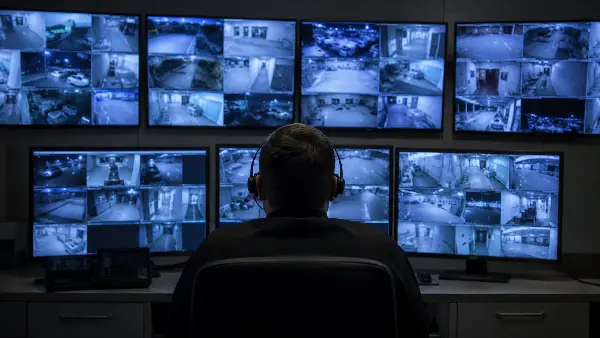
Virtual guarding, also called remote video monitoring, uses cameras and video analytics to flag activity for an operator watching from an off-site center. When a camera trips, the operator reviews the feed, can speak through a loudspeaker, and calls police if needed. No one is physically on your property.
An on-site officer does that watching in person and adds the part a screen can’t reach: walking the property, checking locked doors, challenging a stranger face to face, and staying until the site is secure again.
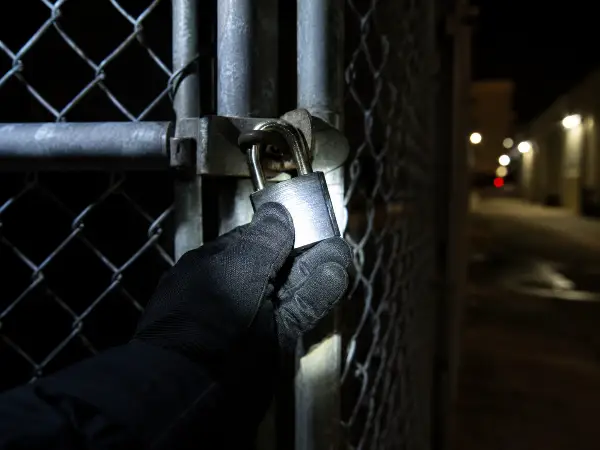
Where the two models split
Both models can spot a problem. Only one can put a person between the problem and your property. Here is the honest side-by-side.
| Task | Virtual guarding (cameras plus remote operator) | On-site security officer |
|---|---|---|
| Detect activity | Yes, on camera | Yes, in person |
| Confirm what’s happening | Yes, on video | Yes, up close |
| Warn an intruder | Yes, over a speaker | Yes, face to face |
| Physically block or intervene | No | Yes |
| Detain and hold for police | No | Yes, within the law |
| Recover property before it leaves | Rare, only if police arrive in time | Often, on the spot |
| Check doors and re-secure the site | No | Yes |
| Keep working in an internet or power outage | Depends on backups | Yes |
Notice the bottom rows. A camera feed needs power and a connection. A cut line or a dead router can blind a remote center, and the intruder who cut it knows that. An officer on foot doesn’t drop offline.
Does virtual guarding stop crime, or just record it?
Mostly, it records. A loudspeaker warning scares off some people, but a remote operator can’t physically stop anyone, and once goods leave the property they rarely come back.
The numbers are stark. The same NIBRS-based study found the average construction-site theft costs about $6,000, and fewer than 7 in 100 stolen items are recovered. The National Insurance Crime Bureau and National Equipment Register have pegged direct equipment-theft losses at $300 million to $1 billion a year. Tools were the single most stolen item, involved in nearly 40 percent of incidents.
Here is the part camera vendors skip: that same research lists on-site security guards among the practices that actually reduce these thefts. A recording helps you file a claim and hand police a face. It does not put your copper back on the reel.
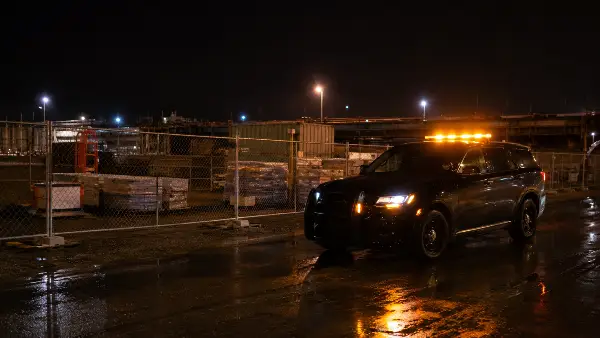
Five Houston incidents where an on-site officer changed the outcome
This is what physical presence looks like in practice. Each of these is from our patrol logs, with client names and exact addresses removed.
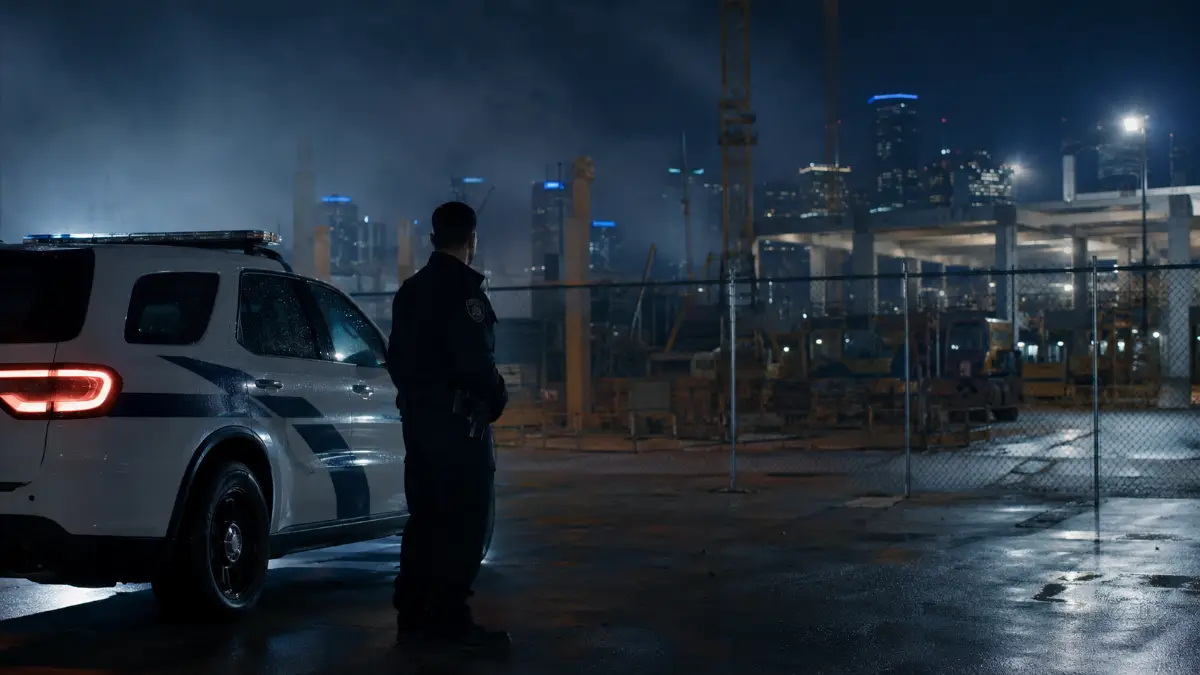
At about 3:30 a.m., an officer on a construction site found a storage container forced open and a man pulling out rolls of copper wire. He called police, kept the suspect in view from a safe distance, and fed updates to dispatch until officers arrived and made the arrest. The copper went back to the site. Recovery like that is the rare outcome the data says almost never happens.
At roughly 11:40 p.m., an officer spotted two people carrying materials toward the perimeter fence. He hit them with a spotlight and a verbal challenge. They dropped everything and ran, and every piece stayed on site.
Around 2:15 a.m., an officer watched a pickup circle a job site and stop near the gate. He switched on the patrol vehicle’s emergency lights and moved in. The truck left. He logged the description and called site management.
At about 1:45 a.m., an officer saw two people prying at a boarded window of a vacant commercial building. He called it in, kept eyes on them, and lit up the patrol vehicle. They fled before getting inside. The only damage was to the window covering.
At around 11:20 p.m., an officer found an unknown vehicle at a warehouse loading dock and a man testing a secured storage area. The officer identified himself and told him to leave. He complied, and a follow-up check confirmed every dock door and gate was still locked.
A camera could have filmed all five. In four of them, the property never moved, because someone was there to move first.
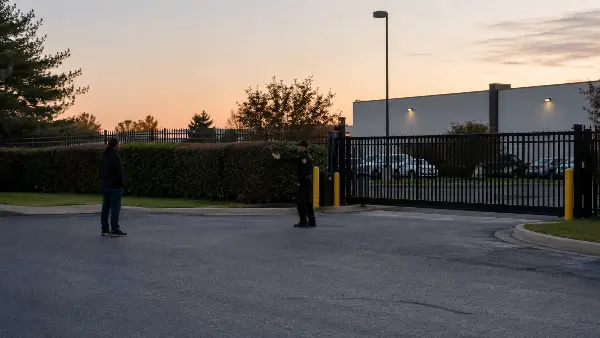
What can a security guard legally do that a camera can’t?
A licensed Texas security officer has the same authority to detain and act as a private citizen, not the powers of a police officer. What you’re paying for is someone trained to use that limited authority correctly and to document it, so a stopped incident holds up afterward.
In practice, an officer observes, deters, gives lawful warnings, can detain a suspect when the law allows, and hands off to arriving police. A remote camera operator can do none of that on your property. For a fuller breakdown of what a security officer can legally do, the limits matter as much as the powers. Every Reliable officer is licensed by the Texas Department of Public Safety, background-checked, drug-tested, and reference-verified before a shift.
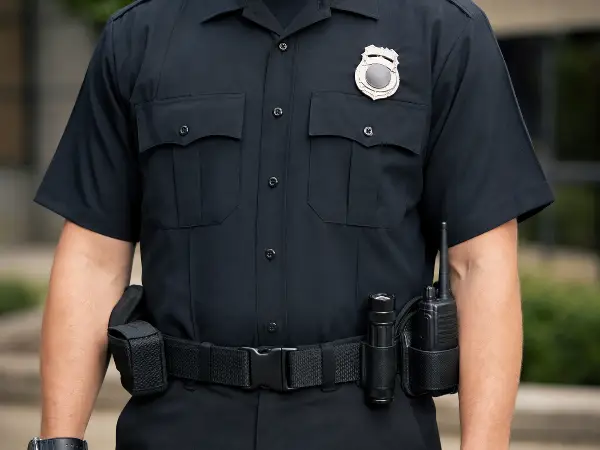
Armed, unarmed, and what “commissioned” means in Texas
Unarmed officers handle most deterrence, patrol, and reporting work. Armed officers add a firearm for higher-risk sites, cash handling, and sensitive facilities. In Texas, that line is a license level, not a job title.
An unarmed officer is non-commissioned and holds Level II training. An armed officer is commissioned and holds Level III, a minimum 45-hour course with a firearms proficiency test, and Level II has to come first. Our armed officers requalify and re-test their firearm proficiency every two years. If you’re weighing armed and unarmed officers for a site, the risk profile usually makes the call: a quiet office lobby and an after-hours materials yard are not the same job.
We also run foot and vehicle patrols, and every round is logged on a GPS guard-tour system with real-time incident reports and supervisor check-ins. That log is your proof the patrol happened, the same accountability a camera timestamp gives you, from the officer who was actually there.
What on-site guards cost, and the long-term-contract myth
On-site guards cost more per hour than a camera feed, because you’re paying for a trained person instead of software. What you get for the difference is response, not just a recording.
Price tracks a few things: how many posts you need, how many hours, armed or unarmed, and how risky the site is. A single overnight post at a quiet property is one figure; a large active job site with armed coverage is another. We quote it in a free written proposal after we understand the site, and we can put a certificate of insurance in your hands the same day.
Now the myth we hear constantly: that hiring guards means signing a long contract. It doesn’t, at least not with us. Coverage can run weekly, month to month, short term, or long term, whatever the job needs. Plenty of the misconceptions about security guards start with that one, and it keeps businesses paying for cameras when a few weeks of patrols would have solved the actual problem.
When virtual guarding is the right call
Cameras earn their place. For a very large perimeter, wide-area documentation, or a budget that can’t cover round-the-clock posts, remote monitoring can watch ground a single officer can’t cover at once. It’s also a strong record after the fact.
Where it falls short is the moment something is happening. If your risk is an active break-in, copper and materials that walk in minutes, or a site that needs doors physically checked and re-locked, a screen can’t finish the job. Many properties do best with both: cameras for reach, officers for response. We don’t run camera systems ourselves, so when a site needs that mix, we’ll tell you plainly and cover the on-site half.
Which coverage fits your Houston site in 2026?
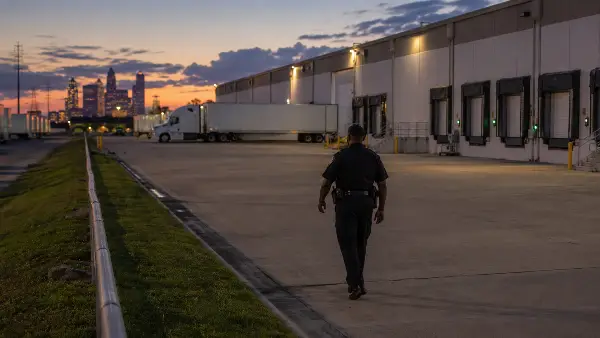
Start with your biggest risk and how fast it moves. If the threat is theft or intrusion that can happen in minutes, you need someone on site. If it’s documentation across a wide area, a camera helps. Most of our work is construction site security and warehouse security, where after-hours theft is the main risk.
| Site type | Main risk | How an on-site officer handles it |
|---|---|---|
| Construction site | Equipment, copper, and material theft after hours | Overnight foot and vehicle patrols, gate access control, logged rounds |
| Vacant or commercial building | Squatters, copper theft, vandalism, arson | Interior and exterior checks, door and window seals, fast police coordination |
| Warehouse or distribution | Inventory theft, cargo theft, loading-dock losses | Dock monitoring, delivery verification, access control |
| Retail or shopping center | Shoplifting, organized retail crime, disputes | Visible deterrent, loss-prevention support, incident response |
The 3 a.m. question
When something happens at 3 a.m., you get one of two things: a recording, or a response.
The choice between virtual guarding and security guards isn’t really about technology. It’s about what you want standing on your property when a stranger tests the gate. If that’s a person who can act, look at the on-site coverage we provide, then get a free proposal or call (713) 783-1344. We can have coverage and a certificate of insurance ready the same day.
FAQs
What is the difference between virtual guarding and a security guard?
Virtual guarding is remote video monitoring: cameras flag activity for an operator watching from an off-site center, who can talk through a speaker and call police. A security guard is a licensed person physically on your property who can patrol, challenge intruders, detain within the law, and re-secure the site. The core difference is response. A camera watches; a guard can act.
Can I use both virtual guarding and on-site security guards?
Yes, and many Houston sites do. Cameras cover a wide perimeter and create a record, while an on-site officer provides the physical response a camera can’t. Reliable provides the on-site half, and when a site also needs the camera layer, we’ll say so up front.
Can a virtual guard stop a break-in?
Not physically. A remote operator can issue a loudspeaker warning and call police, which deters some intruders, but no one is on site to block entry or hold a suspect. An on-site officer can do both, within the limits of the law.
What can a security guard legally do in Texas?
A licensed officer has the same authority to detain and act as a private citizen, not police powers. Unarmed officers hold Level II training (non-commissioned); armed officers hold Level III (commissioned), which requires a minimum 45-hour course and firearms proficiency. All are licensed through the Texas Department of Public Safety.
Do I need a long-term contract to hire security guards?
No. At Reliable Guard & Patrol Service, coverage can run weekly, month to month, short term, or long term. We provide a free written proposal and can issue a certificate of insurance the same day.
For a construction site, is virtual guarding or a security guard better?
Construction sites lose tools, copper, and materials after hours, and fewer than 7 in 100 stolen items are ever recovered. Cameras document the loss; on-site patrols deter it and can catch it in progress. For active job sites, officers with logged patrols are the stronger primary layer, with cameras as support on large perimeters.
Does virtual guarding work during a power or internet outage?
Only if it has battery and cellular backups, and even then a cut line can create blind spots. An on-site officer keeps patrolling regardless of power or connection, which is why some sites pair the two.