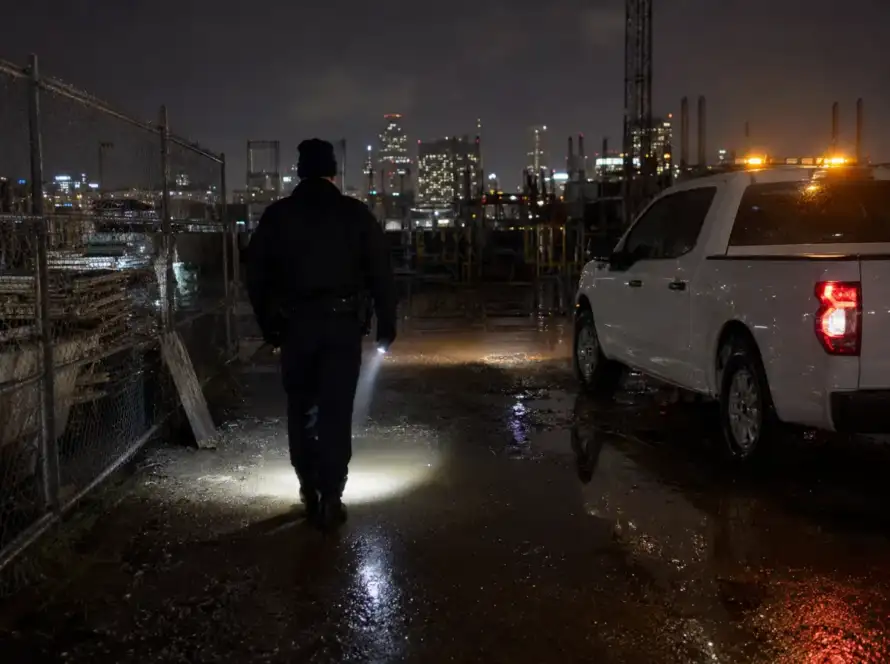
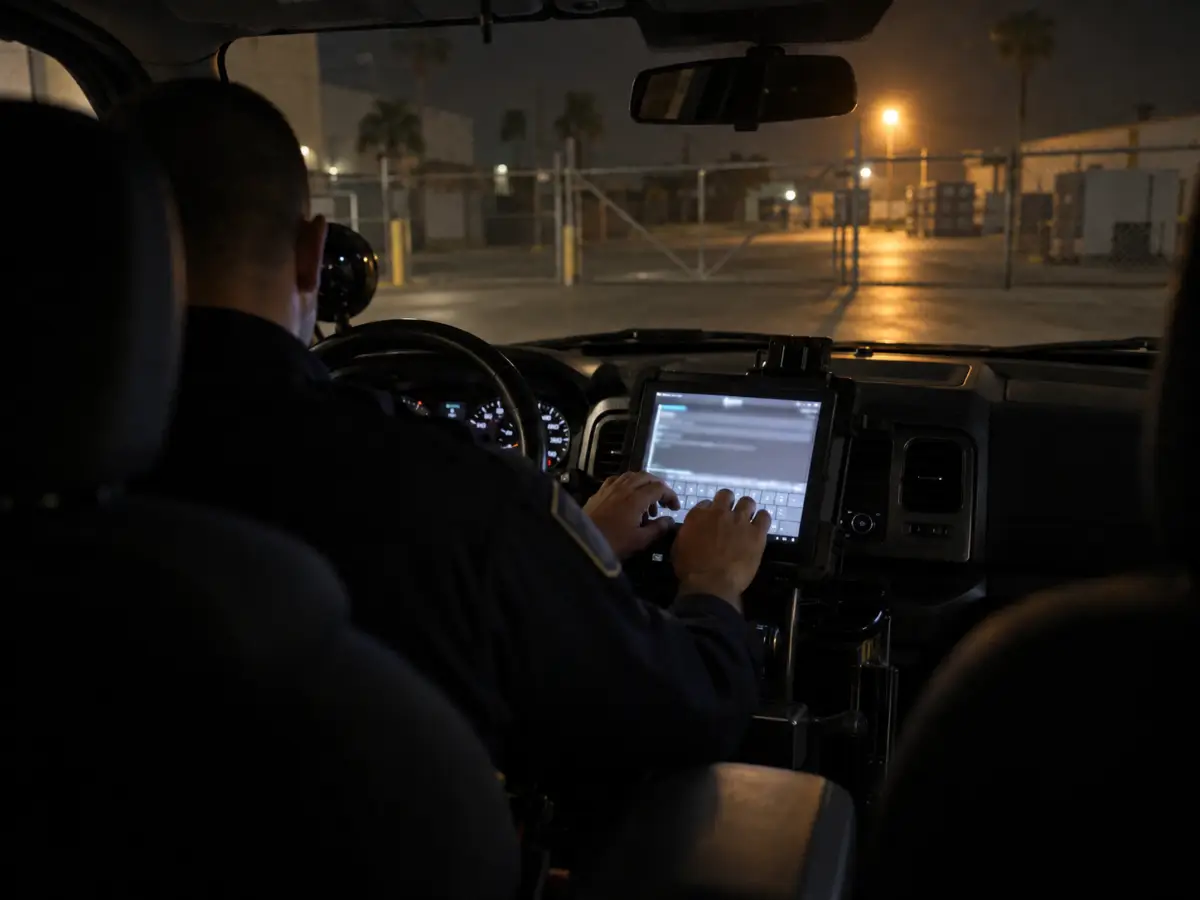
AI security guard reports are incident reports that software drafts or rewrites from an officer’s raw field notes. They read better than what most guards type at 3 a.m. That is the selling point, and it is a real one. It is also where the trouble starts. The worth of an incident report has little to do with how it reads. It comes from who saw the thing, when they wrote it down, and whether the record survives someone attacking it a year later in a claim. Software improves the prose. It cannot add firsthand knowledge, and it can quietly weaken the record it is cleaning up. Below is what changes when AI touches the report you receive, and what to check before you rely on one.
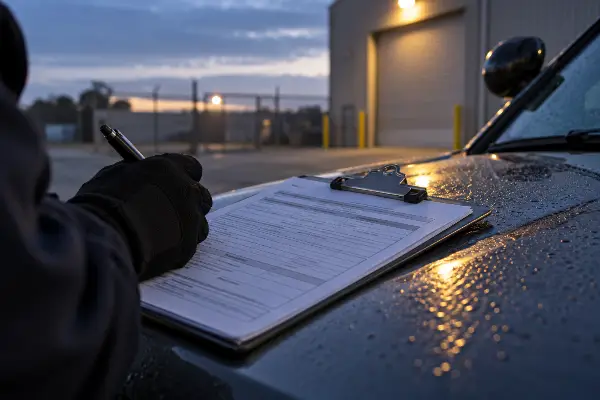
What is an AI security guard report?
An AI security guard report is an incident report that software generates or rewrites from a security officer’s raw field notes. The tools produce consistent structure and clean language in seconds. They do not observe the incident. The officer on site remains the only source of firsthand knowledge in the record.
Report writing is not a side task in this job. The federal occupational description for security guards lists “write reports on what they observed while on duty” among the core duties, alongside patrolling and access control, and counts 1,304,000 jobs in the occupation, which the Bureau of Labor Statistics groups with gambling surveillance officers, as of 2025. About 157,200 of those jobs come open every year, mostly to replace people who leave. That churn rate is the reason report quality swings so widely between companies, and it is the reason the software exists.
What the report software actually does to an officer’s words
It rewrites them, rather than correcting them. Several guard-management platforms now ship AI report tools that promise to “turn rough field notes into polished, compliance-ready reports” and “generate executive summaries in seconds.” One markets itself on saving guards hours of paperwork a day.
Read that promise carefully. The officer types fragments. The software produces the paragraph. Whatever the officer left out, the software fills in with language that sounds like it belongs. Producing language that sounds right is what these systems do.
Some platforms log the original notes next to the rewritten version. That is the right design, and if you buy a service that uses one of these tools, the side-by-side log is the thing to ask for. Without it you receive a document with no way to tell which sentences came from the person who was standing there.
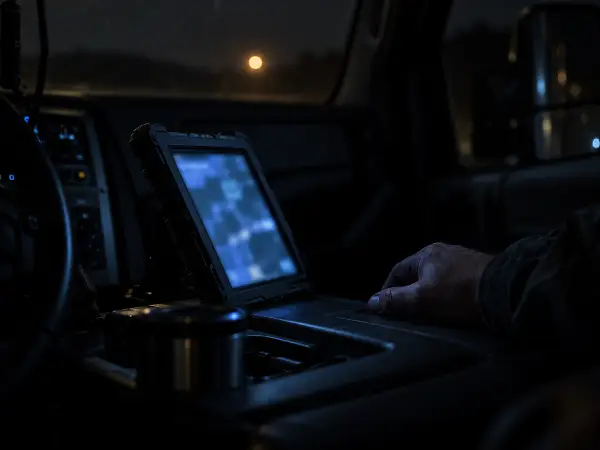
Why a polished report can be a weaker report
Because the polish hides the gaps, and the gaps are what a claim turns on.
The federal government has a name for this failure mode. NIST, in its Generative AI Profile, lists “confabulation” as a named risk of these systems and defines it as “the production of confidently stated but erroneous or false content (known colloquially as ‘hallucinations’ or ‘fabrications’) by which users may be misled or deceived.” NIST adds that the danger comes from the confidence itself: users believe the false content “often due to the confident nature of the response.”
Now put that in a security file. A report says the officer checked the rear gate at 2:40 a.m. If the officer’s note said “walked rear perimeter” and the software supplied the gate and the time, you have a sentence nobody can stand behind. In a theft claim, or when your insurer goes after someone else for the loss, that is the sentence the other side reads out loud.
We do not run AI report writing. Our officers write their own reports, and the round is logged on a GPS guard tour system as it happens. That is not advanced technology. It is a record that is simple to defend, which is a different thing and worth more.
What makes an incident report hold up?
A record holds up when it was made close to the time by someone with knowledge, kept as a matter of routine, and produced in a way nobody can call untrustworthy.
That is not a marketing standard. It is close to the actual test courts apply to business records. Under the Federal Rules of Evidence, a record of an act or event comes in when “the record was made at or near the time by, or from information transmitted by, someone with knowledge,” when it “was kept in the course of a regularly conducted activity,” when “making the record was a regular practice of that activity,” and when “the opponent does not show that the source of information or the method or circumstances of preparation indicate a lack of trustworthiness.”
Read the last condition again with AI drafting in mind. Method of preparation is a listed vulnerability. A report assembled by software from partial notes hands the other side a question it did not previously have. None of this is legal advice, and how any court treats a given record depends on the case, but the pattern is plain enough to plan around.
| Record type | Who has firsthand knowledge | Made at or near the time | What it proves | How it gets attacked |
|---|---|---|---|---|
| Officer-written incident report | The officer on scene | Yes, if written on shift | What was seen, done, and checked | Handwriting, spelling, thin detail |
| AI-drafted report from notes | Still only the officer | The notes are, the narrative is not | Roughly what the notes contained | Method of preparation, added detail |
| GPS patrol tour log | The device, plus the officer | Yes, automatically | Where the officer was and when | Device gaps, dead zones |
| Body camera footage | The camera | Yes | What the lens covered | Angle, battery, what is off frame |
None of these replaces another. A patrol log proves presence and cannot describe intent. A report describes intent and cannot prove presence. Ours are read together, which is also how body camera footage should be treated rather than as a standalone answer.
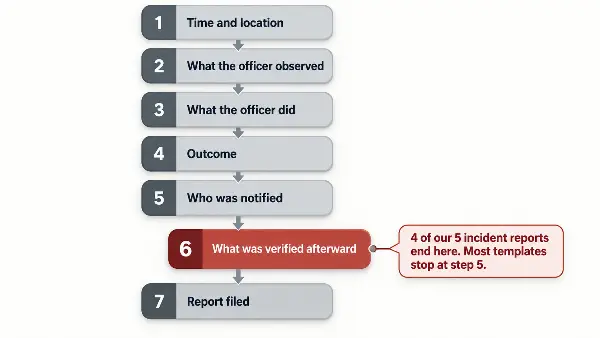
What should a security guard incident report include?
Time, place, what the officer observed, what the officer did, what happened next, who was told, and what was verified afterward. Most templates stop at the fifth item.
That last one is the piece almost nobody writes down, and it is the piece that turns a story into a usable record. Take one from our patrol logs, client name and address removed. At about 11:20 p.m. an officer on a perimeter round at a distribution warehouse found an unauthorized vehicle near the loading docks after hours, with someone trying to reach a secured storage area beside the dock doors. He contacted dispatch, notified the site supervisor, identified himself, and told the man to leave the restricted section. The man complied and left. Law enforcement was advised and the incident was documented.
Then the part that matters for your file. The officer inspected the dock and storage areas, found no forced entry, no damage, and no missing inventory, and confirmed that every dock door, gate and access point was still secure.
Across 5 incident reports from our logs covering construction sites, a vacant commercial building and that warehouse, 4 end with a documented check of that kind: an inventory count, a physical inspection of the entry point, or recovered property returned to site management. That last check is what lets you tell your insurer, your general contractor or your lender what you lost on a given night. Without it, all you can say is that something happened and a guard handled it. If you are comparing providers, ask whether their reports end there. Most do not.
The habit behind it is old and boring. Observe, report, verify, in that order, on every call. It is the same discipline behind the general orders every officer follows on post.
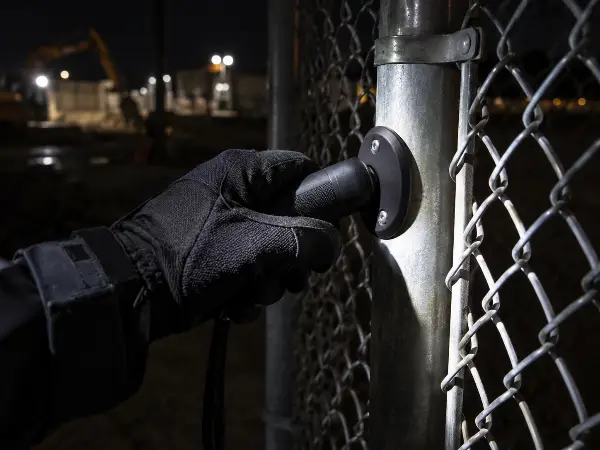
Patrol log versus incident report: what each one proves
A patrol log proves an officer was somewhere at a given minute. An incident report explains what he did about what he found.
Buyers mix these up constantly, and vendors do not correct them. A screen full of green checkmarks showing completed patrol points tells you nothing about judgment. It tells you a device was carried past a checkpoint. That is worth having, and we log every round on ours, but a clean tour log on a night when copper walked off the site is evidence of a process, not of protection.
The reverse gap is worse. A detailed report with no tour data behind it cannot establish that the officer was where he says he was at the time he says he was there. Ask for both. We provide both, on construction sites and inside warehouses alike, and the two records are meant to be checked against each other.
How fast should you get the report?
Same shift for anything involving police, injury, forced entry or missing property. Next business morning for everything else.
Speed matters for a reason that has nothing to do with service levels. Memory fades. The business-records test rewards a record made at or near the time of the event. A report written 3 days later by an officer working 5 other posts is a weaker document than the same facts typed at 4 a.m. Our officers file incident reports in real time from the field, which is what separates real overnight coverage from a warm body in a parked car.
Injury is where a slow report stops being an annoyance and becomes your problem. If someone on your payroll is hurt on the property, OSHA’s reporting rule gives you 8 hours to report a work-related death and 24 hours to report an in-patient hospitalization, an amputation, or the loss of an eye. Recordable injuries go on the log within 7 calendar days. If a guard’s report is how you find out, those first 2 windows can close before you know they opened.
One more thing to settle before you sign: whether you get a report on quiet nights. You should. A shift with nothing in it is still a documented shift, and a file with gaps in it invites questions later. Get the answer in writing before the contract starts, not after the first quiet week.
Where AI does help guard reporting in 2026
Sorting, searching and spotting patterns across many reports, rather than writing them.
The honest case for this technology is on the back end. Given 400 reports from 100 sites, software can group repeat activity by location and hour, flag the third attempt on the same fence line, and surface a pattern a human reading one report at a time will miss. That is pattern work on records that already exist. It does not change who witnessed what.
Translation is a fair use too. Our officers work in English and Spanish, and a written record produced in one and read in the other has an obvious need. The rule is the same either way: the original stands in the file next to the translation.
Where it stops being helpful is the narrative itself. The moment software supplies a fact the officer did not write, the record stops being the officer’s. We have written before about where AI falls short of an on-site officer, and reporting is the sharpest version of that limit.
What to ask a security company about reporting before you sign
4 questions, and the answers tell you more than any sales sheet.
- Show me a real incident report, redacted. If they cannot produce one, you are buying an intention.
- Who writes the narrative, the officer or software? If software, do I get the original notes beside the final text?
- What is in your reports after the response is over? Look for the verification step.
- How fast does it reach me, and do I get one on quiet nights?
Ask about licensing in the same conversation. In Texas, unarmed officers hold a Level II registration and armed officers hold a Level III commission through the Texas Department of Public Safety, and armed officers requalify on the firearm every 2 years. The person writing your report holds one of those licenses. A company that cannot tell you which level is on your site cannot tell you much about the record either. Our Houston team is licensed under Texas DPS No. B07315701, runs about 150 officers across more than 100 active sites, and can put coverage in place and issue an insurance certificate the same day. There is no long-term contract requirement, and terms run weekly, month to month or longer.
Run the same test on whoever you use now. Reading one redacted report tells you more about a guard company than reading its website, and it is the fastest way to see whether AI security guard reports on your account are documenting the night or just describing it. It is the first thing we check when comparing Houston security agencies, and it is the standard our own guard services are meant to be judged against.
Want to try it here? Ask us for a sample report with the client details stripped out, and see how it reads against the 4 questions above.
FAQs
What is an AI security guard report?
An AI security guard report is an incident report that software drafts or rewrites from a security officer’s field notes. The tools produce structure and clean language quickly. They add no firsthand knowledge, so the officer on scene is still the only person who witnessed anything in the document.
Are AI security guard reports reliable?
They are only as reliable as the notes behind them. NIST’s Generative AI Profile names “confabulation” as a risk of these systems, defined as confidently stated but false content that misleads users. Ask for the officer’s original notes stored beside the finished report so you can tell the two apart.
What should a security guard incident report include?
Time, location, what the officer observed, what the officer did, the outcome, who was notified, and what was verified afterward. That last step is the one most templates skip. Across 5 reports from our logs, 4 end with a documented inventory count or inspection of the entry point.
Can a security guard’s incident report be used in a claim or in court?
It can, and the standard is stricter than most buyers expect. Federal rules admit business records made at or near the time by someone with knowledge, kept as a regular practice, where the method of preparation does not indicate a lack of trustworthiness. This is general information, not legal advice for your situation.
What is the difference between a patrol log and an incident report?
A patrol log records where an officer was and when, usually through a GPS guard tour system. An incident report explains what the officer found and did. One proves presence, the other proves judgment, and neither substitutes for the other.
How quickly should a security company send an incident report?
Same shift for anything involving law enforcement, injury, forced entry or missing property, and the next business morning for routine matters. Our officers file incident reports in real time from the field on all of our Houston-area sites.
Do you get a report on nights when nothing happens?
You should. A shift with no incidents is still a documented shift, and unexplained gaps in a security file create problems during a claim. Ask any provider to confirm quiet-night reporting in writing before you sign.