
Commercial security guards are the difference between an incident that costs you a few hundred dollars and one that ends in a lawsuit. Commercial security guards are trained professionals who protect physical property, people, and operations through visible presence, monitoring, access control, and emergency response. The private security industry has expanded year over year for the better part of two decades, and demand for commercial guard coverage in Houston has tracked right along with it. Most business owners we talk to think cameras and alarms cover them. They don’t.
Here’s what should change your mind. The Bureau of Labor Statistics counts roughly 1,272,400 security guards employed as of May 2024, with 162,300 annual openings driven mostly by turnover. Demand is enormous. Quality varies wildly between providers, and that gap is where most owners lose money before they realize what’s happening.
This article argues something most security blogs won’t say: hiring the cheapest guard service is the single most expensive mistake a Houston business can make. We’ll cover what guards actually stop, what coverage works for different properties, how to vet a provider, and why 24/7 coverage matters for most commercial sites. We won’t cover residential or executive protection, which are separate services with different rules.

What Threats Do Commercial Security Guards Actually Stop?
Theft, vandalism, trespassing, workplace violence, unauthorized after-hours entry, customer altercations, and emergencies that need immediate human response. Cameras record. Alarms ping. Guards intervene.
We’ve seen this play out across dozens of Houston commercial properties. A warehouse near the Energy Corridor lost equipment month after month for half a year before bringing on patrol coverage. The thefts stopped within two weeks of posting a guard. The cameras had been recording the whole time. Nothing was acting on the footage.
Workplace violence is the threat owners underestimate most. A trained guard at the front doesn’t just deter the disgruntled ex-employee. They de-escalate the regular customer having the worst day of their life.
The Real Role of Commercial Security Guards in Protecting Assets
A guard’s job isn’t to chase down criminals. It’s to make your property unattractive to start with. Most theft and trespass attempts are opportunistic. The opportunist sees a uniformed guard at the entrance and moves on.
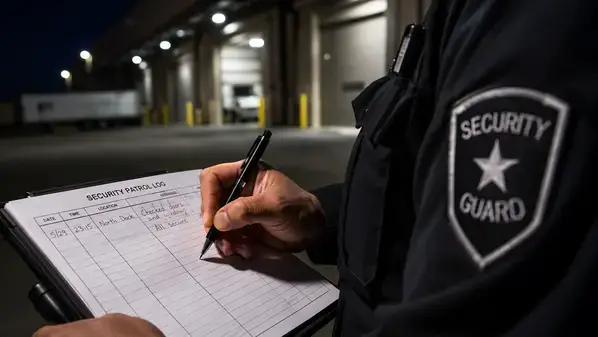
Day to day, guards handle access control, conduct property walks on fixed or randomized schedules, monitor surveillance feeds, log incidents, manage vendor check-ins, and coordinate with local police and fire when something escalates. A well-trained guard at a warehouse security post will catch inventory discrepancies your accounting team won’t find for weeks.
The contrarian take: most agencies sell you on patrol frequency. That’s the wrong metric. What matters is incident documentation and response time. Ten passes with no notes is worse than three passes with detailed logs.
Why Employee Safety Drives Business Continuity
Safe workplaces produce better work. That isn’t motivational poster talk. Employees who don’t feel safe spend mental energy scanning the room instead of doing their jobs.
One serious incident, an active shooter scare, a chemical spill, a violent customer, can shut down a commercial property for days. Insurance covers some of it. Lost contracts, damaged reputation, and employee turnover? You eat those.
Guards trained in first aid, CPR, and crisis stabilization are the bridge between the incident and the professional response. Two minutes of competent intervention before paramedics arrive can be the difference between a hospital visit and a fatality.
How Visible Security Builds Customer Trust
Visible security tells customers you take their wellbeing seriously. That perception drives repeat business in retail, hospitality, and any industry where customers spend time on your property.
Hotels live and die by this signal. A guest who sees a uniformed presence at the lobby entrance assumes the parking lot is monitored and the rooms are secure. A guest who walks into an unstaffed lobby at 11pm makes a different mental note. Hotel security coverage isn’t just defense, it’s brand positioning.

What Types of Commercial Security Guard Services Should You Consider?
Houston businesses pull from four main service types depending on property and risk.
Armed guards cover high-value sites, cash-handling businesses, jewelry retail, banks, and properties with a documented threat history. Training requirements under Texas private security licensing are more rigorous for armed posts, which is why they’re reserved for higher-risk sites.
Unarmed guards handle most commercial work. Retail, office buildings, hotels, and general access posts run on unarmed coverage. The focus is visibility, documentation, and de-escalation, which is what most commercial incidents call for.
Mobile patrols rotate between multiple sites or cover large properties that don’t justify a fixed post. One patrol unit can cover an industrial park more efficiently than three stationary guards.
Event security covers temporary deployments for conferences, concerts, and corporate gatherings. Crowd management, access verification, and emergency response are the focus.
Texas market rates run lower than coastal states, which is worth knowing when you’re comparing provider quotes. The numbers you see in coastal pricing benchmarks aren’t your numbers.
Cutting Legal Risk and Liability Exposure
Texas property owners have a legal duty to provide reasonable care for invitees. Skip security in a known high-risk area and you open the door to negligence claims after an incident. We’ve seen these lawsuits drag on for years and end in settlements that swallow a small business whole, all over incidents that one posted guard might have prevented.
Documentation matters more than most owners realize. Daily activity reports, incident logs, visitor records, these are the evidence that protects you in court. A property with detailed security logs faces very different litigation outcomes than one with no paper trail.
This is why hiring the cheapest provider backfires. Low-bid agencies skip training, run punishing turnover, and produce sparse reports. Vetting providers takes work, the same diligence you’d apply when picking SEO service partner who actually drives results instead of one who just sends invoices.
What Happens When Things Go Wrong
Emergencies don’t pick convenient hours. Medical events, fires, hostile intrusions, weather emergencies, hazmat spills. Your guard is the first responder until the professionals arrive.
A licensed guard trained in CPR can stabilize a cardiac event in the four to six minutes before paramedics reach the property. A guard trained in fire response can clear a building and meet first responders with a clear sit-rep instead of confusion. A guard with active shooter training knows the difference between cover and concealment when seconds count.
Not every guard has this training, which is why you ask. Specifically. Before signing a contract.
Is 24/7 Coverage Worth It in 2026?
For most commercial properties, yes.
24/7 coverage is a real investment. One serious incident can wipe out years of preventive spending in a single quarter. An after-hours break-in, a workers’ comp claim, a liability settlement, any of these can run higher than a full year of guard coverage on a mid-sized property.
Off-hours are when risk spikes. Most commercial burglaries happen between 11pm and 4am. Your overnight gap is the window every opportunist looks for.
24/7 isn’t right for every business. A small office that locks down at 6pm has different needs than a warehouse with active loading at 3am. Hire to your actual risk window, not to a generic template.
Why Houston Businesses Trust Reliable Guard Patrol Service
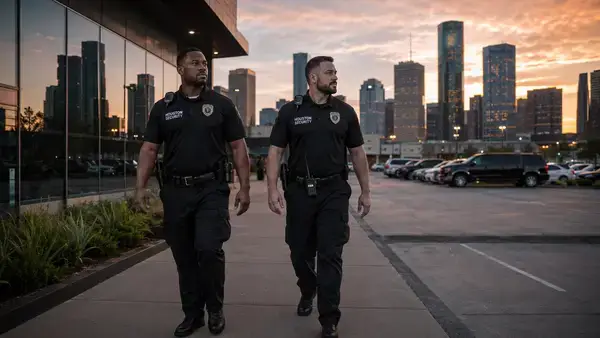
We’ve worked with Houston commercial properties across retail, hospitality, warehouse, construction, and office sectors. Every property gets a site walk first, then a custom coverage plan with documentation protocols, response procedures, and a single point of contact. Read more about how Reliable Guard Patrol Service builds programs around the actual risk profile of your property.
What separates us isn’t slogans. It’s that our guards stay. Industry turnover in many markets reaches triple digits annually. Ours runs a fraction of that. Lower turnover means a guard who knows your property, your staff, and your patterns. That continuity catches problems a new face every week will miss.
If you’re weighing commercial security guard services for your Houston property, the highest-leverage move you can make this quarter is sitting down with a provider and walking your site together. That’s where real protection planning starts, not in a quote email. Reach out to schedule a site assessment and we’ll show you what serious commercial security looks like in practice.
FAQs
Are commercial security guards worth the cost for a small business?
For most small commercial operations, yes. Effective security spending returns multiple dollars in avoided losses, lower insurance premiums, and reduced liability exposure for every dollar invested. A single negligence settlement can dwarf a full year of guard coverage. Smaller businesses with consistent foot traffic or after-hours risk benefit the most from this kind of preventive math.
What’s the difference between armed and unarmed commercial security guards?
Armed commercial security guards carry licensed firearms and require additional state certification, more rigorous background checks, and higher insurance limits. They suit high-value sites like banks, jewelry retail, and cash-handling businesses with a documented threat profile. Unarmed guards focus on visibility, de-escalation, and documentation, which covers most office, retail, and hospitality work where deterrence matters more than force.
How do I vet a commercial security guard company?
Ask three questions every legitimate provider should answer in writing. What’s your annual turnover rate? What are your guards’ training hours and certifications? Can you provide proof of current liability insurance limits? Industry turnover reaches triple digits in many markets, so a provider running below 50% is a strong signal of quality. Skip any company that won’t share these numbers.
Can technology replace commercial security guards?
Not for most commercial use cases. Guarding services remain the largest segment of the private security industry, and that hasn’t changed despite a decade of AI hype. Cameras and remote monitoring extend a guard’s reach, but they don’t replace human judgment in de-escalation, emergency response, and on-site decisions. Hybrid models combining manned coverage with remote monitoring are the fastest-growing approach right now.
How fast should a commercial security guard respond to an incident?
On-site guards should respond to any flagged incident within 60 seconds. Mobile patrol units serving multi-site rotations target response times of 5 to 15 minutes depending on the size of the patrol zone. Response time should be part of your written contract, not a vague promise. The first two to four minutes of an incident determine how it ends, which is why guard placement and route planning matter more than total patrol count.


