

Hotels deal with four security problems that show up over and over again: trespassing, theft, parking lot crime, and disorderly guests. These aren’t theoretical risks. They’re the incidents that lead to bad reviews, insurance claims, and lost bookings. The Bureau of Labor Statistics reports that roughly 31,280 security guards work in traveler accommodations across the country, and that number hasn’t grown in years. That tells you something. Most hotels are still running the same outdated security playbook they used a decade ago.
Hotel security issues include unauthorized access to guest floors, theft from rooms and common areas, vehicle break-ins in parking structures, and alcohol-fueled guest disturbances. These four threats account for the majority of security incidents reported at lodging properties nationwide, and each one requires a different response strategy.
I’ve worked with properties that pour money into guards and still get blindsided by basic access control failures. The fix isn’t always a bigger budget. It’s better planning. This article won’t cover cybersecurity (that’s its own beast, and 82% of North American hotels faced cyberattacks in 2024 according to a 2025 hospitality cybersecurity report). We’re focusing on the physical threats that hotel security guards in Houston and across the country deal with every single shift.
How Does Trespassing Put Hotels at Risk?
Trespassing is the gateway to every other security problem on this list. Someone who shouldn’t be on your property can steal, vandalize, or threaten guests, and your team won’t catch it until it’s too late.
Hotels are built to feel open and inviting. That’s the whole point. But that same openness makes it painfully easy for unauthorized people to blend in. Guests check in and check out constantly. Delivery drivers, event attendees, and visiting friends flow through lobbies all day. Your staff can’t visually sort a paying guest from someone casing the building.
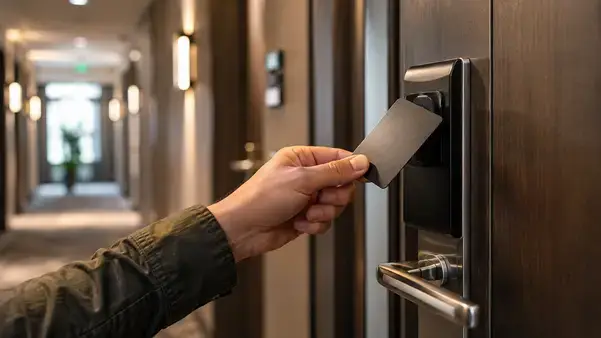
The fix starts with access control. After 10 PM (at minimum), every exterior door should require a key card. I’d go further: require key card access to pools, fitness centers, and business centers around the clock. That expensive treadmill in your gym isn’t going to replace itself. Properties that run events or have on-site restaurants need a guard stationed near those entry points during peak hours. A trained on-site security officer can spot behavioral red flags that a camera never will.
Why Is Property Theft the Most Common Hotel Security Issue?
Theft is the number-one reported incident at lodging properties, but most people picture the wrong scenario. They imagine someone breaking into a guest room. In reality, most theft happens in lobbies, hallways, and common areas.
Guests themselves are often the problem. Some copy their key card before checkout so they can re-enter and grab items without being charged. Five-star hotels actually report more stolen property than four-star ones (higher-end amenities are more tempting to pocket). We’ve seen hotels lose bathrobes, electronics, artwork, and even fixtures.
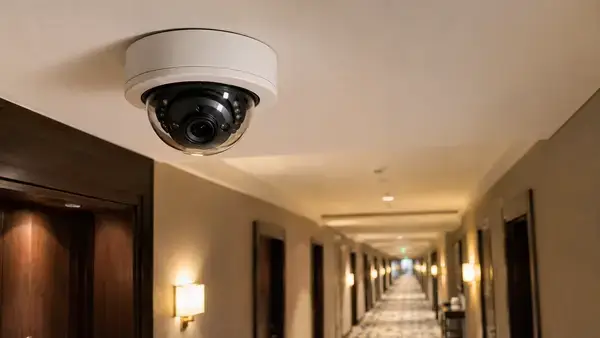
Your housekeeping crew is your first line of defense here. Train them to run a quick room inventory after every checkout. Keep a master list of items in each room and compare it. For common areas, educate guests at check-in about securing personal items around the pool or fitness center. A short reminder during the registration process goes a long way. Properties that pair inventory systems with security camera monitoring catch these incidents faster and build better evidence for claims.
Does Parking Lot Crime Really Hurt Your Bottom Line?
Yes, and it’s worse than most managers realize. Cars sit unattended in hotel lots for days. Thieves know this. According to national crime data, items stolen from inside vehicles account for roughly 85% of all auto-related theft, and vehicles are four times more likely to be targeted in parking lots than anywhere else.
Higher-end properties face an extra problem. Luxury cars in the lot signal to thieves that high-value items (electronics, jewelry, cash) are probably inside. I’ve talked to hotel managers who lost repeat corporate clients after a string of parking lot break-ins. One property in Texas lost three vehicles in a single month before they made changes.
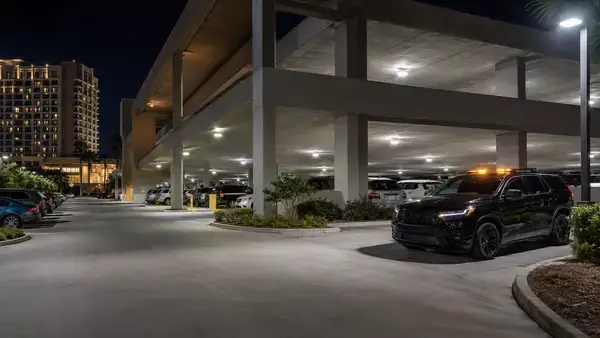
The solution is a combination of lighting, cameras, and human presence. Walk your lot at night and look for dark corners, blind spots between structures, and poorly lit pathways. Fix those first. Then add visible parking lot security patrols during overnight hours. According to BLS data from May 2024, the median wage for security guards nationally sits at $18.46 per hour, with guards in the traveler accommodation sector earning closer to $19.48. The cost of consistent patrol coverage is a fraction of what a single vehicle theft claim will run you in insurance and lost business.

What Should Hotels Do About Disorderly Guests?
Guests on vacation drink more, sleep less, and push boundaries. That’s fine until it starts affecting other guests. Noise complaints, confrontations at the pool, and hallway disturbances are the most common incidents, and they’re the hardest for your front desk team to handle alone.
Your front desk staff isn’t trained for confrontation. They shouldn’t be. When a guest gets aggressive after too many drinks at the hotel bar, you need someone who’s trained in de-escalation and knows the legal limits of what security can do. A dedicated guard assigned to event spaces, pool areas, and bar-adjacent zones during high-traffic hours solves 90% of this problem.
Actually, the bigger issue isn’t the confrontation itself. It’s the ripple effect. One loud guest at 2 AM can generate five bad reviews by morning. Hotels that run dedicated patrols from 10 PM to 4 AM report significantly fewer noise complaints and guest satisfaction scores that trend upward over time. The American Hotel & Lodging Association’s Safe Stay guidelines recommend visible security patrols as a baseline, not a luxury.
Why “Just Add More Guards” Is Bad Advice
This is the part most security articles skip. The industry’s default recommendation is to throw bodies at the problem. More guards, more hours, more visibility. But I’ve seen hotels with three guards on shift who still get hit with theft because none of them had proper training or clear patrol protocols.
The most expensive mistake in hotel security isn’t skipping guards entirely. It’s hiring under-vetted contract guards who don’t integrate with your camera systems, don’t file proper incident reports, and don’t know your property’s layout. A poorly handled guest incident turns into a liability claim that dwarfs whatever you saved by going cheap. Practitioners across the industry are seeing this play out constantly, especially at properties that pick the lowest bidder.
The smarter approach is fewer, better-trained guards paired with technology. A single well-trained officer who monitors your CCTV system and runs structured patrols will outperform three undertrained guards standing in one spot. If your security provider can’t show you their training curriculum, response time benchmarks, and incident reporting process, that’s your sign to look elsewhere. Working with an experienced security team makes the difference between a guard who deters crime and one who watches it happen.
The bottom line on hotel security issues in 2026: you don’t need to spend more. You need to spend smarter. Pair access control with trained guards, light up your parking lots, and stop treating security as an afterthought. The properties that get this right don’t just avoid incidents. They build the kind of guest trust that shows up in reviews, repeat bookings, and revenue.
FAQs
Are hotel security guards typically armed or unarmed?
Most hotels use unarmed security guards for day-to-day operations because armed guards can make leisure guests uncomfortable. Armed guards are more common at high-risk properties, large events, and hotels in areas with elevated crime rates. The choice depends on your property’s risk assessment and local regulations.
What training should hotel security guards have?
Major security industry associations and the AHLA both recommend that hotel security guards receive training in de-escalation, emergency response, active shooter protocols, and guest communication. Guards should also know your property’s layout, camera system, and access control procedures. Low-bid providers often skip specialized training, which increases liability.
Can hotel guests request a security escort?
Yes. Professional hotels should provide security escorts upon request, especially for guests walking to parking structures late at night. Guests can also request incident reports for any security event that affects them. If your hotel doesn’t offer this, it’s a gap worth fixing.
Is in-house hotel security better than contracted guards?
Both have trade-offs. In-house teams offer consistency and better property knowledge, but they require more management overhead (benefits, training, HR). Contracted guards provide flexibility and often carry their own liability insurance. According to BLS data, roughly 31,280 security guards work in the traveler accommodation sector, split between in-house and contract roles.
What are the biggest hotel security issues in 2026?
The four most reported hotel security issues are trespassing and unauthorized access, theft from rooms and common areas, parking lot vehicle crime, and disorderly guest conduct. Cybersecurity is an emerging fifth threat, with a 2025 hospitality cybersecurity report finding that 82% of North American hotels experienced cyberattacks in 2024.
How do hotels handle insider theft by staff?
Hotels reduce insider theft through thorough background checks during hiring, CCTV coverage in storage and back-of-house areas, and strict access controls for master keys. The AHLA’s Safe Stay program includes guidelines on employee vetting. Properties with regular security audits catch internal theft faster than those that rely on guest complaints alone.


