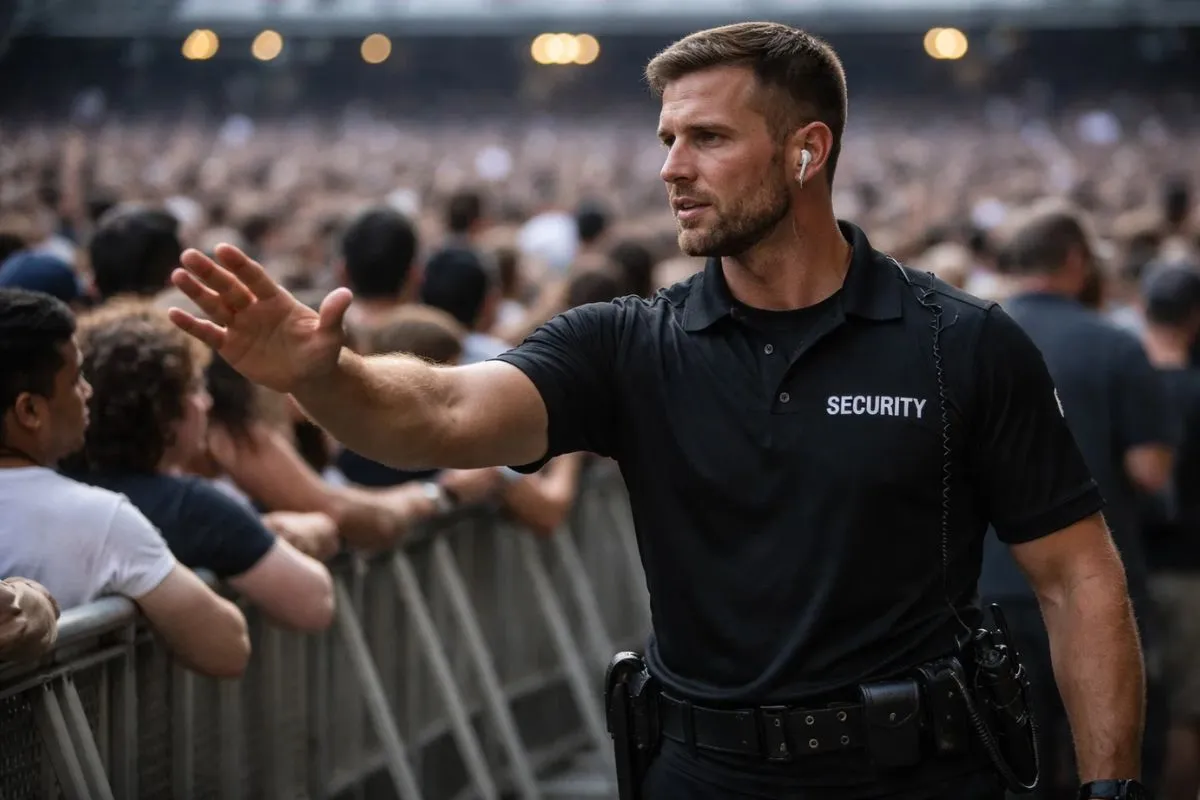
Unarmed security guards manage crowd control at events through pre-event risk planning, strategic positioning, real-time crowd monitoring, and trained de-escalation. They don’t carry weapons. They carry training, communication tools, and a plan that keeps thousands of people moving safely.
If you’re hiring for a festival, corporate gathering, or concert in the Houston area, unarmed guards are almost always the right starting point. Agency rates for event-trained unarmed officers run $32–$35 per hour nationally (Thumbtack, October 2025), with higher rates in major metros. Most event organizers don’t need armed personnel. They need guards who know how to read a crowd before it turns.
This article won’t cover armed security or executive protection. It’s focused on what unarmed guards actually do during events, and what separates a well-run security plan from one that falls apart at the gate.
What Does Pre-Event Planning Look Like for Unarmed Crowd Control?
Good crowd control starts 90 to 120 days before anyone shows up. That’s not a suggestion. Shannon Torres, a former police chief and current customer success manager at 911inform, told ASIS International’s Security Management Magazine that risk assessments should begin at least three months out and be treated as a living document, updated as ticket sales, weather forecasts, and intelligence change.
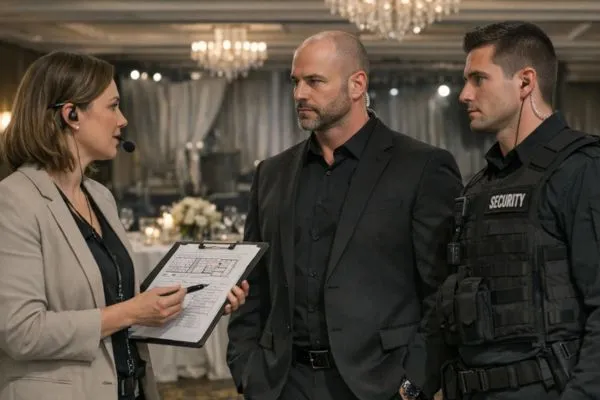
Your guards need a full venue layout. Entrances, exits, emergency routes, bottleneck zones, VIP sections, restrooms, concession areas. All of it mapped. They also need to know the crowd profile. A 2,000-person charity gala is a different animal from a 10,000-seat outdoor concert with general admission.
Here’s something most event planners skip: getting the security team involved in the communication chain early. Security Guards should have two-way radios or a shared mobile app synced with event organizers before the first attendee walks in. If your security provider can’t explain their comms protocol, that’s a red flag.
How Do Unarmed Guards Direct Crowd Flow at Events?
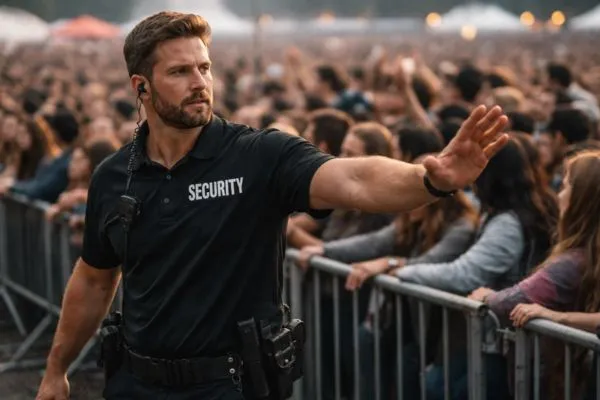
Access control is the first job. Guards stationed at entry points verify tickets, check bags for prohibited items, and control the pace of people flowing in and out. That pace matters. A bottleneck at a single entrance can cascade into a safety issue in minutes.
Physical barriers, stanchions, ropes, and clear signage do part of the work. But barriers without human oversight are almost useless. A December 2025 UN Operational Guide on Crowd Management found that physical flow-control measures need constant human monitoring because crowds will find and exploit gaps in real time.
Guards give calm, firm, specific directions. Not “move along.” More like “exit to your left past the blue tent.” Specificity matters when people are packed shoulder to shoulder.
What Warning Signs Do Guards Watch For?
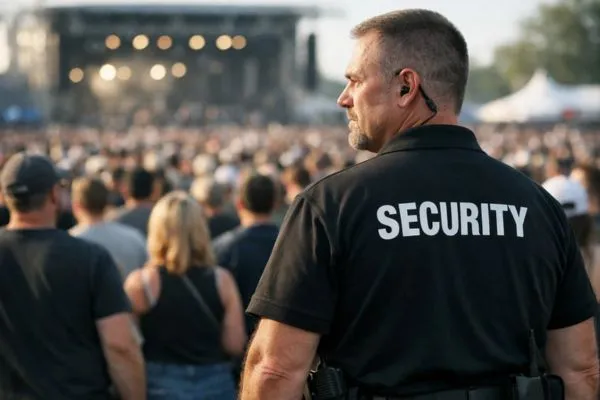
This is where training separates a professional from someone filling a uniform. Unarmed security guards monitor crowd behavior in real time, scanning for agitation, overcrowding, individuals who are visibly impaired, or pockets of the crowd compressing toward a stage or barrier.
The security industry turns over roughly 27% of its officers every year (BLS industry reports). That kind of churn means the skill level of the guards you hire can vary wildly. Ask your provider whether their event officers have specific crowd-flow and de-escalation training beyond the standard 8-hour guard card.
AI-driven crowd density monitoring is becoming more common at large-scale events, and guards working with that tech can spot dangerous compression patterns before they become visible to the human eye.
How Do Unarmed Guards De-Escalate Without Force?
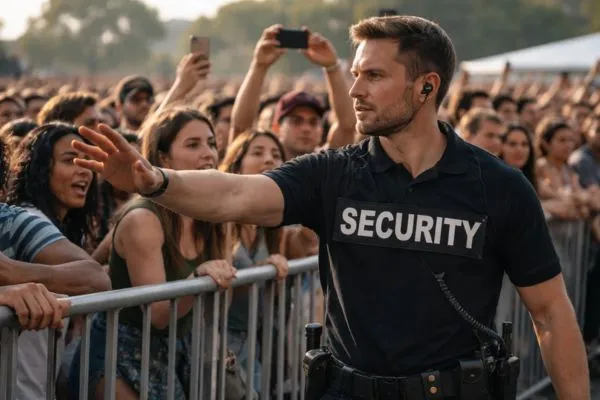
Here’s a contrarian take: “visible presence prevents incidents” is one of the most repeated lines in the security industry, and it’s mostly wrong in crowd settings. Presence alone doesn’t stop a fight or calm someone who’s been waiting in the sun for four hours. What actually works is verbal de-escalation backed by training.
A security guard’s first move is to listen. That sounds soft, but acknowledging someone’s frustration before it hits a boiling point stops a surprising number of confrontations. After listening, they use clear, respectful communication to redirect the individual. If the situation doesn’t cool down, they create physical separation between the person and the crowd (not with force, with positioning) and radio for backup.
The UN’s 2025 crowd management guide makes this point bluntly: heavy-handed or indiscriminate actions turn the crowd against security. Respecting people’s right to be there and treating them like adults actually makes self-policing within the crowd more likely.
Emergency Response: What Happens When Things Go Wrong?
Your unarmed guards should already know the emergency response plan cold before the event starts. If they don’t, you have the wrong provider.
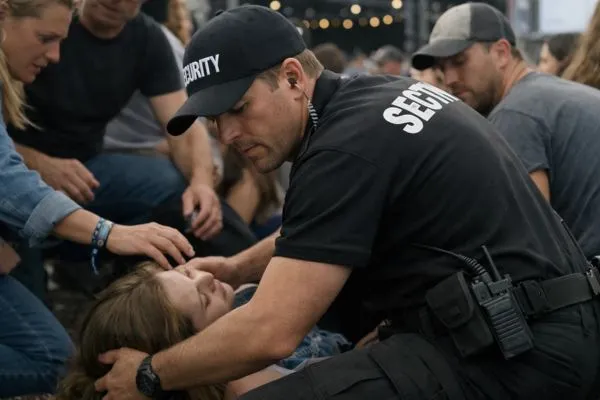
When an incident hits, guards operate on a tiered system. Minor medical issues (Tier 3) get handled on-site. More serious situations (Tier 1 or 2) get escalated through a command center to 911, EMS, or law enforcement. Guards serve as the link between emergency responders and the crowd. They clear pathways, direct people to exits, and prevent a manageable incident from turning chaotic.
One thing to ask your security company that almost nobody asks: “What is your tiered incident response protocol, and what does your liability insurance cover for crowd-related claims?” If you get a vague answer, keep looking. And if you’re not sure where to start with event security planning, working with a team that understands your industry can save you from expensive mistakes down the line.
Unarmed security guards don’t stop problems with force. They stop problems with preparation, positioning, and people skills. For most Houston-area events, that’s not just enough. It’s better.
FAQs
How far in advance should you plan crowd controls with unarmed security guards?
Start at least 90 to 120 days before the event. Risk assessments should be living documents that get updated as ticket sales, weather, and venue conditions change. A July 2025 ASIS International article featuring former police chief Shannon Torres confirmed this timeline as the industry standard for outdoor events.
How much do unarmed security guards cost for event crowd control?
Nationally, event-trained unarmed guards run $32–$35 per hour at the officer level, while full agency rates average $45–$60 per hour (Thumbtack, October 2025). Coastal metros like the Bay Area can push unarmed rates to $30–$45 per hour due to stricter licensing. Budget-tier “presence only” guards start around $15–$20 per hour but come with less specialized training.
Can unarmed security guards actually stop fights or crowd surges?
Not with physical force, and they shouldn’t try. Unarmed guards stop problems through verbal de-escalation, strategic positioning, and early intervention. The UN’s December 2025 crowd management guide found that aggressive or heavy-handed responses from security tend to turn the crowd hostile and make situations worse.
How many unarmed guards do you need per attendee at an event?
A common starting ratio is 1 guard per 50 to 100 attendees, depending on the risk level. Events with alcohol, general admission seating, or genres prone to moshing need ratios closer to 1:50. Lower-risk corporate events can stretch toward 1:100.
What training should unarmed event security guards have beyond a guard card?
Ask about crowd-flow management, verbal de-escalation, tiered incident response protocols, and genre-specific risk awareness. The basic 8-hour guard card most states require doesn’t cover event-specific crowd dynamics. Some states require additional elective hours in crowd control, but requirements vary.
Do unarmed guards use technology for crowd control?
Yes, and it’s changing fast. AI-driven crowd density monitoring, computer vision for anomaly detection, RFID tracking, and even digital-twin venue simulations are gaining adoption at larger events. But technology without trained human oversight is just expensive data nobody acts on.
Are unarmed guards enough, or do you need armed security at events?
For standard crowd control, unarmed guards are the better choice. They cost less, carry lower escalation risk, and create a less confrontational atmosphere. Armed security makes sense for high-threat situations or VIP protection, but most festivals, corporate events, and community gatherings are better served by well-trained unarmed officers.


