The 5 C’s of a security guard are communication, vigilance, confidence, courage, and compassion. Most lists online stop there. Here is the part nobody says out loud: only four of those actually start with C. Vigilance does not. The “5 C’s” is a memory hook, not a law of physics, and a guard who nails the acronym but freezes during a real incident is worthless to you.
So treat this as a working checklist for what separates a good security guard from a warm body in a uniform. We staff posts across Houston every week, and the traits below are the ones that decide whether an incident gets prevented or just written up afterward.
Quick definition you can lift: the 5 C’s of a security guard are communication, vigilance, confidence, courage, and compassion. Communication prevents most conflicts before they escalate. Vigilance catches threats early. Confidence projects authority without aggression. Courage means acting under pressure and knowing when not to. Compassion keeps public-facing encounters calm. Training and retention turn those traits into reliable behavior.
This is not a guide to passing the Texas Level II exam or building a career. It is about the qualities a business should expect when it pays for protection, and why the cheapest guard usually costs the most.
Communication
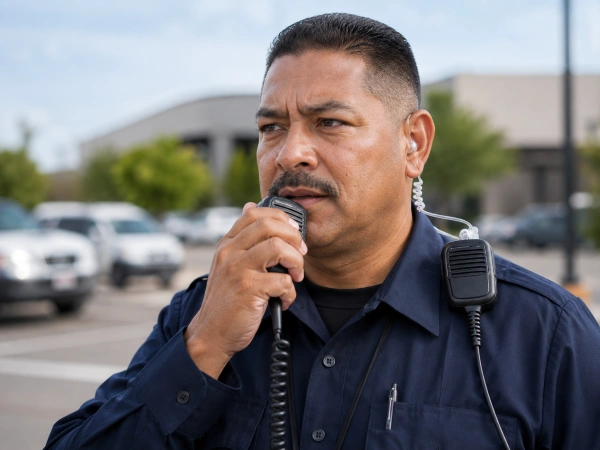
Communication is a security guard’s most-used tool, and it prevents more incidents than any weapon. A guard who can calm a heated customer, give a clear radio update, and write a report that holds up later is doing the actual job. Most posts are talking, not tackling.
Labor researchers at UC Berkeley found that guards now routinely handle the kind of de-escalation and crisis response that used to fall to police, often without matching pay or training. The work shifted. The job titles did not.
Good communication runs in three directions: the team, the client, and the public. On the team side it is radio discipline and clean shift handoffs. With the client it is a report you can actually read. With the public it is tone, body language, and knowing how to ask someone to leave without turning it into a fight. The radios and gear matter less than the person holding them, though the right equipment still helps.
Here is my contrarian take after years of staffing posts. A guard who talks well and looks unremarkable will out-perform a former linebacker who escalates everything. Hire for the mouth, not the muscles.
Vigilance, the one that isn’t a C
Vigilance is staying alert enough to catch a problem while it is still small. We are keeping it on the list even though it breaks the alliteration, because dropping it would be dishonest. It is arguably the most important trait here.
The data backs this up in a brutal way. One airport-screening study cited in workforce research showed detection rates fell about 0.62% for every percentage point that staff turnover rose. Translation: tired, rotating, brand-new guards miss things. Steady guards who know your site catch them.
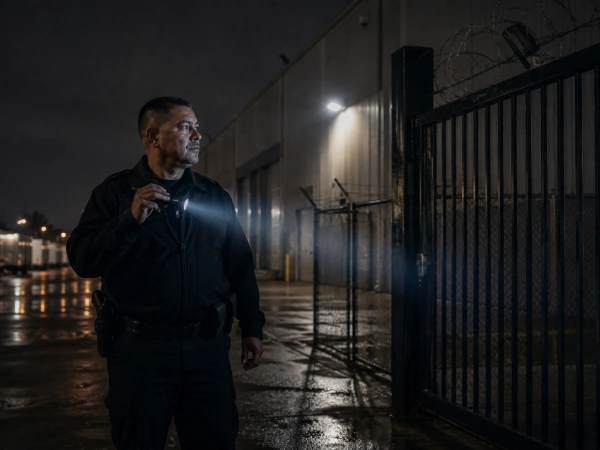
Vigilance is not standing still and staring. It is working a smart patrol routes pattern, varying your timing so it cannot be predicted, and noticing what is different tonight versus last night. On a Houston warehouse perimeter at 3 a.m., the guard who clocks one gate chained slightly differently is the one actually doing the job.
Confidence
Confidence is a security guard acting decisively without tipping into aggression. Clients say they want a confident guard. Actually, that framing is not quite right. What they want is trained composure: someone who stays calm, gives clear instructions, and does not escalate a situation just to prove they are in charge.
Real confidence comes from reps and training, not personality. A Texas Level II officer who has rehearsed access control and incident response carries themselves differently than someone improvising. That is why how a company trains and screens its officers, which lines up with industry training standards set by groups like ASIS International, tells you more than any confident demeanor on a sales call.
Courage, and knowing when not to act
Courage is acting when a situation turns risky, and it is just as much about restraint as bravado. The guards who get their employers sued are usually the ones with too much courage and too little judgment. A private security guard is not a police officer. Their legal authority is limited, and a wrongful detention or an overreaction can turn into a lawsuit fast.
Citizen’s arrest and use of force exist in narrow circumstances, and a well-trained officer knows when not to use them. Courage without that knowledge is a liability, not an asset.
Compassion
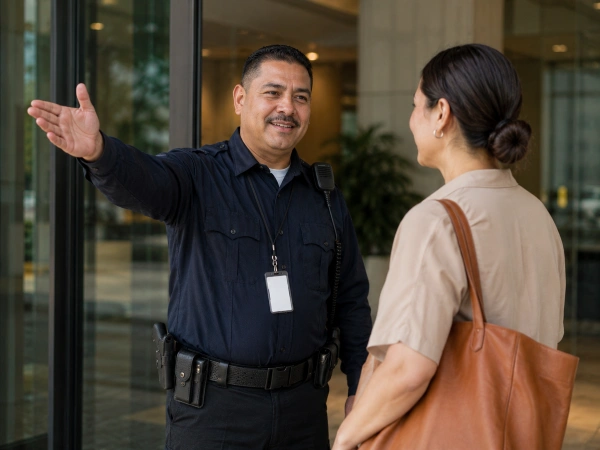
Compassion is the most underrated trait on this list. Guards deal with people having bad days: a stressed tenant, a lost visitor, someone in a mental health crisis. Empathy de-escalates faster than authority does. A guard who treats people like humans gets cooperation. One who treats everyone like a suspect creates the very conflict they are there to prevent.
This is where the public-facing reality of modern guarding shows up. The role looks more like customer service with a safety mandate than the bouncer image people still carry around.
How does Reliable Guard & Patrol build the 5 C’s into every officer?
Traits are nice. A hiring standard is better. At Reliable Guard & Patrol, no officer works a post until they clear a six-point check: an active Texas DPS license, a criminal background screening, drug testing, an in-person interview, verified references, and recurring training.
We have been licensed in Texas since 2018 and run about 150 officers across Houston, with GPS-documented patrols so a client can see the rounds actually happened. That last part matters more than any trait list. The deepest tell of a good security guard is whether the company behind them invests in training and keeps officers long enough to learn your site.
You do not have to take a vendor’s word for it either. You can confirm any Houston company’s license in about two minutes through the state’s public portal run by the Texas Department of Public Safety. Our company license is public, and for armed posts you can verify an officer’s Level III commission before they ever set foot on your property.
Armed vs. unarmed in Houston (does the badge change the 5 C’s?)
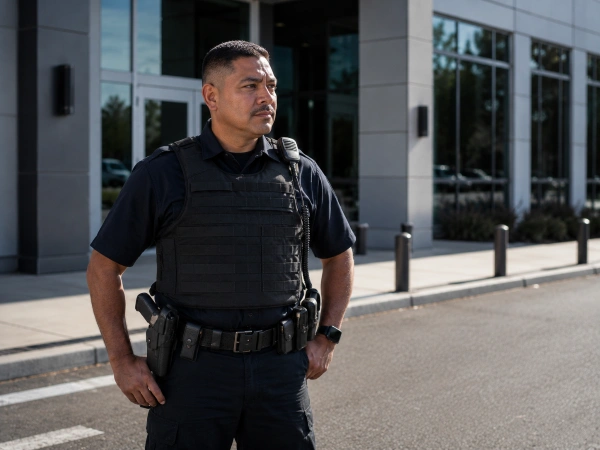
The five traits apply to every officer. What changes between armed and unarmed officers is training depth and liability exposure. Under the Texas Private Security Act, an unarmed Level II officer completes a state training course and test. An armed Level III officer completes a minimum of 45 hours of training plus firearm proficiency, with requalification every two years.
| Unarmed (Level II) | Armed (Level III) | |
|---|---|---|
| Training in Texas | State training course plus a written test. | Minimum 45 hours plus firearm proficiency. Requalify every two years. |
| Best fit | Access control, patrols, retail, observe and report. | Cash handling, high-value assets, sites with a violence history. |
| Use-of-force exposure | Lower. | Higher. Stricter insurance and a written use-of-force policy needed. |
The right call comes from a real risk assessment, not a price list. Most standard commercial posts do fine unarmed. Armed makes sense when the threat or the assets justify it.
Why do the 5 C’s matter when you hire a security guard?
Because the wrong guard is expensive in ways that do not show up on the invoice. The US security industry hit about $50.4 billion in 2026, per IBISWorld, and a lot of that spend is wasted on the lowest bid.
The overlooked math is simple. Federal labor data puts the median security guard wage near $38,370 a year, with about 162,300 openings every year, almost all from turnover rather than growth. In one high-density market, guard turnover hit 77% in 2024. A post with 77% annual churn is a post staffed by people who do not know your building. That is how the cheap option becomes the expensive one: more incidents, more liability, more rehiring.
One piece of outdated advice should be retired. “Just be visible and call the police” underplays what guards actually do now. And the AI-camera pitch that software can replace guards? It cannot. Cameras flag movement, they do not make a judgment call on a false alarm at 2 a.m. Hybrid setups raise the value of a sharp human, they do not remove it.
Forget the tidy acronym for a second. The single best predictor of a good security guard is not whether they check five boxes that mostly start with C. It is whether the company behind them trains hard, screens honestly, and keeps officers long enough to know your site. Get that right and the five C’s take care of themselves. Get it wrong and no checklist will save you.
FAQs
What are the 5 C’s of a security guard?
The 5 C’s are communication, vigilance, confidence, courage, and compassion. Only four actually start with C, but vigilance earns its spot because it may be the most important of the group. Together they describe a security guard who prevents problems instead of just reporting them.
Can a security guard arrest you in Texas?
A security guard has no police arrest powers. In narrow situations a guard can make a citizen’s arrest, such as a felony committed in their presence, but the legal risk is high and a wrongful detention can lead to a lawsuit. Good training focuses as much on when not to act as when to act.
What is the difference between an armed and unarmed security guard?
An unarmed guard in Texas holds a Level II registration and completes a state training course and test. An armed guard holds a Level III commission, which requires a minimum of 45 hours of training plus firearm proficiency and requalification every two years. Armed officers carry higher use-of-force liability and stricter insurance requirements, so they fit cash-handling and high-risk sites rather than standard posts.
Why is turnover so high among security guards?
Low pay relative to the risks, irregular scheduling, and demanding conditions drive heavy churn, and one high-density market reported 77% annual turnover in 2024. High turnover hurts safety because posts end up staffed by people who do not know the site. It is a major reason retention matters more than any single personality trait.
Do AI cameras replace the need for a security guard?
No. Cameras and AI monitoring flag movement and send alerts, but they cannot judge a false alarm, calm a tense person, or decide how to respond to an ambiguous situation. Hybrid systems actually raise the value of a guard who can interpret what the technology reports.
How do I verify that a Houston security company is licensed?
Use the Texas Online Private Security portal run by the Texas Department of Public Safety, then search by company name or license number and confirm the license is active. For armed posts, you can also confirm an officer holds a current Level III commission. The whole check takes about two minutes and protects you from a real insurance and liability problem.


