US retailers lost roughly $45 billion to shoplifting in 2024 alone, according to data compiled by the National Retail Federation. A big chunk of that hit malls. And if you’ve spent any time in a Houston shopping center recently, you’ve probably noticed more uniformed guards than you did five years ago. There’s a reason for that.
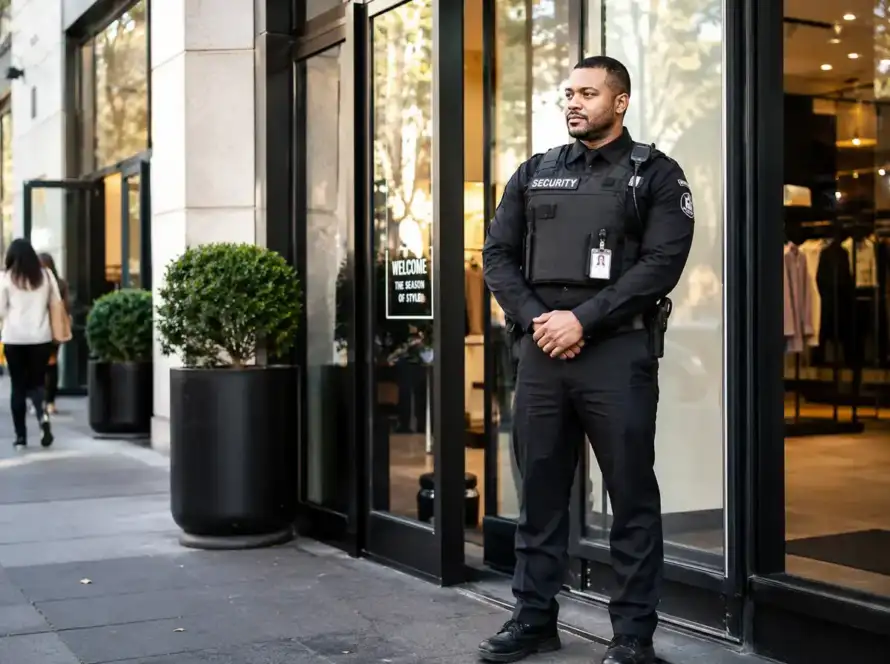
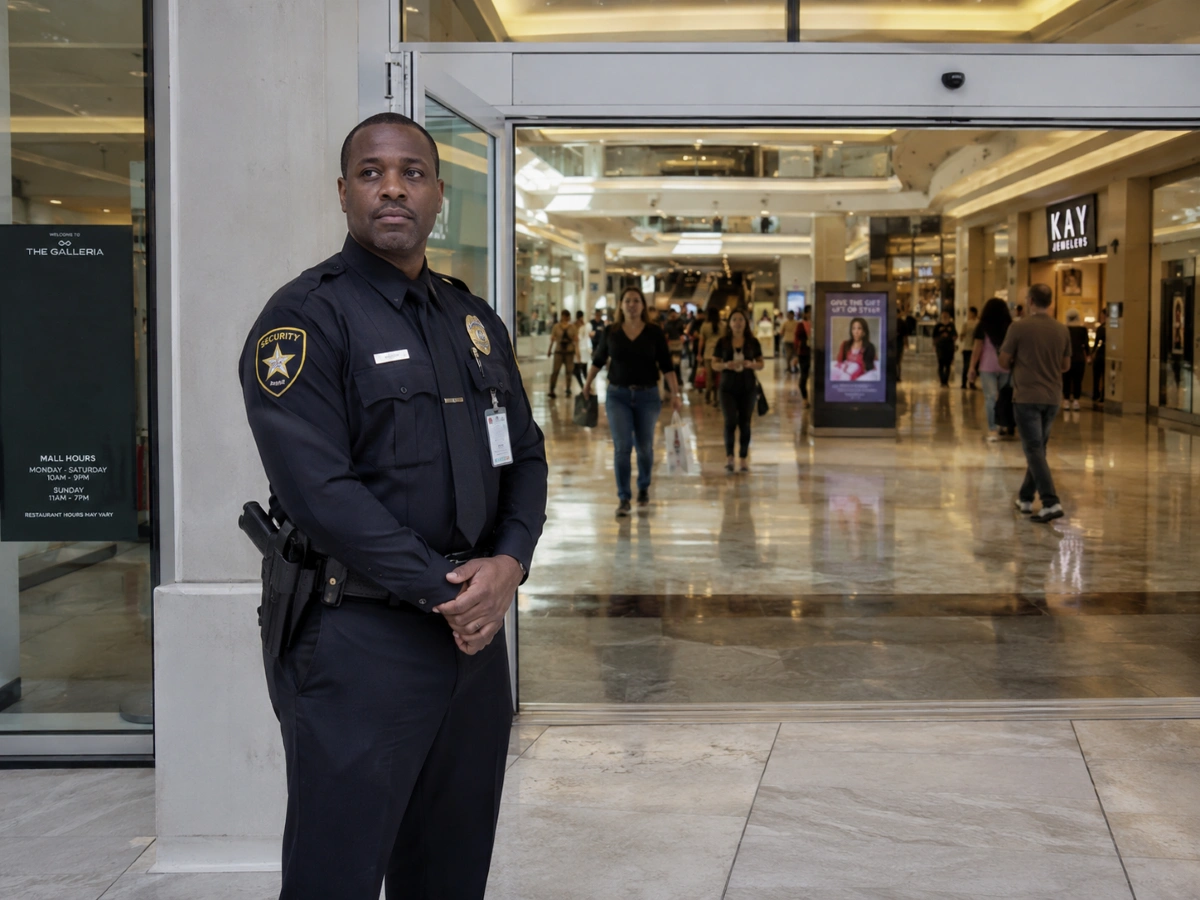
Mall security guards are trained professionals who patrol shopping centers, respond to emergencies, deter theft, assist lost shoppers and children, and coordinate with local police when incidents escalate beyond their authority. In Houston, where malls like Memorial City and The Galleria draw tens of thousands of visitors weekly, that presence isn’t optional.
This article covers five specific ways mall security guards protect people and property. It won’t cover residential security, camera-only systems, or cybersecurity topics.
How Do Mall Security Guards Handle Lost and Found Items?
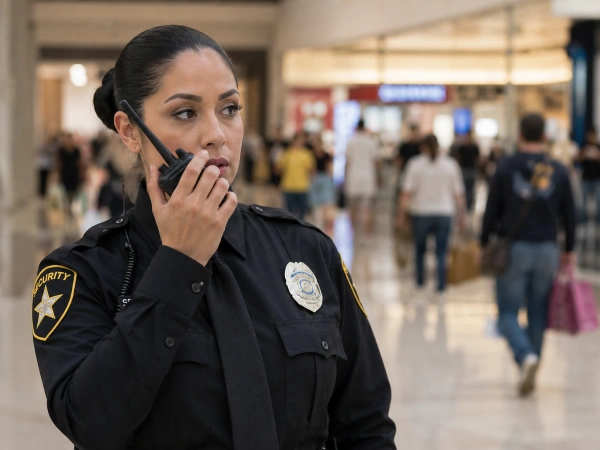
Most shoppers don’t think about lost-and-found services until they’ve left a phone on a food court table. Mall security guards in Houston manage centralized databases where shopping center guards log every item turned in during a shift. If you report a missing bag, wallet, or device, the guard on duty cross-references it against what’s already been collected.
I’ve seen malls with 30+ items logged in a single weekend. The recovery rate is surprisingly high when the system is run by a trained team rather than individual store employees passing things around.
Guards also document items with timestamps and descriptions, which matters if a theft dispute arises later. That paper trail protects the mall and the shopper.
What Happens When a Child Gets Lost at the Mall?
This is the call every guard takes seriously. In a mall with 150+ stores and multiple levels, a separated child can be anywhere within minutes. Houston’s shopping center security teams follow lockdown-style protocols. Doors get monitored. PA announcements go out. Staff at every anchor store get descriptions by radio.
Most reunifications happen within 10–15 minutes. But here’s what parents miss: the guard’s job starts before anyone gets lost. Trained security staff watch for children wandering alone, especially near exits and parking garage entrances. That’s proactive work you’ll never see on a camera feed.
If you’re a mall operator in the Houston area, ask your security provider how they train for child separation specifically. Generic “observe and report” training doesn’t cut it for this.
Do Mall Security Guards Actually Prevent Theft?
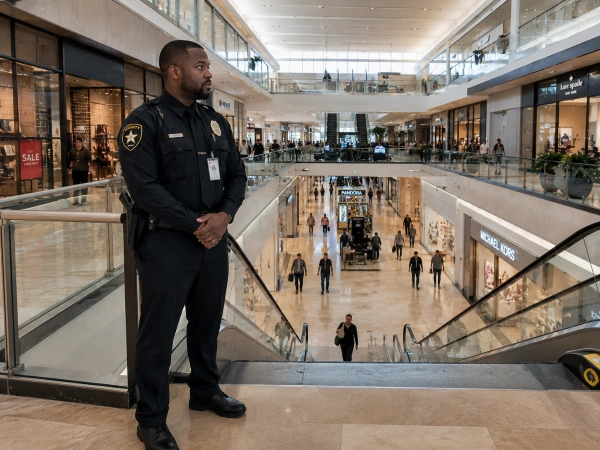
Yes, but not the way most people think. Mall security guards don’t chase shoplifters through parking lots (despite what you’ve seen on YouTube). Their role is deterrence and documentation, not apprehension.
NRF’s 2025 report found an 18–19% jump in shoplifting incidents in 2024 compared to 2023, plus a 17% rise in threats and violence during theft events. That second number is why visible guard presence matters more than ever. Shoplifters increasingly test boundaries, and an empty hallway gives them permission.
Here’s the contrarian take most security companies won’t tell you: the cheapest guard contract is often the most expensive mistake. Budget providers with $16/hour guards, minimal training, and 50%+ annual turnover (the national average, per the Center for American Progress) create a false sense of safety. You’re paying for a uniform, not protection. The right provider matches trained guards to your specific risk profile.
Why Is a Security Directory Useful for Shoppers?
Mall security offices are the most underused resource in any shopping center. Beyond answering “where’s the nearest restroom,” guards provide emergency exit locations, store directories, ADA assistance, and parking guidance.
In Houston malls, security desks also serve as coordination points during weather emergencies (this is Texas, after all). When a severe thunderstorm warning hits, security teams manage garage access, communicate with store managers, and direct foot traffic away from glass-heavy atriums. The BLS reports that over 1.27 million security guards work across the US as of 2024, and a growing share of those positions now include customer-service training alongside traditional patrol duties.
How Should Malls Prepare for Active Shooter Scenarios?
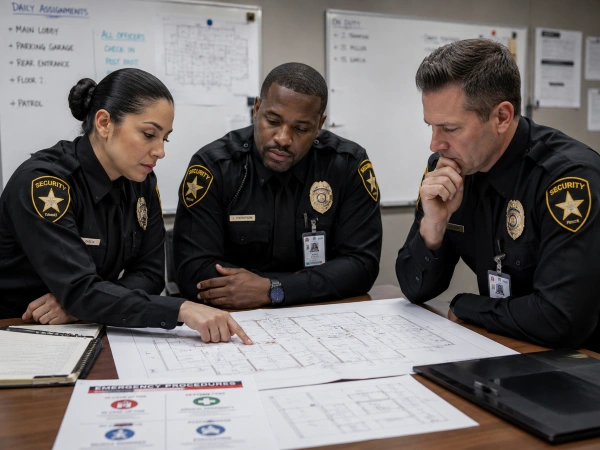
Nobody wants to talk about this, but ignoring it is reckless. Mall security guards in Houston run active threat drills that include evacuation routes, shelter-in-place procedures, and coordination with Houston PD.
A good security team doesn’t just hand out pamphlets. They walk every employee through specific scenarios: “If you’re in the stockroom and hear shots from the food court, what’s your nearest exit? Where’s the lock? Who do you call first?” That kind of specificity saves lives.
ASIS International and the Security Industry Association emphasized in their joint 2024 market report that hybrid human-tech security models are becoming the standard for retail environments. Cameras record. Guards act.
If you’re managing a Houston-area property and haven’t updated your active threat plan since 2023, you’re behind.
FAQs
What should I do if my child gets lost in a Houston mall?
Tell the nearest store employee or mall security guard right away. Guards activate radio-based search protocols and can monitor exits within minutes. Most families are reunited in 10–15 minutes when security is notified quickly.
Can mall security guards arrest someone for shoplifting?
No. Mall security guards are private citizens with limited legal authority. In Texas, they can observe, report, and in some cases temporarily detain a suspect until police arrive. Their primary job is de-escalation and documentation, not physical enforcement.
Will mall security walk me to my car at night?
Yes. Most Houston mall security teams offer parking escort services on request, especially after dark or in parking garages. Don’t hesitate to ask at the security desk if you feel uncomfortable walking alone.
How much does it cost to hire mall security guards in Houston?
Unarmed guards in the Houston area typically run $16–$25 per hour through a contracted security provider. Armed guards cost $25–$70+ per hour depending on training requirements and threat level. These rates reflect Southeast regional pricing from 2024–2025 BLS and contractor data.
Do mall security guards handle medical emergencies?
Most are trained in basic first aid and CPR. They stabilize the situation, call EMS, and secure the area until paramedics arrive. Their response is often faster than waiting for external help because they’re already on-site.
Are mall security guards armed or unarmed?
It depends on the mall, the location’s risk profile, and state licensing requirements. Most Houston malls use unarmed guards for standard patrols. Higher-risk properties or those with a history of violent incidents may deploy armed officers at $50+ per hour.
How do mall security guards coordinate with Houston police?
Guards serve as the first point of contact and gather incident details before police arrive. They provide descriptions, timestamps, and surveillance footage access. Well-trained teams also run joint active-threat drills with local law enforcement annually.