A retail store opening and closing checklist is the list of security steps your staff finish, in order, before the doors open and after they lock. At opening, check the outside before anyone goes in, and open with 2 people when you can. At closing, count cash out of sight, clear every room, set the alarm and leave together.
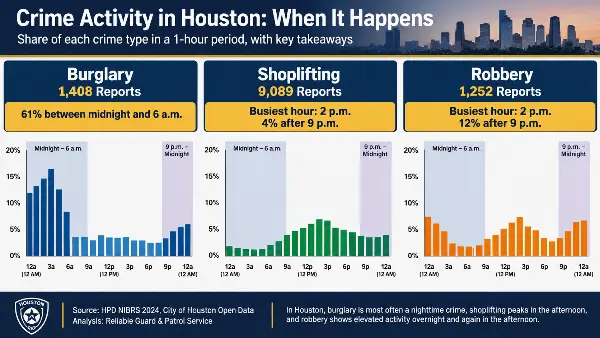
The order matters because each part of the day has its own crime. In Houston police records for 2024, 61% of burglaries at Houston stores happened between midnight and 6 a.m., when most stores are closed. Shoplifting and robbery both peaked at 2 p.m., and robbery stayed high until about 8 p.m. After 9 p.m., both fell off, and that changes what each list is for.
What is a retail store opening and closing checklist?
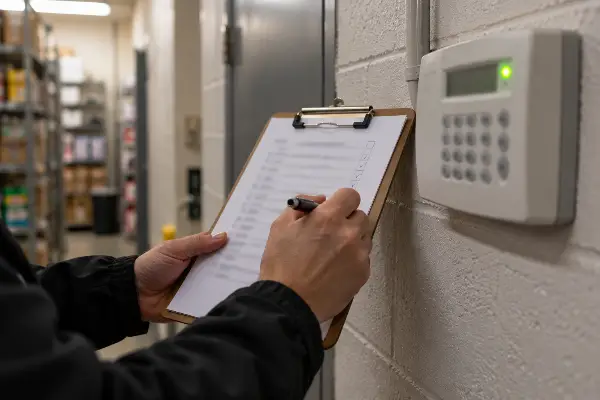
A retail store opening and closing checklist is a written, step-by-step routine for the first and last hour of the business day. It covers the outside check, the alarm, the doors, the cash, a walk-through of every room and how staff leave. Each step has an owner, a time and a sign-off, so nothing depends on memory at 10 p.m.
Housekeeping, like restocking and the thermostat, can live on a separate list. The 18 security steps below are the ones nobody should skip.
When are Houston stores most at risk?
It depends on the crime, and on when your store closes. In Houston Police Department records for 2024, shoplifting and robbery at Houston stores both peaked at 2 p.m., and robbery stayed high until about 8 p.m. Burglary peaked at 3 a.m. and 4 a.m., when most stores are closed.
We pulled the incident data HPD publishes and kept 4 of its store categories: convenience, department and discount, liquor, and specialty stores. Grocery stores, drugstores, malls and gas stations sit in other categories and aren’t counted here. Then we sorted every report by the hour it happened.
| Time of day | Shoplifting | Robbery | Burglary |
|---|---|---|---|
| Midnight to 3 a.m. | 2% | 5% | 24% |
| 3 a.m. to 6 a.m. | 1% | 4% | 37% |
| 6 a.m. to 9 a.m. | 7% | 5% | 8% |
| 9 a.m. to noon | 20% | 14% | 5% |
| Noon to 3 p.m. | 24% | 20% | 3% |
| 3 p.m. to 6 p.m. | 24% | 19% | 4% |
| 6 p.m. to 9 p.m. | 18% | 21% | 8% |
| 9 p.m. to midnight | 4% | 12% | 11% |
| Busiest hour | 2 p.m. | 2 p.m. | 3 a.m. and 4 a.m. |
| Reports in 2024 | 9,089 | 1,252 | 1,408 |
Source: our count of Houston Police Department NIBRS records for 2024, from the City of Houston’s open data copy (HPD NIBRS Yearly Cases). 4 store categories only. Percentages are rounded.
The 2023 records show the same shape. That year, 61% of store burglaries fell between midnight and 6 a.m., and 14% of store robberies came between 9 p.m. and midnight.
Read these numbers with 2 cautions. They’re counts, not rates, and the records don’t show which stores were open at each hour, since some convenience stores never close. And burglary times are often estimates, because nobody saw it happen.
So each list has its own job. The opening list protects the person most likely to walk into an overnight break-in. The closing list protects cash and people in the hour with the fewest staff around. If your store closes at 7 or 8 p.m., that hour sits in the busiest robbery window in this data. Treat the count and the walk-out as the riskiest steps of your day. Daytime theft needs its own plan, like these shoplifting prevention basics.
Retailers are seeing less theft, but not less risk to people. In the National Retail Federation’s 2026 survey, retailers reported shoplifting incidents fell 12.4% in 2025. Its 2025 survey had found threats or acts of violence during shoplifting or theft up 17% in 2024. That shift is changing a retail guard’s job on the sales floor, and it’s why the closing steps below put people first.
Opening checklist: 8 security steps before the doors open
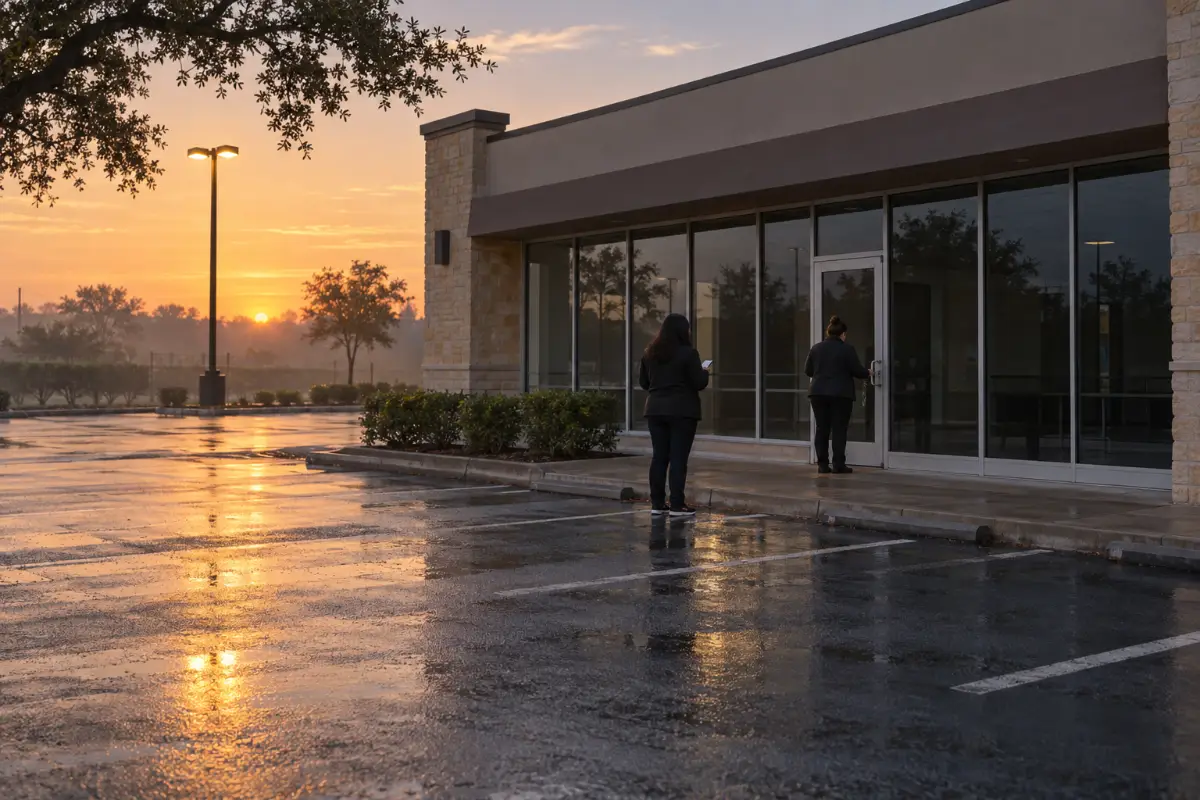
Open in this order: outside check, 2-person entry, alarm, a full walk-through, then cash and the front door. The order exists so nobody opens a door before they know what’s behind it.
| # | Step | Why it matters |
|---|---|---|
| 1 | Drive past before you park. Look for broken glass, pried doors, damaged locks and anyone waiting nearby. | Overnight break-ins are often found by the opener. |
| 2 | If anything looks wrong, don’t go in. Leave, call 911 and wait for police. | Someone may still be inside. |
| 3 | Open with 2 people. 1 goes in, 1 waits outside with a phone. | If something goes wrong, someone outside can call for help. |
| 4 | Lock the door behind you and turn off the alarm. | A door left open behind you lets anyone follow you in. |
| 5 | Walk every room: restrooms, stockroom, office and back door. | It confirms nobody stayed inside overnight. |
| 6 | Check that every camera is recording and the alarm panel shows no faults. | A dead camera can’t be fixed after an incident. |
| 7 | Count the starting cash in the back office with the door shut. | A count done near a window shows people where the money is. |
| 8 | Read the closing shift’s notes. Keep the front door locked until opening time. | OSHA’s guide says doors stay locked before and after business hours. |
If you see signs of a break-in
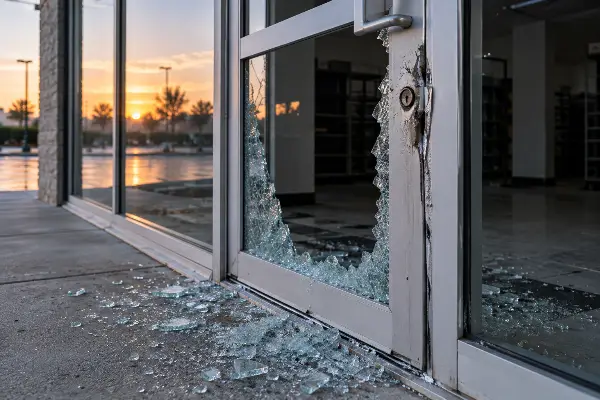
Don’t go in to check. Get back in the car or go somewhere safe, call 911 and wait for police to clear the building. Don’t touch the door or the alarm panel. Then call your manager and your alarm company. If break-ins keep coming back, run an after-hours risk assessment.
Should anyone open a store alone?
Not if you can avoid it. OSHA’s late-night retail guide, which is advisory, recommends a buddy system and, when possible, more staff at stores with a robbery history or in high-crime areas. It doesn’t set a number, so the 2-person rule is a policy you choose. If 1 person has to open, keep them on the phone with a manager until the walk-through is done, or schedule a security officer for that hour.
Duress codes
Ask your alarm company to set up a duress code. It’s a separate code that turns the alarm off like the normal one. It also silently tells the monitoring center that the person entering it is in trouble. Everyone who opens or closes should know it, and nobody should write it on the panel.
Closing checklist: 10 steps from last call to lock-up
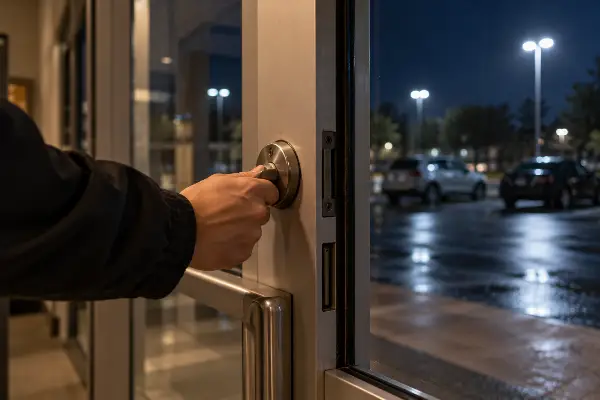
Close in this order: clear the store, lock up, count, secure the cash, set the alarm and leave together. Done in that order, nobody counts cash or walks out alone.
| # | Step | Why it matters |
|---|---|---|
| 1 | 15 minutes before close, announce it and bring in outside displays. | Shoppers get time to finish, and the clear-out starts early. |
| 2 | At closing time, lock the front door. Let people out, but don’t let anyone new in. | Every reopened door is a new risk. |
| 3 | Check every place a person could wait: restrooms, fitting rooms, stockroom and office. | Someone hiding at close is inside after the alarm is set. |
| 4 | Lock the back and side doors. Don’t take trash out alone after dark. | OSHA’s guide says delivery and garbage doors stay locked when not in use. |
| 5 | Count cash in the back office with the door locked, away from windows. | The count is the only time all the cash is together. |
| 6 | Lock the deposit in the safe and log who sealed it. | You get a clear record if anything goes missing. |
| 7 | Shut down the registers and lock the office. | Cash, keys and customer data stay out of reach. |
| 8 | Walk the store a final time and sign the checklist with the time. | A signed, timed sheet is a record if anything happens. |
| 9 | Set the alarm and wait for the confirmation. | An alarm that didn’t arm protects nothing. |
| 10 | Leave together and walk to the cars together. Look over the lot first. | OSHA recommends escorts to parking areas in the evening. |
Where should the cash count happen?
In a back office with the door locked, out of sight of windows and the front door. Keep the registers light all evening, too. OSHA’s guide recommends drop safes and keeping cash as low as practical, and its sample checklist asks whether the register holds less than $50. Less cash in the drawers means a shorter count at close. If a robbery happens, hand the money over. OSHA’s guide says to train workers to give up money or valuables without resistance.
The deposit
Don’t carry the deposit out at the same time, by the same route, every night. If the amount is large, an armored car pickup takes the bag off your staff. Keep deposit days and short-staffed nights off social media, too.
Walking staff to their cars
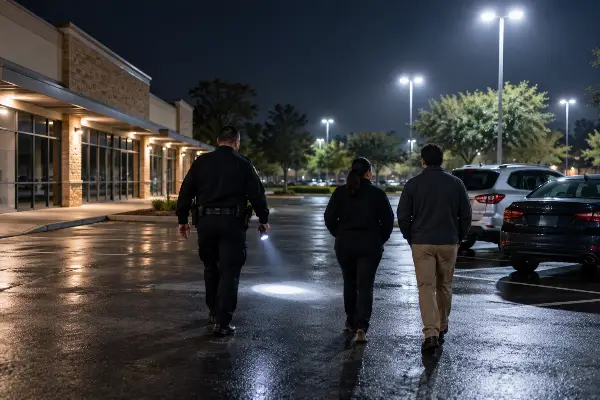
Do it every night, even when the lot looks empty. OSHA’s guide recommends security escorts to parking areas in the evening, plus lots that are well lit and easy to see. Our officers walk closing staff to their cars as part of a closing shift. In a strip center, the lot usually belongs to the landlord, so ask whether the center’s shopping center security covers your closing time.
What Houston already requires of convenience stores
Houston’s convenience store ordinance writes much of this checklist into law. City Code Sections 28-402 to 28-409 require these items, according to HPD:
| Requirement | The rule |
|---|---|
| Registration and training | Register with HPD. Every employee, manager and supervisor watches HPD’s training video. |
| Trespass affidavit | Keep one on file with HPD and post a copy. |
| Signs | “No Loitering” and “No Trespassing” in English and Spanish, plus height strips at the exits. |
| Clear windows | A clear view through windows and doors from 3 to 6 feet off the ground. |
| Hold-up alarm | A silent panic alarm with a valid permit and a button within reach of the register. |
| Drop safe | Bolted to the floor, with a cash policy and signs saying employees can’t open it. |
| Cameras | At least 2, covering the register and the entrance, with 30 days of recordings. |
A second ordinance, City Code Sections 28-671 to 28-673, also requires convenience stores to keep cameras recording the outside of the store at all hours, keep 30 days of video and give footage to HPD within 72 hours of a request.
Rules on paper aren’t rules in place. When researchers from the National Institute for Occupational Safety and Health surveyed 305 Houston convenience stores in 2011, only 3% met every requirement. Across Houston and Dallas, signs, clear windows and drop safes were the least-met items. Even if you don’t run a convenience store, the list makes a good audit of your own routine.
When does a security officer make sense at opening and closing?
When 1 or 2 people open or close, cash is counted on site, or the lot goes dark at closing time. An officer covers the security steps so your staff can work the store steps.
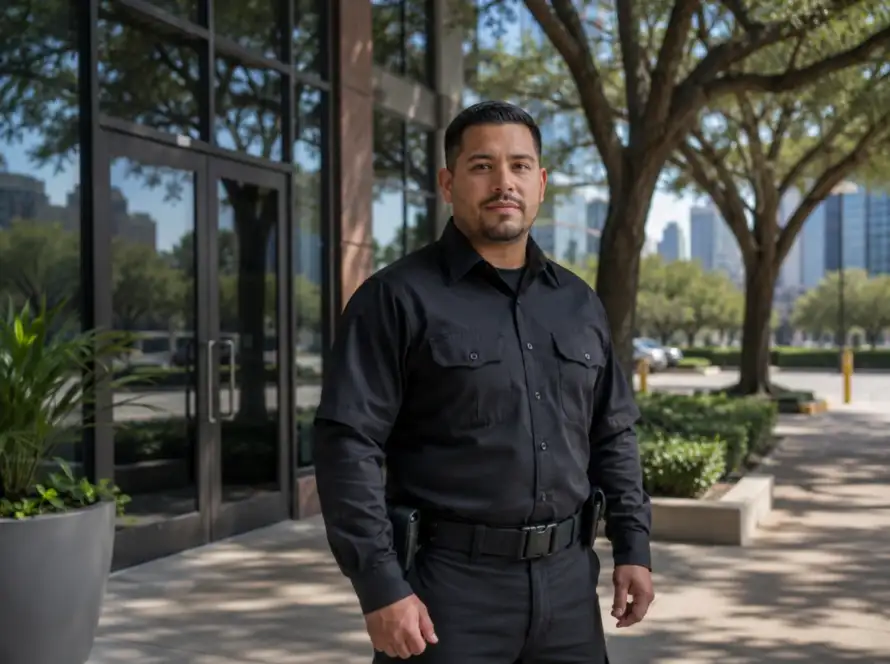
We run short opening and closing shifts for Houston stores. Before your staff arrive, the officer walks the outside of the store, then stays at the door while they go in and turn off the alarm. At close, the officer checks the restrooms, stockroom and back door, then walks your staff to their cars. Our GPS guard tour system logs each round with a time stamp, officers file incident reports in real time, and a supervisor checks in on the post. Our officers speak English and Spanish, which helps when the last customers need to hear that the store is closed.
An unarmed officer covers the routine above. An armed security guard fits a store that closes with a large cash count or has a robbery history. HPD’s numbers also say the biggest theft hours are in the afternoon. If shoplifting is your problem, staff those hours, which is how we build retail security services around your trading hours. If break-ins are the problem, the hours after close call for night security guards.
A retail store opening and closing checklist only works when it runs in the same order every night. If you want an officer on your opening or closing shift, tell Reliable Guard & Patrol Service your store hours and when cash gets counted. We’ll send a written proposal at no charge. Our Texas DPS license number is B07315701, and terms run weekly or month to month.
FAQs
What should be on a retail store opening and closing checklist?
At opening: an outside check before anyone goes in, 2-person entry, the alarm, a walk-through of every room, a camera check and a cash count out of sight. At closing: clear every room, lock the doors, count in a locked office, lock up the deposit, set the alarm and leave together. In 2024, 61% of burglaries at Houston stores happened between midnight and 6 a.m., so the opening check matters as much as the lock-up.
When are Houston stores most at risk of crime?
It depends on the crime. In Houston Police Department records for 2024, shoplifting and robbery at Houston stores both peaked at 2 p.m., robbery stayed high until about 8 p.m., and burglary peaked at 3 a.m. and 4 a.m. Only 12% of store robberies and 4% of store shoplifting happened between 9 p.m. and midnight.
Should 1 employee ever open or close a store alone?
Avoid it when you can. OSHA’s advisory guide for late-night retail stores recommends a buddy system and, when possible, more staff at stores with a robbery history or in high-crime areas, without setting a number. If 1 person has to do it, keep them on the phone with a manager or schedule a security officer for that shift.
What should staff do if they see signs of a break-in before opening?
Don’t go in. Go back to the car or another safe place, call 911 and wait for police to clear the building. Don’t touch the door or the alarm panel. Then call the manager and the alarm company.
What does Houston require of convenience stores?
Houston’s convenience store ordinance requires HPD registration, staff training, a trespass affidavit on file, no-loitering and no-trespassing signs in English and Spanish, clear windows, a silent hold-up alarm, a bolted drop safe and at least 2 cameras with 30 days of recordings. A second ordinance requires cameras that record the outside of the store at all hours.
Who should sign a retail store opening and closing checklist?
The 2 people who did the steps, with the time next to each set of initials. Keep the signed sheets on file. If a security officer works the shift, the GPS log of their rounds adds an independent time stamp to your retail store opening and closing checklist.