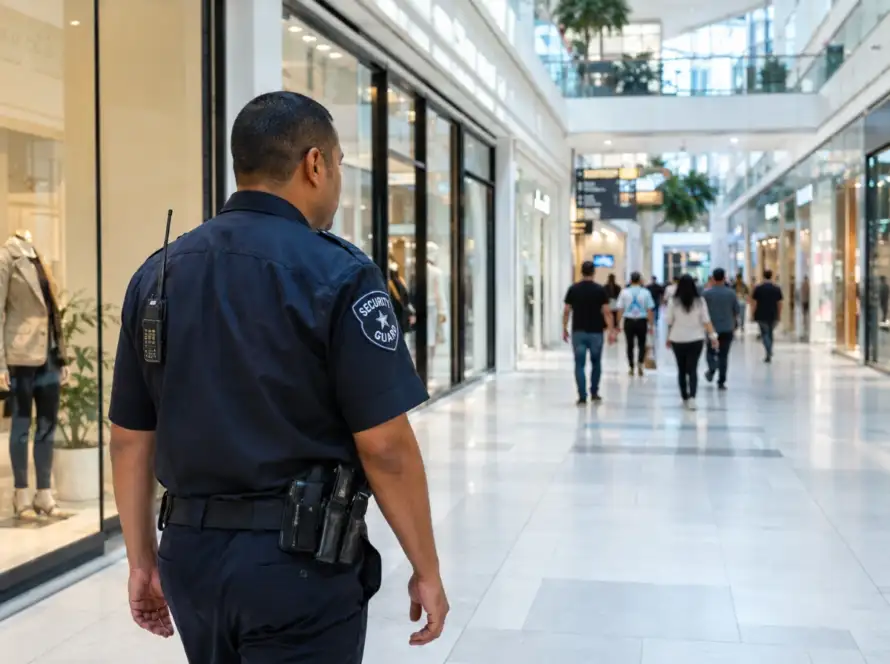
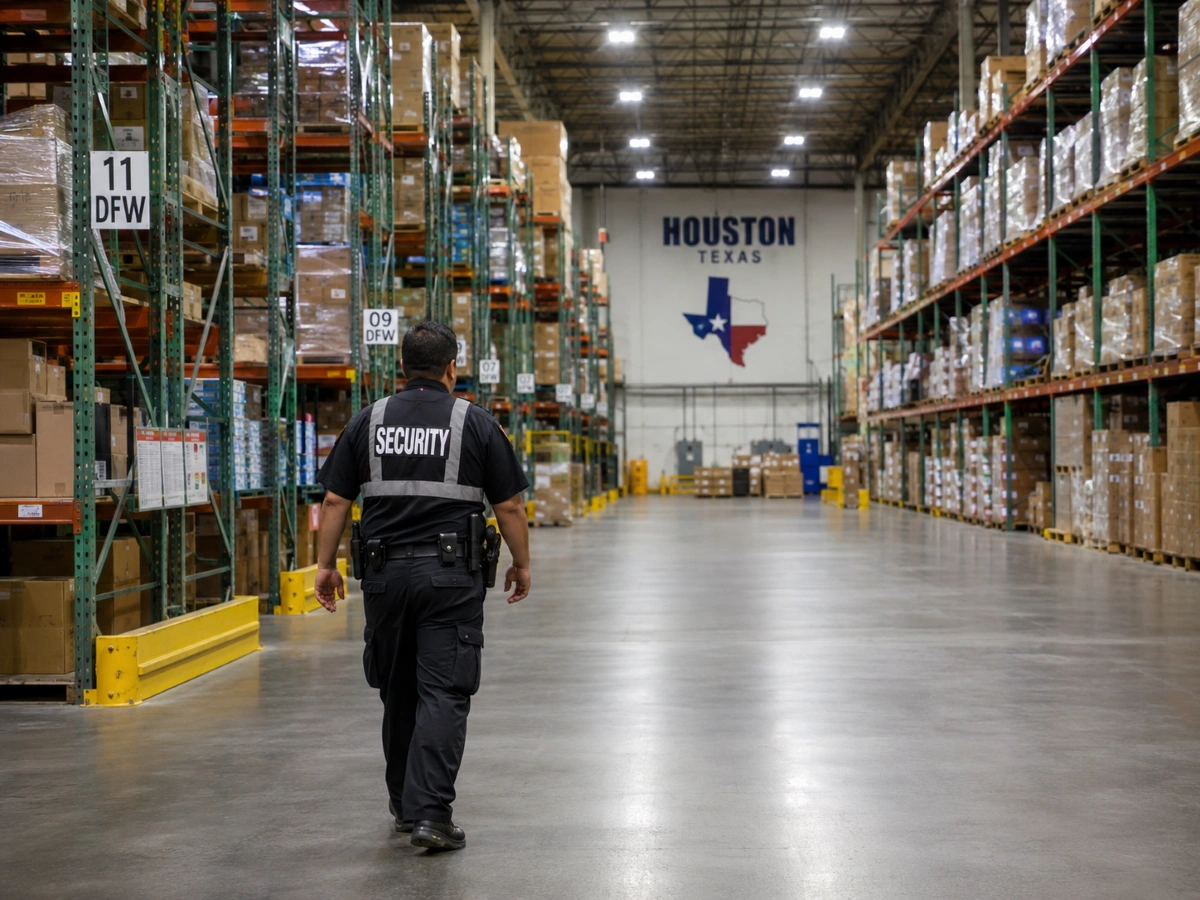
A warehouse security guard is a trained professional who controls access, patrols inventory areas, responds to alarms, and protects goods and employees inside a warehouse or distribution center. In Houston, where roughly 550 million square feet of industrial warehouse space sits along the I-10 and I-45 corridors, these guards are the reason millions of dollars in inventory doesn’t walk out the back door every night.
A warehouse security guard manages entry points, monitors surveillance systems, documents incidents, deters theft, and coordinates emergency responses. Nationally, warehouses rely on roughly 870,000 contract security employees (per NASCO’s 2024 White Paper) working inside a $34.5 billion contract security market. Most of them aren’t standing at a gate looking bored. They’re running a system.
Why Does Warehouse Security Matter in Houston?
Houston’s warehouse market is one of the largest in the country, and that creates a specific problem. Big facilities with multiple loading docks, 24-hour shifts, and constant truck traffic make it almost impossible to track every person moving through the building without professional guard services on site.
I’ve seen operations lose $40,000+ in a single quarter from internal shrinkage alone. Not break-ins. Employees walking product out during shift changes when nobody’s watching the dock. A single warehouse security guard posted at the right choke point during the right hours would’ve caught it in week one.
And it’s not just theft. OSHA’s warehousing standards carry serious penalties. As of January 2025, a single willful violation can cost $165,514. Guards trained in safety compliance give you an extra set of eyes on forklift operations, blocked exits, and hazmat protocols before an inspector shows up.
What Does a Warehouse Security Guard Do Day to Day?
This is where most articles give you a bulleted list and move on. The reality is messier and more useful than that.
Do Warehouse Guards Handle Access Control?
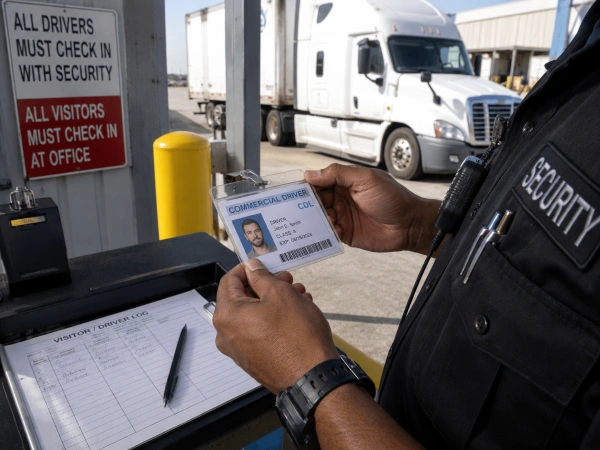
Yes, and it’s probably 40% of the job. Every person and vehicle entering the facility gets checked. IDs verified, delivery schedules confirmed, visitor logs maintained. In Houston warehouses handling pharmaceutical or electronics inventory, guards often run badge-access systems integrated with CCTV and surveillance cameras that log entry timestamps automatically.
The point isn’t bureaucracy. It’s accountability. If a product goes missing from Zone C between 2:00 and 4:00 AM, you know exactly who was in that zone.
How Do Guards Patrol and Monitor a Warehouse?
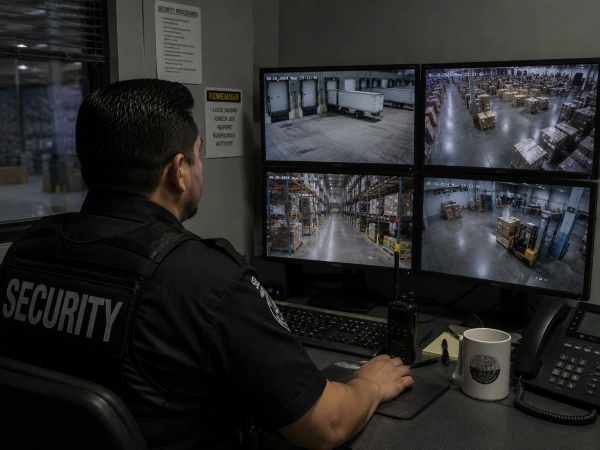
Patrols aren’t random walks. A good warehouse security guard follows a structured patrol checklist that covers high-risk areas on a rotating schedule. Loading docks, receiving bays, exterior perimeters, parking lots. They’re checking camera feeds between rounds and looking for things like propped-open doors, disabled sensors, or unauthorized vehicles.
Here’s the contrarian take most security companies won’t tell you: cameras alone don’t work. Guards on Reddit’s r/securityguards forum constantly point out that CCTV has blind spots, footage gets reviewed only after something goes wrong, and false alarms are common enough to cause fatigue. You need a human who can make a judgment call in the moment. Technology is backup for the guard, not the other way around.
What About Emergencies and Alarm Response?
Warehouse guards respond to fire alarms, medical incidents, severe weather (Houston sees its share of hurricanes and flooding), and security breaches. They coordinate with HPD, HFD, and EMS while managing evacuations.
This isn’t optional filler. A guard who knows your floor plan, your headcount, and where your hazmat materials are stored can shave minutes off emergency response. Minutes that matter.
How Do Guards Protect Inventory and Assets?
Asset protection means monitoring shipping and receiving, inspecting outgoing loads, and verifying inventory counts against manifests. For warehouses storing high-value goods, guards maintain chain-of-custody documentation that becomes critical if you ever file an insurance claim.
According to the Bureau of Labor Statistics, there are about 1.27 million security guards employed nationwide with a median wage of $18.46/hour. But what warehouses actually pay agencies is different. Client bill rates for unarmed guards typically run $20–$35/hour nationally. Armed guards cost $30–$70/hour depending on risk level and region.
How Much Does a Warehouse Security Guard Cost in Houston?
Houston falls below coastal markets like LA or New York, but above rural areas. Here’s a realistic breakdown for a mid-size warehouse:
| Service Level | Hourly Bill Rate | What’s Included |
| Budget (basic static post) | $20–$28/hr | Unarmed guard, limited patrol |
| Mid-range | $28–$40/hr | Unarmed + mobile patrols, CCTV monitoring, incident reporting |
| High-end | $45+/hr | Armed option, AI/drone integration, rapid response team |
Contract agencies handle recruiting, licensing, insurance, and turnover. In-house hires look cheaper per hour, but the administrative weight (and liability if someone quits mid-shift) makes working with a professional security provider the better bet for most operations.
What Training Should a Warehouse Security Guard Have?
Texas requires a Level II or Level III security license through the Texas Department of Public Safety. But licensing is the floor, not the ceiling.
The guards worth hiring have training in de-escalation, patrol principles and procedures, first aid/CPR, fire safety, and warehouse-specific hazards like forklift traffic and chemical storage. Ask the agency one question most managers skip: what’s your guard turnover rate for this type of post? The industry average is brutal. High turnover means your guards never learn your facility well enough to protect it.
Why Hire Professional Warehouse Security in Houston?
Skip the cheapest option. A low-bid agency cycling through underpaid guards with 60% annual turnover will cost you more in missed incidents, theft losses, and insurance headaches than the hourly rate difference. We’ve tested this across dozens of Houston warehouse accounts, and the pattern doesn’t change. The providers worth calling are the ones who invest in their reputation, maintain a real online presence through a marketing team that understands the security industry, and can show you references from similar facilities.
The right warehouse security guard doesn’t just stop theft. They give your employees a safer workplace, keep your insurance premiums from spiking, and make sure an OSHA visit is a non-event. For Houston warehouse operators sitting on millions in inventory along the Ship Channel or out in Katy, partnering with a local security team that knows your market isn’t an expense. That’s a line item that pays for itself.
FAQs
What does a warehouse security guard do on a typical shift?
A warehouse security guard checks credentials at entry points, conducts interior and perimeter patrols on a rotating schedule, monitors CCTV feeds, logs visitor and vehicle activity, and responds to alarms or emergencies. During slower periods, they verify inventory movement and inspect outgoing shipments. The job alternates between long stretches of monitoring and quick-response situations.
Can cameras replace a warehouse security guard?
No. Cameras record evidence, but they don’t stop incidents in real time. CCTV has blind spots, footage is usually reviewed after a loss occurs, and false alarms cause monitoring fatigue. The industry consensus (backed by practitioner feedback and ASIS International research) is that cameras work best as a supplement to trained guards, not a replacement.
What training do warehouse security guards need in Texas?
Texas requires a Level II (unarmed) or Level III (armed) security license through the Department of Public Safety. Beyond licensing, effective warehouse guards have training in de-escalation, first aid/CPR, fire safety, emergency evacuation, and warehouse-specific hazards like chemical storage and forklift traffic.
Should I hire in-house security or use a contract agency?
Contract agencies handle recruiting, background checks, licensing, insurance, and turnover replacement. In-house hires may cost less per hour long-term but add significant administrative burden. For most Houston warehouse operations, contract security is more reliable because the agency absorbs the risk of high turnover, which runs in the double digits industry-wide.
How many security guards does a warehouse need?
It depends on square footage, number of entry points, operating hours, and inventory value. A 50,000 sq ft facility with one loading dock and standard hours might need one guard per shift. A 200,000+ sq ft distribution center running 24/7 with multiple docks often needs three to five guards minimum. An experienced security provider can run a site assessment and recommend staffing levels.
What questions should I ask before hiring a warehouse security company?
Ask about guard turnover rate for warehouse posts, specific training programs (not just licensing), integration plans with your existing cameras and access systems, response-time SLAs for alarms, and how guard performance is monitored and reported back to you. Most managers skip these questions and regret it.