Most mall managers think they’ve got security figured out. A few guards at the entrances, a camera system from 2018, and a “call the police if something happens” protocol. Then organized retail crime hits their property and they’re scrambling.
Mall security is the combination of trained guard personnel, surveillance technology, and operational protocols that protect shopping center tenants, customers, and property from theft, violence, and liability exposure. In 2026, U.S. retailers are losing roughly $45 billion a year to shoplifting alone, and malls sit right at the center of that problem. Individual tenants buying their own cover should start with retail security services instead, since the staffing question is different inside a store. The old “observe and report” model isn’t holding up anymore. Guards who just walk laps and write incident reports after the fact aren’t enough to protect a property where hundreds (sometimes thousands) of people move through every day.
I’ve worked with shopping centers that learned this the hard way. This article breaks down what mall security guards actually do, what different guard types bring to the table, whether 24/7 coverage makes financial sense, and why throwing more bodies at the problem usually backfires. It won’t cover residential security or event-specific staffing, as those are different animals entirely.
What Do Mall Security Guards Actually Do?
The short answer: a lot more than standing near the food court looking bored.
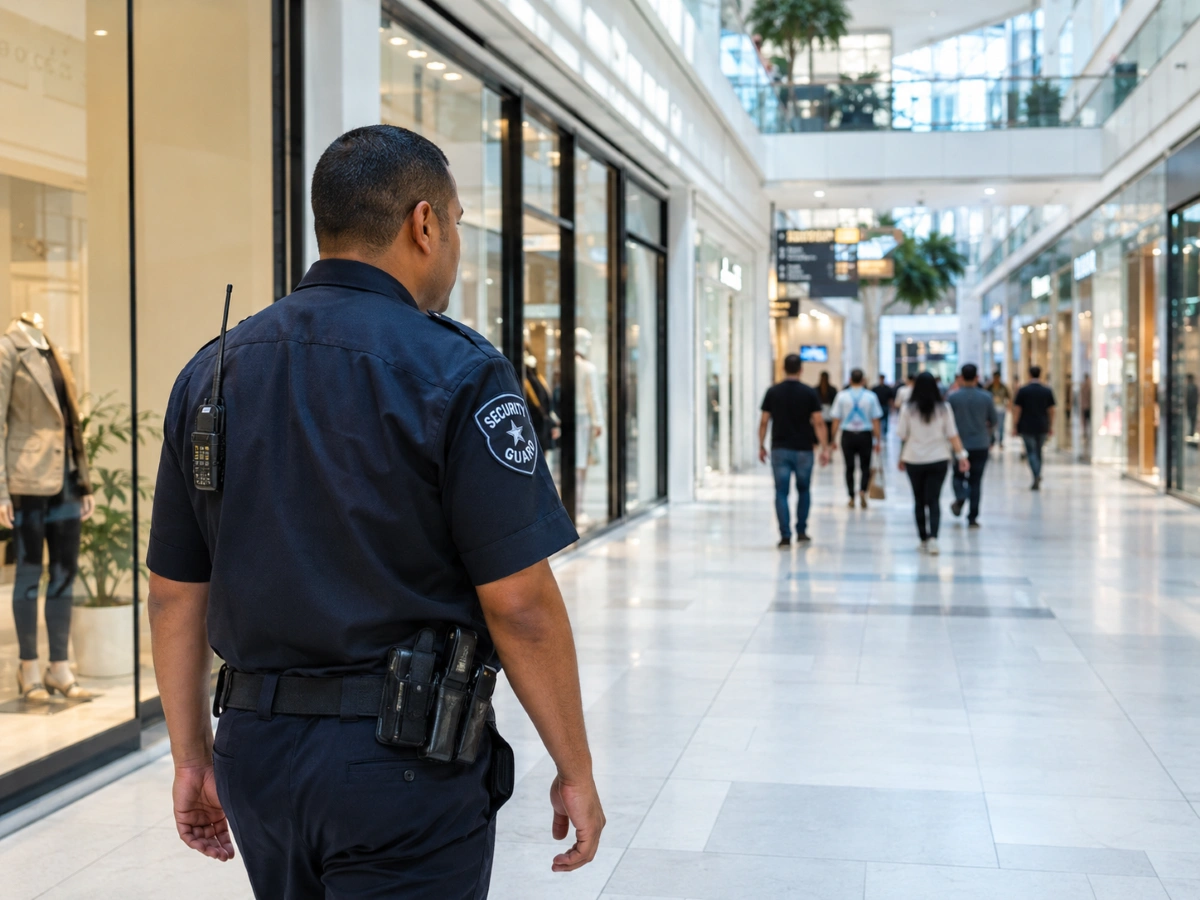
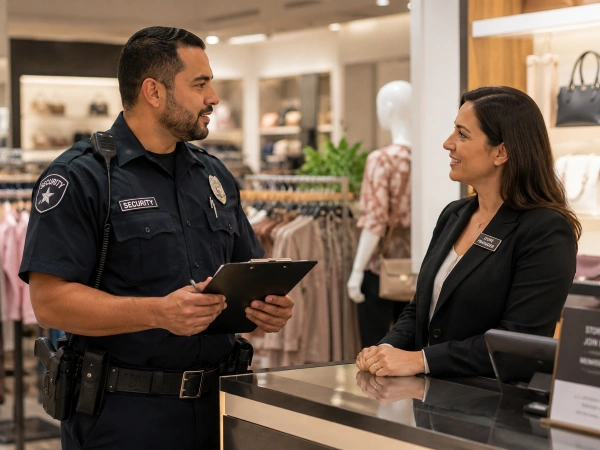
A mall security guard’s job spans loss prevention, crowd management, emergency response, access control, parking lot patrols, and direct coordination with local law enforcement. On a busy Saturday, a single guard might handle a shoplifting detention at noon, a medical emergency at 2 PM, and a trespassing situation in the parking garage by evening. Nationally, general merchandise retailers employ about 44,640 security guards, and that number has barely budged because the BLS projects 0% employment growth through 2034.
That flat growth number is misleading, though. The industry churns through roughly 162,300 job openings every year, almost entirely from turnover and replacement. People burn out fast. The real work of mall security includes de-escalation of conflicts between shoppers, monitoring CCTV feeds in real time (not reviewing them after an incident), running coordinated responses with store managers during organized theft events, and making sure shopping center security coverage doesn’t have blind spots during shift changes. Guards also serve as the first point of contact for customers who need help finding a lost child, reporting a vehicle break-in, or getting directions. That customer service piece matters more than most property managers realize, because a guard who can’t communicate well with the public creates more problems than they solve.
Types of Mall Security Guards and When Each One Fits
Not every mall needs the same security setup. The guard standing at a luxury jewelry store entrance has a completely different skill set than the one patrolling a suburban strip mall parking lot at midnight.
- Uniformed patrol guards are the most common. They walk designated routes through hallways, anchor stores, food courts, and parking areas. Their visibility alone deters a good chunk of opportunistic theft. For most mid-size shopping centers, this is where the bulk of the security budget goes.
- Mobile patrol units cover larger properties, especially outdoor parking lots and loading dock areas that foot patrols can’t reach quickly. If your mall has more than 500 parking spaces, you probably need at least one mobile unit.
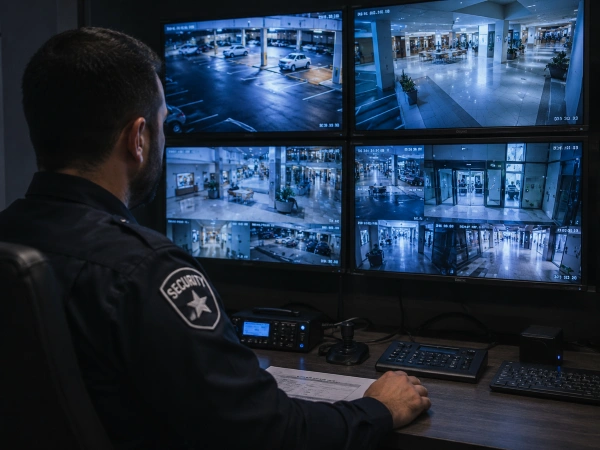
- CCTV monitoring specialists sit in a control room and watch camera feeds. This role has changed fast in the last two years as AI video analytics have gotten better. A good monitoring specialist can track suspicious behavior across multiple feeds simultaneously and dispatch floor guards before an incident happens.
- Concierge security handles front-desk duties, visitor management, and coordination between tenants and the rest of the security team. Think of this role as the communication hub.
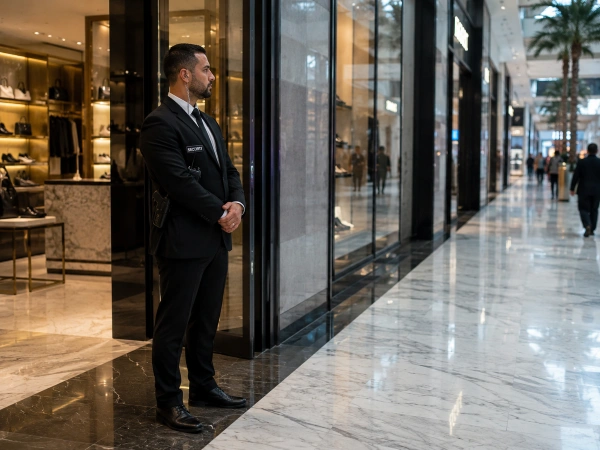
- Armed guards are reserved for higher-risk situations. High-end retailers with expensive inventory, properties in areas with elevated crime rates, or malls that have experienced repeated violent incidents. If you’re considering armed versus unarmed protection, the liability differences are significant and worth a detailed conversation with your provider.
How Much Does Mall Security Cost Per Hour in 2026?
This is where shopping center managers start asking hard questions, and rightly so.
The national median wage for a security guard is $18.46/hour according to 2024 BLS data. But that’s what the guard earns. What you pay the security company is a different number entirely, once overhead, insurance, supervision, and margin are factored in. Here’s a general breakdown of client-billed rates by guard type:
| Guard Type | Typical Hourly Range | Best For |
| Basic unarmed (static post) | $25-$35/hr | Low-risk suburban malls, off-peak hours |
| Unarmed + mobile patrol | $35-$45/hr | Standard shopping centers, mixed indoor/outdoor |
| Armed guard | $45-$65+/hr | High-value retailers, elevated threat areas |
| Armed + monitoring | $65-$100+/hr | Luxury properties, metro locations with high ORC |
In Texas and the South, rates tend to sit on the lower end of these ranges. Your actual number will depend on property size, hours of coverage, and the specific threat profile of your location. That’s exactly why hiring the right security team the first time matters so much. Getting a site-specific assessment upfront saves you from overpaying for coverage you don’t need or underpaying for protection that leaves gaps.
Is 24/7 Mall Security Worth the Investment?
It depends on your loss data. But for most malls with any meaningful after-hours foot traffic or overnight inventory exposure, the answer is yes.
The National Retail Federation’s 2025 report flagged an 18% increase in shoplifting incidents and a 17% rise in violence against retail employees. Those numbers track with what I’ve seen on the ground. Crime doesn’t stop when the stores close. Parking lots, loading areas, and exterior walls become targets for vandalism, break-ins, and homeless encampments after hours.
Seasonal spikes make 24/7 coverage even more important. Black Friday, back-to-school, and holiday shopping periods push foot traffic up 30-50% at some properties. If your patrol coverage doesn’t scale with that traffic, you’re exposed. I’ve seen malls that cut overnight shifts to trim their budget, then lost five figures in a single weekend break-in. The math isn’t complicated.
A flexible security partner will adjust staffing levels week by week based on your risk calendar. That means ramping up for peak retail periods and pulling back during slower months, rather than locking you into a flat monthly contract that wastes money half the year.
Does Camera Technology Replace Mall Security Guards?
No. And anyone selling you that pitch is either misinformed or trying to sell cameras.
AI video analytics have gotten legitimately good. Modern systems can flag loitering, detect weapons, track known offenders across multiple camera feeds, and alert a monitoring center in seconds. Remote monitoring is growing faster than manned guarding at roughly 5.5% annually, and ASIS International’s 2025 security trends report highlights AI as the biggest area of experimentation in the industry right now. The global physical security equipment market hit $60.1 billion in 2024 and is projected to reach $70 billion by 2026.
But here’s what cameras can’t do. They can’t physically stop someone from walking out with merchandise. They can’t de-escalate a fight in the food court. They can’t help a lost child or administer first aid after a slip-and-fall. They can’t testify in court the way a trained guard can.
The smart play is a hybrid model. Use AI-powered surveillance to extend coverage area and improve detection speed, then pair it with trained guards who can actually respond. Technology is a force multiplier for guards. It’s not a replacement for them.
Why “More Guards” Isn’t the Fix Most Malls Think It Is
Here’s the contrarian take that most security companies won’t tell you (because they sell hours, not outcomes): doubling your guard count won’t double your protection if the underlying program is broken.
The industry’s turnover rate runs between 100% and 300% annually at many contract security firms. That means the guard working your property today might be gone in three months, replaced by someone who doesn’t know your building layout, your tenant relationships, or your incident history. BLS data confirms this. The industry adds only about 5,100 net new positions per year but fills 162,300 openings, almost all replacements.
What actually moves the needle is training quality, response protocols, and guard retention. Ask your security provider these questions before you sign: What are your guards’ exact training hours and de-escalation certifications? What’s your turnover rate on this specific contract? What’s your response time protocol, and how do you coordinate with local PD? How is camera footage monitored in real time versus reviewed after incidents?
If they can’t answer those with specifics, find a provider who understands your vertical well enough to give you real numbers. The difference between good and bad mall security isn’t headcount. It’s whether the people on your property know what they’re doing and stick around long enough to get good at it.
The single most important thing you can do for your mall’s security in 2026 isn’t buying more hours. It’s demanding better ones. Start with a risk assessment from a team with real retail experience, match your guard types to your actual threat profile, and stop treating mall security like a commodity where the cheapest bid wins.
FAQs
What does a mall security guard do on a typical shift?
A mall security guard patrols corridors, monitors CCTV feeds, deters theft, manages access points, coordinates with store managers during incidents, and responds to emergencies from medical situations to violent altercations. Nationally, general merchandise retailers employ approximately 44,640 guards for these roles. The job is far more active and varied than most people assume.
Is mall security available 24 hours a day?
Yes. Most professional security providers offer fully customizable schedules including overnight, weekend, and holiday coverage. After-hours patrols protect against break-ins, vandalism, and trespassing. Properties with after-hours inventory exposure or parking lots that stay accessible overnight typically benefit from round-the-clock staffing.
Do mall security guards carry guns?
It depends on the contract, the property’s risk profile, and state licensing requirements. Many mall guards are unarmed, which works fine for standard retail environments. Armed guards are common at luxury retailers, properties in high-crime areas, or locations that have experienced repeated violent incidents. Armed guard rates run noticeably higher than unarmed.
Can mall security guards detain shoplifters?
Mall security guards can detain suspected shoplifters using citizen’s arrest authority on private property, but their legal powers are far more limited than police officers. Specific detention protocols vary by state. Guards typically hold the individual, document the incident, and wait for law enforcement to arrive. Proper training in detention procedures reduces the property’s liability exposure.
Why is turnover so high in the mall security industry?
The security guard industry reports annual turnover rates between 100% and 300% at many contract firms. BLS data shows the field fills roughly 162,300 openings per year with near-zero net job growth, meaning almost every opening is a replacement. Low wages relative to the physical and emotional demands of the job, inconsistent scheduling, and difficult public interactions drive most of the churn.
Does AI surveillance technology replace the need for security guards?
No. AI video analytics and remote monitoring are growing rapidly (around 5.5% CAGR in some segments) and they’re excellent at extending coverage area and detection speed. But cameras can’t physically intervene, de-escalate confrontations, administer first aid, or provide courtroom testimony. The most effective mall security programs use a hybrid approach pairing AI-powered surveillance with trained on-site guards.