Reliable Guard & Patrol Service Inc. places full-time Texas peace officers on Houston commercial properties for off-duty security work, hired through our Texas DPS company license, B07315701. The officer keeps peace officer authority and needs no security license under Section 1702.322 of the Texas Occupations Code. Before the first shift, the officer's department has to approve the job. At HPD and the Harris County Sheriff's Office, that approval is a permit for your specific address.
2 Sets Of Rules Decide Whether An Off-Duty Officer Can Work Your Property
Texas law decides whether the officer needs a security license. The officer’s own department decides where and when that officer may work for you.
The state rule is Section 1702.322 of the Occupations Code. Under it, an officer who works full time for a Texas public employer, putting in 32 or more paid hours a week on average with that employer’s full benefits, can take guard, patrolman, watchman or extra job coordinator work with no private security license. Reserve officers are left out. So is any officer working for another peace officer. A business can hire the officer directly or through a licensed company like ours. The Texas DPS summary of the exemption spells out the limit: guard work only. Investigations still need a license.
The department rules sit on top of the statute and follow the officer to every job. Houston Police Department (HPD) officers work under General Order 300-14, Extra Employment, issued August 19, 2020. Harris County Sheriff’s Office deputies work under Policy 244, Extra Employment, last revised September 29, 2025.
The department rules on this page come from those 2 policies. Constables, other cities and other counties write their own extra employment rules, so the officer’s agency decides which version governs your post. For the broader split between private officers and police, read armed security versus police.
Every Off-Duty Detail Starts With A Permit For Your Address
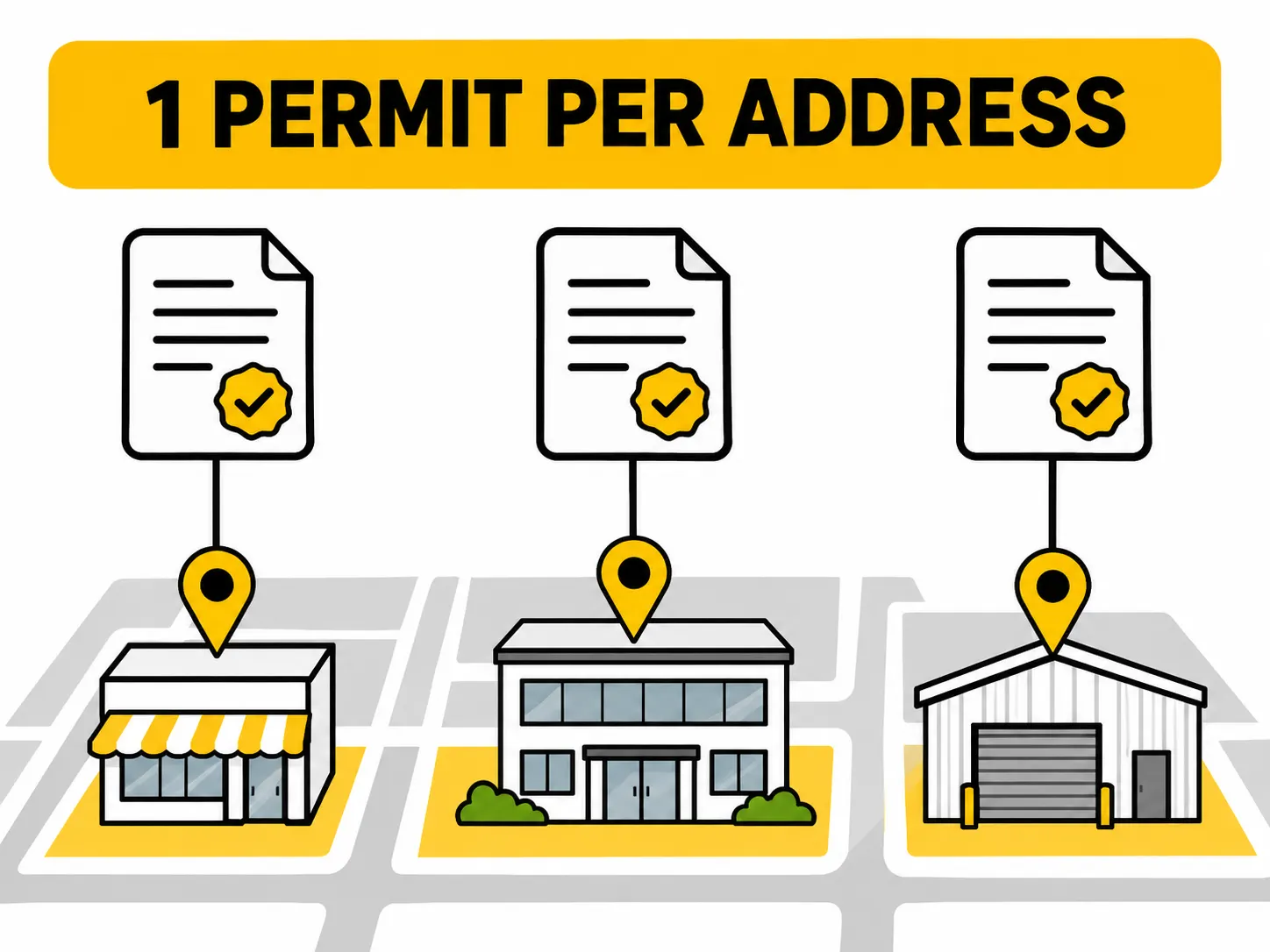
An HPD officer or Harris County deputy can’t start at your property until the department approves an extra employment permit for that address. The officer’s supervisor alone has up to 10 calendar days to decide, and each department’s Extra Employment Unit reviews applications too.
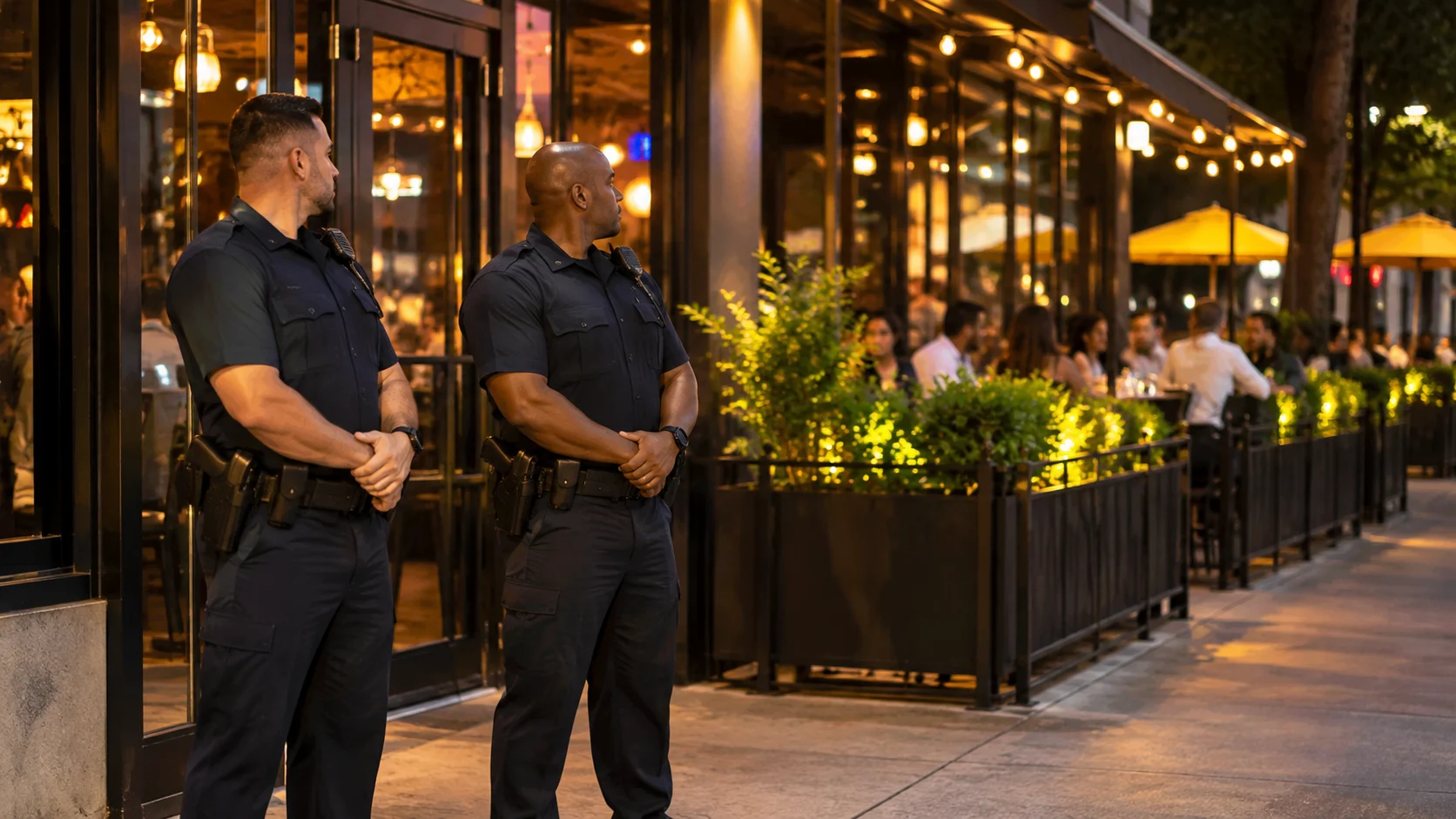
At HPD, the officer gets a permit number through the department’s Extra Employment System before working any extra job. Each location needs its own permit, even when the same owner holds every site. When a company like ours coordinates and pays the officer, our name goes on the application as the third-party employer. The officer also checks HPD’s Unauthorized Lists, which name businesses and employers barred from employing police personnel. If the address, the business or the coordinator changes, the permit is cancelled and the officer applies again. A permanent permit expires at the end of the officer’s birthday month in the following calendar year and has to be renewed by that date.
At the Sheriff’s Office, no deputy works an extra job until a supervisor approves it. When a third-party company coordinates the work, the deputy files a separate application for each business and address, and “various locations” is not accepted. Temporary permits cover 30 days or less.
New officers wait longer. HPD keeps probationary officers off extra jobs, with a waiver for lateral or reinstated officers who worked patrol for at least 12 months at their previous agency and finished HPD’s field training. The Sheriff’s Office keeps new deputies with no prior law enforcement experience off extra jobs until their 180-day probation ends, and grants no waivers.
So a brand-new address can’t be a same-day booking unless the permit clears that day. If you need someone on the property tonight, our same-day security guard services put a licensed security officer on post while the permit works through the department.
CALL US FOR SMART SECURITY SOLUTIONS
We Cover Houston, TX, Sugar Land, TX, Pearland, TX, Conroe, TX
Who Signs The Officer's Paycheck Matters Under Texas Law
Pay each officer directly, or pay a licensed security company. Don’t pay 1 officer to pay the rest.
The statute is the first reason. Section 1702.322 only exempts an officer who is not in the employ of another peace officer, so a detail where 1 officer collects the money and pays the crew puts the exemption at risk for everyone on it.
HPD writes the rule out. Each officer is paid directly and individually by the employer, unless a properly licensed guard company hired the officer. A coordinator, the officer who takes your call and fills the schedule, may not accept payment for other officers’ work or pay them, and only the employer may hire or fire. The Sheriff’s Office bars a deputy from any job where the business pays a flat rate and the deputy pays the other workers out of it.
Both departments allow coordinators. Keep that role administrative, and keep the money moving from your business, or from a licensed company, straight to each officer.
Get Your
Free Armed & Unarmed Security Proposal
Why Houston businesses choose Reliable Guard & Patrol Service
Why Choose Our Armed Guards:
01. Fully Licensed to Carry in the State of Texas
02. Background-Checked and Drug Tested
03. Trained in Firearms Handling and De-Escalation
04. Experienced in High-Risk Property Protection
05. Serving Houston Businesses for Over 20 Years
06. Corporate, Construction, Retail, and Event Coverage
07. 24/7 Coverage Including Holidays
What An Off-Duty Officer Will Not Do On Your Property
An off-duty officer enforces state law and city ordinances at your property. These 6 requests are off the list under state law or department rules.
- HPD won’t permit an extra job where the business expects the officer to enforce house rules, which the order defines as rules no state law, federal law or city ordinance authorizes. The same goes for a business that keeps the officer out of areas the public can enter. A dress code is yours to enforce. Criminal trespass is the officer’s.
- A marked police car patrolling your lot isn’t part of the deal. HPD officers can’t use a department vehicle to patrol or drive around an extra job site, and can’t use another agency’s marked unit. They may drive a take-home car to and from the job and sit in it out of the weather. Sheriff’s deputies can’t use their marked patrol vehicle at an extra job at all.
- Sheriff’s deputies can’t take an extra job that requires driving a vehicle with a security or guard company’s name, identification or contact information on it. Our marked vehicles stay with our licensed officers.
- Neither department permits a job that requires the officer to sign a hold-harmless indemnity agreement. HPD also requires officers to send every extra employment contract to its Extra Employment Unit before signing. Keep your contractor waiver away from the officer at the gate.
- Investigations fall outside the statute’s guard-work exemption. Building a case for your company takes a licensed investigator.
- HPD bars extra jobs at labor disputes, protests and demonstrations, and the Sheriff’s Office bars jobs at controversial locations such as a labor dispute.
If Your Property Serves Alcohol, Book 2 Officers
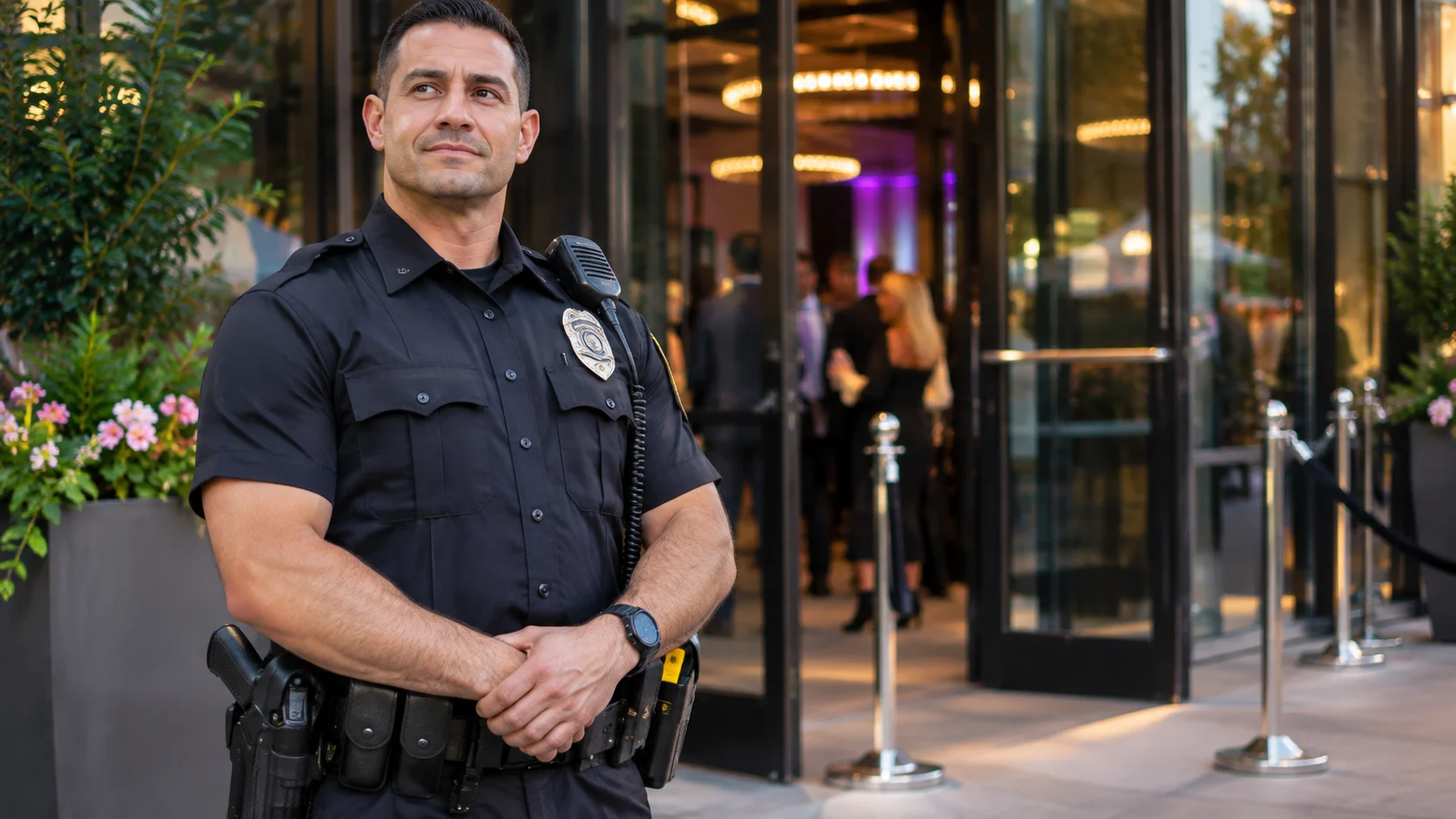
HPD and the Sheriff’s Office both require at least 2 uniformed officers on site at the same time before their officers can work a bar or other alcohol-centered business.
HPD calls these alcoholic beverage establishments: places whose primary purpose is selling alcohol, or that earn 51% or more of their income from alcohol sold for on-premises consumption. A business open after 10 p.m. that holds a TABC on-premises permit and has live music, dancing or floor shows can count as one too.
For an HPD officer, 5 more conditions apply:
- The address has to be inside Houston city limits. A bar in Pasadena, Sugar Land or Katy can’t book an off-duty HPD officer.
- The officer completes HPD’s extra employment alcohol class and body-worn camera training, then carries the alcohol permit receipt or card on the job.
- The officer wears a department-issued body camera.
- Officers assigned to Vice, Narcotics, Gang or Criminal Intelligence can’t take the job.
- After-hours clubs, open past 2 a.m., are off limits.
The Sheriff’s Office applies its 2-officer rule to alcohol establishments and to private receptions, parties and gatherings where people are expected to drink. It also bars this work outside Harris County and its contiguous counties.
Hour Caps Turn A 24/7 Off-Duty Post Into A Roster Of Officers
No single off-duty officer can hold a round-the-clock post. A Harris County deputy may work no more than 16 total hours in any 24, 88 in any 7 days and 72 in the work week, county shifts included, unless a bureau commander approves more.
Run the numbers for your schedule. A deputy coming off a 10-hour county shift has 6 hours left in that 24-hour window. A deputy with 40 county hours in the work week has 32 left for every extra job combined, yours and anyone else’s.
HPD caps hours a different way. It won’t permit an extra job that would push an officer past the department’s maximum work hours under its workday and workweek order. It also requires at least 15 minutes of travel time between a shift and an extra job, and bars officers from calling in sick and then working an extra job.
Big details add rank. When 6 or more officers from any agency work 1 location alongside an HPD officer, an HPD sergeant or higher has to be there the whole time. At 12, add an HPD lieutenant. The Sheriff’s Office wants a sergeant for every 8 deputies at 1 location and a lieutenant for every 24, and both requirements apply at once.
Distance is capped too. HPD officers may work police-related extra jobs only in Harris County and 7 adjacent counties: Brazoria, Chambers, Fort Bend, Galveston, Liberty, Montgomery and Waller. Outside Harris County, the officer notifies the top law enforcement official in that jurisdiction first.
For a 7-night post, the simpler schedule is a commissioned security officer on our payroll, with off-duty officers on the hours where police authority counts most. Our overnight construction site security page shows how a night post gets scoped.
When An Off-Duty Officer Is The Right Hire, And When A Commissioned Officer Is
Book an off-duty officer where police authority changes the result: a property where incidents end in arrests, an alcohol post, or an entrance where you want a uniformed peace officer in front of everyone who walks in. Book a commissioned security officer for posts that run long, run every night or start on short notice.
The off-duty officer brings the department’s paperwork. An HPD officer working an extra job writes the department’s own incident report for anything reportable at your location and, unless a supervisor approves otherwise, finishes it by the end of the extra job. If the officer hears about an incident somewhere else, the order has the officer call dispatch for an on-duty unit. Uniformed HPD officers on extra jobs wear the department body camera when one has been issued to them.
A commissioned officer brings the company’s system. The officer follows your post order, house rules included, can start the same day in most cases, and our GPS guard tour logs each round. Our commissioned armed officers carry a Texas DPS Level III commission.
You can run both: a commissioned officer on the continuous post and off-duty officers on the peak hours.
Frequently Asked Questions
Can an off-duty police officer work security in Texas without a security license?
Yes, if the officer works full time for a Texas public employer, puts in 32 or more paid hours a week on average, isn’t a reserve officer and doesn’t work for another peace officer. Section 1702.322 of the Texas Occupations Code sets those terms. The exemption stops at guard-type work, so investigations still need a license.
How far ahead should I hire an off-duty police officer in Houston?
Allow at least 10 calendar days for a new address. Supervisors at HPD and the Sheriff’s Office each have up to 10 calendar days to approve or reject a permit, each department’s Extra Employment Unit reviews it too, and no officer works the address before approval. An address where the officer already holds a current permit moves faster.
Can an off-duty HPD officer work security at a bar outside Houston city limits?
No. HPD General Order 300-14 strictly prohibits police-related extra jobs at alcoholic beverage establishments outside Houston city limits. Inside the city, HPD requires 2 uniformed officers on site, the alcohol permit and a body camera.
Will the off-duty officer bring a patrol car?
Don’t count on it. HPD officers can’t patrol an extra job site in a department vehicle, and Sheriff’s deputies can’t use their marked patrol vehicle at an extra job.
Can an off-duty officer enforce my store's rules?
Only where a law or city ordinance backs the rule. HPD won’t permit the job when a business expects officers to enforce house rules, so a dress code or a no-backpacks policy stays with your staff.
Can a single off-duty officer cover my property 24/7?
No. A Sheriff’s deputy is capped at 16 total hours in any 24 and 72 in the work week, county shifts included. Round-the-clock coverage takes a rotation of officers, or a commissioned officer on the continuous post.
How is an off-duty officer priced?
Neither HPD’s nor the Sheriff’s Office’s extra employment policy sets an hourly rate. Your total moves with headcount: alcohol posts start at 2 officers, and an HPD detail of 6 or more officers must include an HPD sergeant. Get the officer count and any supervisor hours in writing before you compare quotes.
Can I hire an off-duty officer directly instead of through a company?
Yes. Section 1702.322 lets a business hire the officer directly. Under HPD policy, each officer then has to be paid directly and individually by your business, and the permit checks, the schedule and the coverage questions sit with you.
Get An Off-Duty Officer Proposal For Your Houston Property
Send the address, the hours and whether alcohol is served. We'll tell you which department rules apply, how long the permit is likely to take and whether a commissioned officer fits the post better.