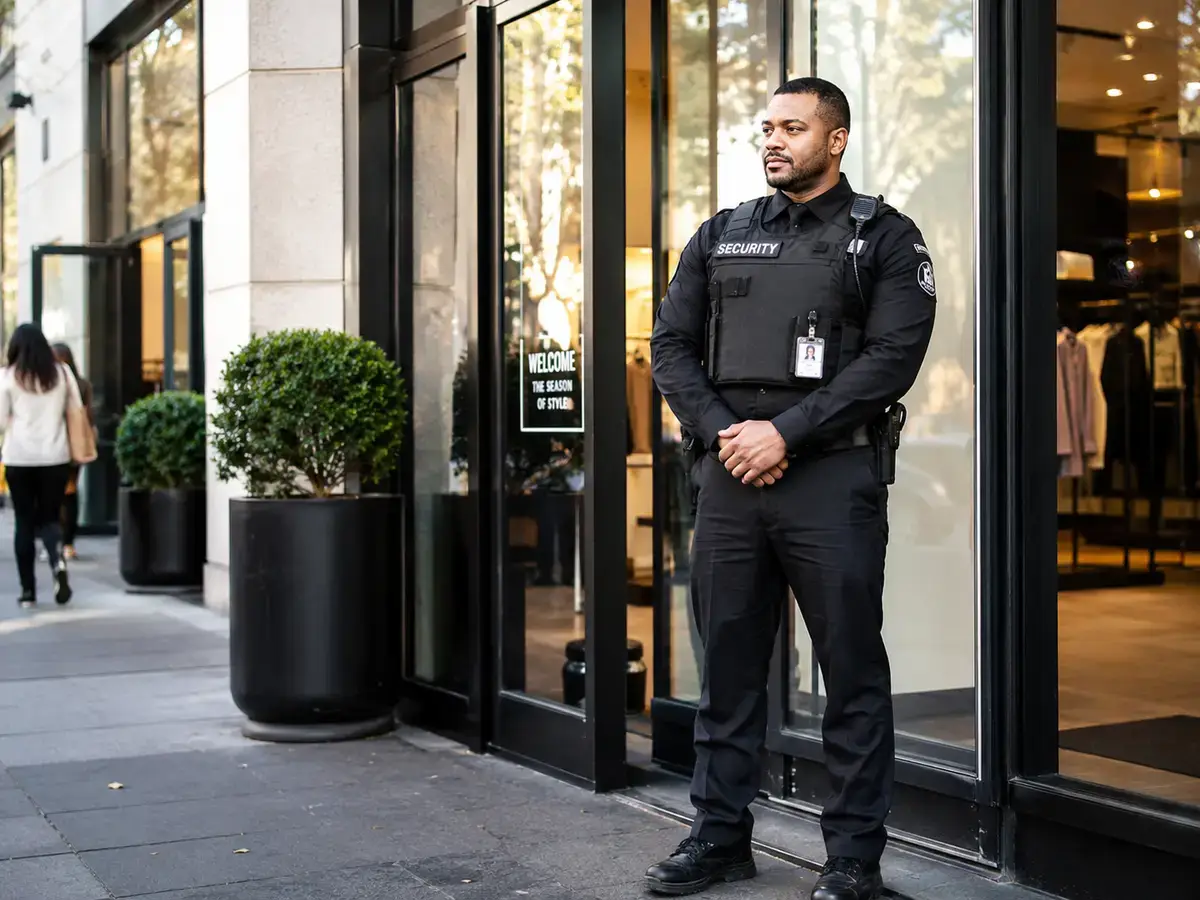
A retail security guard’s real job in 2026 looks different from the version sold in most marketing copy. The headline duty is presence: a uniformed officer who watches the floor, deters casual theft, and steps in when something goes wrong. The marketing version leaves out the friction. Most retail guards work under strict “observe and report” rules, which means they often cannot physically stop a thief even while they watch one walk out the door. That gap matters, because shoplifting incidents rose 18% in 2024 over the prior year, according to the National Retail Federation, and the people doing the stealing are bolder than they were five years ago.
So a guard is part deterrent, part witness, part first responder, and part customer-service rep. The mix depends on the store, the written policy, and the law in your state.
What is retail store security?
Retail store security is the mix of people, policies, and technology a store uses to protect its merchandise, staff, and customers from theft, fraud, and violence. It usually combines uniformed or plainclothes guards with cameras, alarms, and electronic tags on goods. The goal is fewer losses and a safer space to shop.
The human side and the tech side are supposed to work together, not replace each other. Cameras catch a lot. They do not walk over and ask a nervous-looking shopper if they need help, which is often enough to end a theft attempt before it starts. A camera also cannot calm an aggressive customer or walk a closing cashier to her car. That is the part of retail security services that still needs a person.
The daily duties of a retail security guard
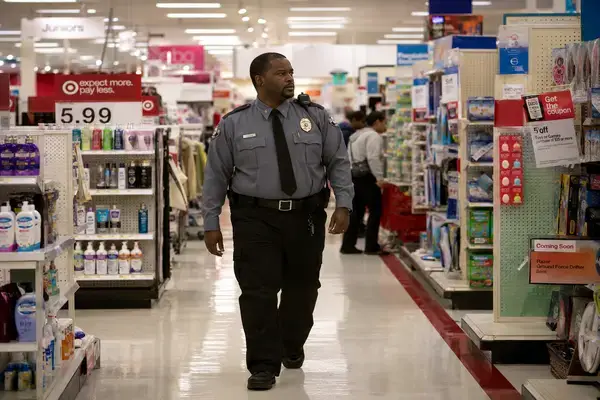
Day to day, a retail security guard patrols the floor, watches for theft, controls access to staff-only areas, writes incident reports, and responds during emergencies. The exact routine shifts with store size and traffic, but the core duties stay the same.
Theft prevention and surveillance
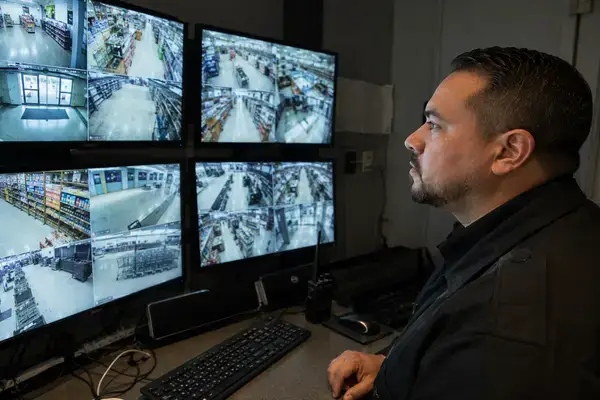
Stopping theft is the duty most stores hire for. Guards watch camera feeds, walk the aisles, and read body language: the shopper who keeps eyeing the lens, the one carrying an empty bag into a fitting room. Visible patrols near high-theft sections like electronics, cosmetics, and liquor do real work. This is the “scarecrow” effect, and it is good at stopping the person who steals on impulse. It does much less against organized crews who already know the store will not chase them. Stores that pair guards with smart layout and tagging tend to cut down on shoplifting more than either move does alone.
Access control and customer service
A guard also decides who gets past the “Employees Only” door. They keep stockrooms, offices, and loading docks limited to staff, and they check in vendors and deliveries. The same person greets shoppers, gives directions, and answers questions. That double role is not filler. A friendly guard at the door reads as service to honest customers and as a warning to everyone else.
Incident reporting and emergency response
When something happens, the guard is usually first on the scene. They handle medical situations, fire alarms, and confrontations, and they call Houston police or EMS when it goes beyond them. Then they write it down. A clear, detailed incident report protects the store in insurance claims and in court, and it helps spot patterns. Knowing the difference between theft and robbery matters here too, because the response and the paperwork are not the same.
Watching for internal theft
Employee theft is a quieter problem than shoplifting and often a costlier one. Guards keep a discreet eye on registers, stockrooms, and the back dock, where most internal loss happens. The point is not to treat staff like suspects. It is accountability, which tends to keep honest people honest.
Crowd control during busy hours
Holiday weekends, big sales, and product drops turn a calm store into a crush. Guards manage the flow at entrances, keep lines orderly, and watch for the conditions that cause injuries. During a doorbuster or a hyped release, this is the difference between a busy day and a dangerous one.
Working with police and loss prevention
Guards are the link between the store and local law enforcement. They hand over footage, give statements, and help investigators. They also feed the bigger loss-prevention plan by flagging weak spots, suggesting better camera angles, and coaching staff on what to watch for. The job overlaps a lot with what shopping center guards handle, just at a larger scale.
What can a retail security guard legally do in Texas?
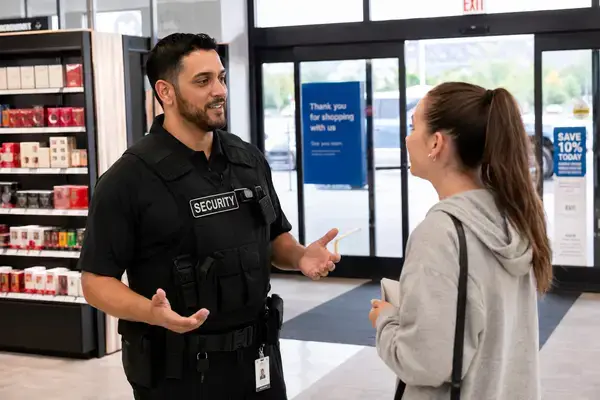
In Texas, a retail security guard can observe, document, ask someone to leave, and detain a suspected shoplifter only with reasonable cause, and only within what store policy and state law allow. They are not police. What any single guard is allowed to do comes down to their license level and the store’s own rules.
Texas guards are licensed through the state’s private security program. Most retail officers are Level II, or non-commissioned, which means unarmed. Carrying a firearm requires a Level III commission, which adds a longer training course and a shooting qualification. That is why armed guards are rare in standard retail and more common in jewelry or high-risk sites. There are also firm legal limits on a guard that hold regardless of the badge.
Now the part nobody advertises. Even when state law would allow a reasonable detention, most retailers tell guards not to touch anyone, full stop, to avoid lawsuits over false arrest or use of force. Guards on industry forums vent about this constantly: they watch theft happen and can only narrate it. If you hire security expecting tackles and arrests, you will be disappointed, and frankly you should be glad. The liability from one bad detention can dwarf a year of shrink. The smarter setup pairs a no-contact policy with clear escalation steps and a real relationship with police. Employers also carry a duty to keep their workers safe from violence on the job, and that shapes how aggressive any response should be.
What drives the cost of retail security?
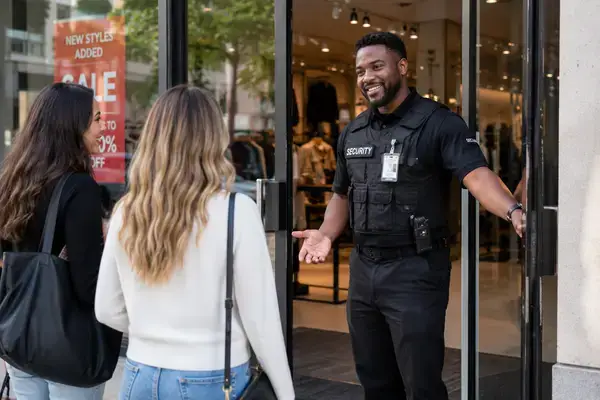
The cost of retail security comes down to a few things: how many hours and posts you cover, whether guards are armed or unarmed, the risk level of your store, and whether you hire in-house or through a contract company. Armed coverage and around-the-clock posts cost the most. Shared or peak-hour coverage costs the least.
A billed rate also reflects the guard’s own pay plus the provider’s training, insurance, and overhead. For context, security guards earn a national median of $38,390 a year, or about $18.46 an hour, reported by the Bureau of Labor Statistics. A contract rate sits above that, since the company carries the hiring, training, and liability you would otherwise manage yourself.
| Coverage type | Armed or unarmed | Best fit |
| Uniformed guard | Usually unarmed | Most stores, malls, strip centers |
| Armed guard | Armed (Level III) | Jewelry, high-value, high-crime sites |
| Plainclothes loss prevention | Usually unarmed | Heavy internal or organized theft |
A word on the cheap end. The lowest bidder usually wins by paying guards less and training them little, and it shows up as turnover and missed incidents. The industry already churns hard, and a guard who started last week does not know your store, your people, or your problem areas yet.
Is a retail security guard worth it for your store?
For most stores with real theft or safety problems, a trained guard pays for itself in deterrence and faster response. For a low-traffic shop with light shrink, a guard can be a waste of money that cameras and good staffing would handle better. The honest answer is that it depends on your numbers.
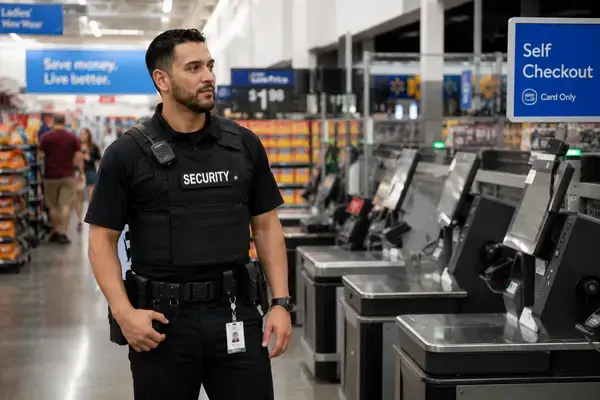
This is the take that annoys vendors on both sides. Cameras and AI analytics are not a guard replacement, and a guard is not a camera replacement. AI video tools flag suspicious behavior fast, but they throw false alarms and cannot physically respond to anything. I have watched stores spend big on analytics, cut their floor coverage, then discover that self-checkout plus an empty floor is an open invitation. The setups that work treat technology and people as one system: the software narrows where to look, the human decides what to do. Whether unarmed officers are the right call usually comes down to whether you need a visible deterrent and a calm responder, which describes most retail.
One more reason this matters in 2026: violence, not just theft. The NRF found that 83% of retailers reported the same or higher levels of aggression during theft events compared with the year before, and 91% had to add workplace-violence training for staff. A guard’s value is shifting from “stops shoplifters” toward “keeps a tense situation from turning into an injury.”
How to choose a retail security guard in Houston
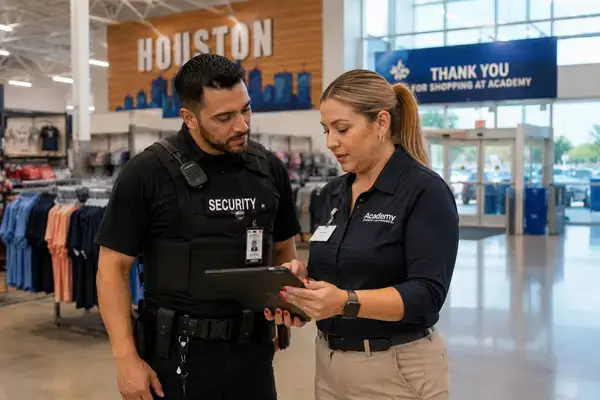
To choose a retail security guard in Houston, vet the provider’s licensing, ask exactly what their written policy allows on detention and use of force, and confirm how they train, supervise, and back up their officers. Price matters, but policy fit and training matter more.
Ask hard questions before you sign. What is the exact policy on apprehension and reasonable detention versus your store’s rules? How do they measure a guard’s performance, whether by incident logs, response times, or shrink trends? What is the plan for sharing information with your staff and with Houston police? How many training hours, and on what: de-escalation, legal limits, spotting organized crews? Thin answers are a red flag.
These days most owners vet a provider online before they ever call, so a firm’s reviews and the work of a digital marketing team behind its visibility shape first impressions as much as its guard roster. Look past the polished page to the substance underneath.
The one thing to remember is simple. A retail security guard is only as good as the policy and training behind the badge. A licensed, well-trained officer who knows your store and your rules is worth far more than a cheaper warm body at the door. If you run a store in the area and want that kind of coverage, start by talking with a Houston team that handles retail security guards every day. Get the policy right, and the presence takes care of the rest.
FAQs
What does a retail security guard do?
A retail security guard patrols the sales floor, watches for theft, controls access to staff areas, writes incident reports, and responds to emergencies. Most also greet and assist customers. The exact duties depend on store size, traffic, and the company’s written policy on how guards handle theft.
Can a retail security guard detain or arrest a shoplifter?
A retail security guard can detain a suspected shoplifter only with reasonable cause and only within what store policy and state law allow. They are not police. Most retailers use strict no-contact policies that tell guards to observe and report rather than physically stop anyone. The National Retail Federation reported that 64% of retailers referred fewer than half of their theft incidents to law enforcement in 2024, a sign of how limited the response options often are.
Can a retail security guard search a customer’s bag?
A retail security guard usually cannot physically search a customer, their bag, or a fitting room without consent. Most store policies limit guards to visual monitoring and asking for cooperation, because a search or detention without clear justification risks a false imprisonment claim. What is allowed always depends on store policy and state law.
Are retail security guards usually armed?
No. Most retail security guards are unarmed. In Texas, that means a Level II, non-commissioned license. Armed guards need a Level III commission with extra firearms training, so they are usually reserved for jewelry stores, high-value goods, or high-crime locations rather than typical retail.
Do security guards reduce shoplifting?
Visible security guards reduce shoplifting by opportunists who steal on impulse, but they are far less effective against organized retail crime crews who plan around no-contact policies. The National Retail Federation reported an 18% rise in shoplifting incidents in 2024, which is why most stores pair guards with cameras and smart layout.
What is the difference between a security guard and a loss prevention officer?
A uniformed security guard focuses on visible deterrence, access control, customer service, and emergency response. A loss prevention officer is often plainclothes and focuses on detecting and investigating theft, both shoplifting and internal theft. Many stores use both, and contract security tends to be more observation-focused than in-house loss prevention.
What training does a retail security guard need in Texas?
In Texas, a retail security guard needs a state license through the Department of Public Safety private security program. Unarmed officers complete Level II non-commissioned training. Armed officers need a Level III commission, which adds a minimum 45-hour course and a firearms qualification. On-the-job training on store policy is standard on top of that.


