A security guard can legally work up to 12 hours a day in most U.S. states, and longer 16- or 24-hour shifts are legal in many places during emergencies or short-staffed nights. No federal law sets a daily hour cap for adult guards. Federal law only requires overtime pay after 40 hours in a single workweek.
In Texas the rule is short and clear. Pay overtime after 40 hours a week, with no daily limit at all. That gives Houston employers more room to schedule long shifts than a company in California gets, which matters if you are arranging security guard coverage in Houston around a 24-hour site. More room is not the same as a smart schedule, which is the part most articles skip.
How many hours does a security guard work in a day?
Most security guards work either an 8-hour or a 12-hour shift. Eight hours was the old standard. Twelve-hour shifts have taken over a lot of sites because they cut the number of guard handoffs in half and give officers more full days off.
Here is the short version by the numbers.
- Typical shift length runs 8 or 12 hours for most fixed posts.
- There is no federal daily cap for anyone age 16 or older.
- Federal overtime is 1.5 times pay after 40 hours in a week.
- Texas follows that weekly rule and adds no daily overtime.
- California pays overtime after 8 hours in a day and double time after 12.
- A 12- to 16-hour shift is legal if overtime and any required breaks get paid.
This is not a niche question. About 1.27 million people worked as security guards in the U.S. in 2024, and the job pays a national median near $18.46 an hour, about $38,370 a year, according to the Bureau of Labor Statistics. That modest base wage is a big reason long shifts and overtime are so common.
What the law says about security guard work hours
Federal law sets no maximum on daily or weekly hours for adult guards. It only requires overtime. State law is where any real daily limit shows up, and it changes a lot depending on where the post sits. A company offering security guard services in one state may schedule very differently from the same company across a state line.
One note on scope. This guide is about daily hours: how long a single shift can run, and what makes a long day legal or risky. Weekly totals, full-time hours, and overtime pay across a whole week are their own topic and live in a separate guide. This also does not cover union contracts or federal-contract wage rules, which can override the basics here.
What is the Fair Labor Standards Act?
The Fair Labor Standards Act, or FLSA, is the federal law that sets minimum wage and overtime rules for most security guards. Under it, non-exempt guards earn at least 1.5 times their regular pay for every hour past 40 in a week. The Department of Labor spells out the federal overtime rules for guards in its own fact sheet for the industry.
The FLSA does not put a ceiling on daily or weekly hours for workers 16 and older, and it does not require daily overtime. A guard can legally work a 12-hour or even a 16-hour day under federal law, as long as the weekly overtime gets paid and other rules are met. (Non-exempt, by the way, just means overtime rules apply, which covers almost every hourly guard.)
Does a security guard get daily overtime?
Under federal law, no. Overtime is weekly, not daily, so a guard earns 1.5 times pay only after 40 hours in a workweek, no matter how long any single shift runs. That is the main reason a 12- or 16-hour day is legal in the first place. There is no federal penalty rate for a long day on its own.
Some states change that. California and a few others add daily overtime, which kicks in after a set number of hours in one day instead of waiting for the weekly total. So whether a long shift triggers extra pay depends almost entirely on the state, which is where the rules further down come in.
Which is better, 8-hour or 12-hour security guard shifts?
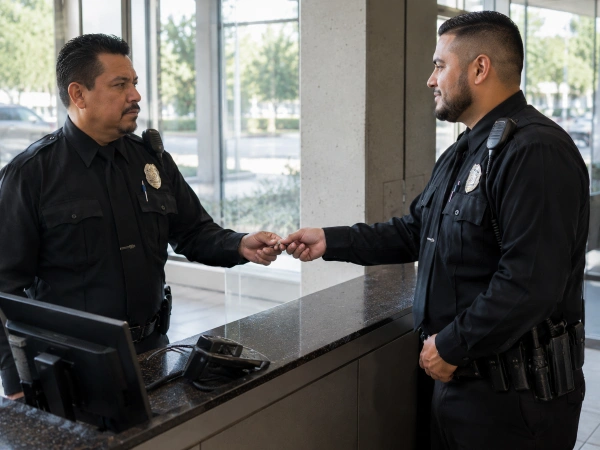
Both shifts are common, and they trade off in different ways. Eight-hour shifts keep guards sharper. Twelve-hour shifts need fewer guards and mean fewer handoffs, which is why a lot of round-the-clock sites like warehouse security run them. Here is the part the schedule-maker rarely says out loud. A guard’s accident and error risk more than doubles by the 12th hour compared with the first eight, based on shift-work fatigue research. So the case for 12-hour shifts holds up right until a tired guard misses something.
Run the math for a 24/7 site and 12s look obvious: two guards cover the day instead of three. The catch is that those longer shifts only stay safe when the rotation gives real rest between them. Stack them back to back and fatigue does the damage, whatever the headcount looks like on paper.
What are the most common security guard shift lengths?
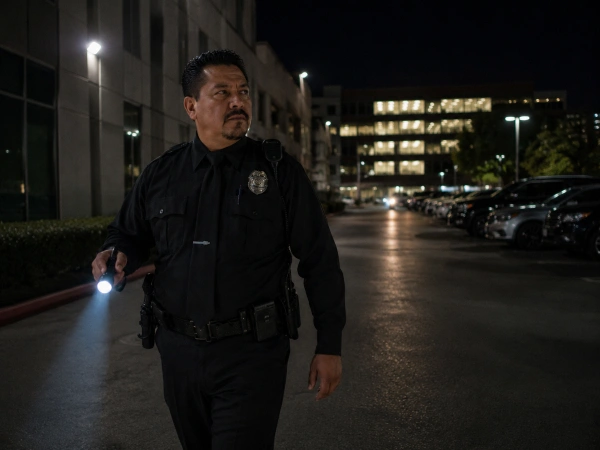
Most security guard schedules are built from a few standard shift lengths.
- 8-hour shifts, like 7 a.m. to 3 p.m., 3 to 11 p.m., and 11 p.m. to 7 a.m. Three of them cover a full day.
- 10-hour shifts, less common, used where a site wants fewer but longer days.
- 12-hour shifts, like 6 a.m. to 6 p.m. and 6 p.m. to 6 a.m. Two of them cover the day.
- Overnight or graveyard shifts, usually 8 or 12 hours, lean heavy on access control and monitoring, and event security work often stretches these even longer.
How many days in a row can a security guard work?
There is no federal limit on how many days in a row a security guard can work. Federal law tracks weekly overtime, not consecutive days, so a guard can legally work 7, 10, or more days straight as long as overtime is paid. The real limits come from a few states, company policy, and fatigue.
A handful of states add their own rules. California is the big one. If a guard works all 7 days in a single workweek, the 7th day carries extra overtime: 1.5 times pay for the first 8 hours and double time after that. Most other states, including Texas and Florida, set no consecutive-day rule at all, so the schedule is whatever the employer and contract allow.
This is where good employers draw their own line. Stacking long shifts day after day wears guards down, and tired officers miss things. Plenty of security companies cap consecutive shifts or build in a required day off, not because the law forces it, but because a rested guard on day 3 is worth far more than an exhausted one on day 9.
When long shifts become a safety risk
A security shift crosses from long into risky somewhere around the 12-hour mark, and it climbs fast after that. The law may allow a 16- or 24-hour shift, but fatigue does not care what is legal. A tired guard is a worse guard, full stop.
The research is consistent. A guard’s accident and error rate more than doubles by the 12th hour of a shift compared with the first 8. Push past that and it gets worse. After roughly 17 hours awake, a person performs about as well as someone at a 0.05 percent blood alcohol level, which is near the legal driving limit in many places.
The danger does not end when the shift does. A guard who just finished 16 hours still has to drive home, and drowsy driving is one of the most overlooked risks in this job. The same exhaustion that dulls reactions on post dulls them behind the wheel.
For the client, the real risk shows up as missed incidents. The whole point of a guard is attention: noticing the propped door, the loitering car, the alarm that is not quite right. That attention is the first thing fatigue takes. A 16-hour guard standing post is technically coverage, but the protection you actually hired a guard for has already dropped off.
State rules that change how long a guard can work
The biggest swings in daily hours come from state law. Texas and California sit at opposite ends, and most other states land somewhere in between.

How does overtime work for guards in Texas?
In Texas, overtime is purely a weekly matter. Anything over 40 hours in a week gets paid at 1.5 times the rate, and there is no state daily overtime and no daily hour cap. So a Houston guard can legally work several 12-hour or even 16-hour days in a row, as long as the hours past 40 each week are paid correctly. What actually limits the shift is company policy, the client contract, and plain safety.
Texas does control who works as a guard, even if it does not limit hours. The Texas Department of Public Safety requires a six-hour Level II course for every non-commissioned officer, plus a Level III course of at least 45 hours and a firearms qualification for commissioned, or armed, officers. Those rules shape how many licensed guards are available to cover a long shift, and why a company that staffs both armed and unarmed officers has to plan training time on top of hours.
My take after years around guard scheduling: in Texas the flexibility is both a gift and a trap. Picture a Houston warehouse that runs around the clock. You can cover it with two guards on 12-hour shifts and no daily overtime, which is efficient. The trap shows up when a relief guard calls out and the on-duty officer gets pushed to 16 or 20 hours to fill the hole. Legal, yes. Smart, no. One serious incident on a stretched shift does more damage than the overtime ever would.
How California’s daily overtime changes long shifts
California is the mirror image of Texas. It pays daily overtime after 8 hours and double time after 12, so a long shift runs into higher overtime fast.
- Time and a half kicks in after 8 hours in a day, up to 12 hours.
- Double time, two times pay, starts after 12 hours in a single day.
- Extra overtime rules apply on the seventh straight day of work in a week.
California also mandates meal and rest breaks and asks far more upfront training than Texas, roughly 40 hours for a new guard, starting with 8 hours of Power to Arrest and Use of Force before the first shift, per California’s licensing agency. So the same 16-hour shift that adds no daily overtime in Houston hits a California employer with double time on the back half.
What is New York’s “spread of hours” rule?
New York follows the federal weekly overtime rule and has no general daily overtime. But it carries one odd extra rule called spread of hours.
Spread of hours means that when a workday runs more than 10 hours from the first clock-in to the last clock-out, certain workers get an extra hour of pay at minimum wage, even if they did not actually work a full 10 hours. It mostly applies to specific industries, so a New York employer should check whether it covers their guards before building long or split shifts.
Where does Florida fit?
Florida looks a lot like Texas. There is no state overtime law, so federal weekly rules apply, with no daily overtime, no state-mandated breaks for adult guards, and no daily hour cap. For a Florida security company, long daily shifts are legal, and the real guardrails are company policy and safety, not the statute book.
State rules at a glance
Here are four states side by side.
| State | Daily overtime | Break requirements | Daily hour limit |
|---|---|---|---|
| Texas | None. Overtime is weekly, after 40 hours. | None required by the state. | None. |
| California | 1.5x after 8 hours, 2x after 12 hours in a day. | 30-minute meal after about 5 hours, plus paid 10-minute rests. | No hard cap, but daily overtime and double time apply. |
| New York | None. Overtime is weekly only. | Meal period required on longer shifts, plus spread-of-hours pay on workdays over 10 hours. | None. |
| Florida | None. Follows federal weekly rules. | None required by the state for adults. | None. |
Rules shift by state, industry, and job type, so confirm the current requirements with your state labor agency or an employment attorney before you lock in a schedule.
Real-world security guard shift examples
Here is what these shifts actually look like on the ground.
8-hour office building shift
A downtown Houston office tower runs three 8-hour shifts. The morning officer handles the lobby rush, badge checks, and deliveries. The day is busy but rarely runs past the limit, and the guard goes home alert. This is the gold standard for posts that need a sharp, friendly presence more than raw hours. A tower like this often pairs the lobby officer with a roving guard or scheduled mobile patrol for the garage and back entrances.
12-hour hospital or industrial site shift
A hospital or a refinery does not stop at 5 p.m., so these sites usually run two 12-hour shifts. A guard might work 6 a.m. to 6 p.m. covering access points, escorting staff, and responding to calls. Twelve hours works here if the rotation gives real recovery time between shifts and the breaks are actually covered. Where it breaks down is back-to-back 12s with short turnarounds, which is when fatigue stacks up.
16-hour emergency coverage shift
Then there is the shift nobody plans for. A relief guard quits mid-week, a storm rolls in, or an event runs long, and one officer ends up covering 16 hours. It is legal in Texas with overtime paid, and sometimes it is the only option in the moment. But by hour 14 that guard is running on fumes, so a 16-hour post should be a one-off fix, not a staffing model. If it happens every week, the schedule is broken, not the guard.
Breaks and rest on long security guard shifts
Federal law does not require meal or rest breaks for adult guards. States fill that gap, and a few, like California, are strict about it.
Do security guards get meal and rest breaks?
It depends on the state, since federal rules set no break requirement. The one federal catch is that short breaks under 20 minutes usually count as paid time, and the Department of Labor is clear that short breaks must be paid. Texas has no state break mandate, so it comes down to company policy and the contract. California requires a 30-minute unpaid meal break after about 5 hours, plus shorter paid rest breaks.
What breaks look like on a 12-hour shift
On a 12-hour shift at a site with strong break rules, a normal pattern looks something like this.
- One or two 30-minute meal breaks, unpaid if the guard is fully off duty.
- Several 10- to 15-minute paid rest breaks spread across the shift.
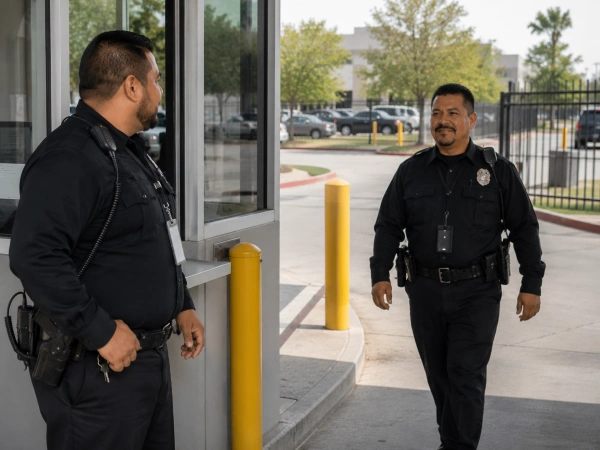
For a single-officer post, a gatehouse or a hotel security desk, the guard cannot just walk off, so a relief guard covers the break instead. Guards should know how relief works at their site before a long shift starts.
Guidance for guards and employers
The same hours look different depending on which side of the schedule you are on.
If you’re a security guard
A few habits protect your pay and your safety on long shifts.
- Track every hour you work, including training time and any pre- or post-shift duties.
- Write down missed breaks or extra-long shifts, and raise them with a supervisor or HR.
- Check your state labor agency’s website, or talk to an employment attorney, if you suspect unpaid overtime or an unsafe schedule.
If you hire security guards
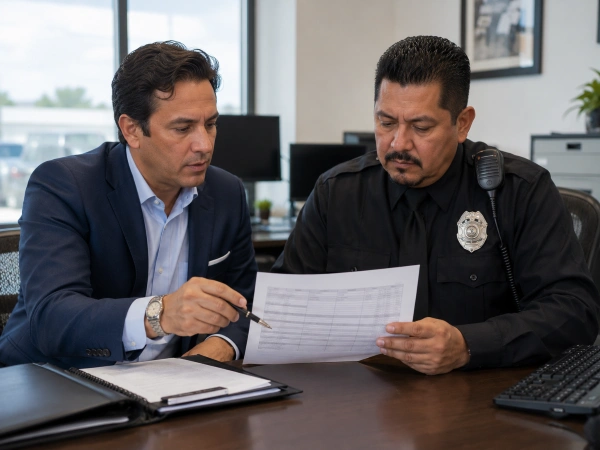
If you are hiring out coverage, how a company schedules guards tells you a lot before you ever sign. A good security guard agency should answer a few direct questions without dancing around them.
- What is your maximum shift length, and your policy when a relief guard does not show up?
- How fast do guards get overtime approved and paid, especially across multiple sites?
- What is your current turnover, and how do you keep experienced officers on my account?
What to do next
The legal maximum is almost never the real limit. Federal law lets a guard work 12, 16, even 24 hours, and Texas adds no daily cap on top. But fatigue and cost are the limits that actually matter, and the smartest schedules are built around the work and the people, not around the loophole.
If you need security guards in Houston and want a provider that schedules around safety instead of the lowest possible headcount, Reliable Guard & Patrol Services can build a coverage plan and run a free site assessment. Sort out the hours before a long shift goes wrong, not after.
FAQs
Is a 12-hour security shift normal?
Yes, a 12-hour security shift is one of the two most common setups in the industry, along with the 8-hour shift. Sites that need round-the-clock coverage often use two 12-hour shifts because it means fewer guard handoffs. The trade-off is fatigue, since alertness drops over a long shift, so good employers pair 12s with enough rest in between.
Is it legal for a security guard to work 12 hours a day?
Yes. In most U.S. states a security guard can legally work a 12-hour shift, as long as overtime and any break rules are followed. In states with daily overtime, like California, part of those 12 hours is paid at higher overtime rates, but the shift is still legal.
Can a security guard work 16 hours in one day?
Yes, and it happens during emergencies, special events, or last-minute call-outs. Federal law and many states set no daily cap, so a 16-hour day is legal when overtime is paid and required breaks are given. California adds daily overtime and double-time rules for those long days, and many companies cap shifts on their own for safety.
Can a security guard work two shifts in a row?
Often yes. Working a double, two back-to-back shifts, is legal in most states as long as overtime and any required breaks are paid, and it is common when a relief guard is late or calls out. A double 8 makes 16 hours and a double 12 makes 24, both deep in the range where fatigue raises the risk of mistakes, so it should be the exception, not the routine.
Can a security guard legally work a 24-hour shift?
In many places, yes, because no universal federal or state ban exists, especially during emergencies or when no relief shows up. It is strongly discouraged, though. After about 17 hours awake, performance drops to a level researchers compare to a 0.05 percent blood alcohol level, so error and drowsy-driving risk climb fast.
Can an employer require a 16-hour security shift?
In most states, yes. Because federal law sets no daily hour cap and most states do not either, an employer can require a 16-hour shift, and a guard who refuses can usually be disciplined under at-will rules. The real limits are state daily overtime, like California’s, plus company policy and safety. Legal does not always mean wise here.
What happens if a relief guard does not show up?
When relief does not show up, the on-duty guard is usually held over until someone arrives, which can turn a 12-hour shift into 16 or more. That is legal in most states when overtime is paid, but it is one of the biggest causes of dangerous, fatigue-heavy shifts. A solid security company keeps a backup and on-call plan so one no-show does not strand a single officer.
How many hours can an armed security guard work?
An armed security guard follows the same federal hour and overtime rules as an unarmed guard, with no separate daily cap. The difference is training and licensing, not hours. In Texas, armed (commissioned) officers must finish a Level III course of at least 45 hours and a firearms qualification. High-risk armed posts also tend to carry stricter client and insurer expectations on shift length.
How many hours can a guard work without a break?
That depends on state law and company policy, since federal law does not set break timing. California is a useful benchmark, because it requires a meal break after about 5 hours and regular rest breaks, so a guard there generally should not go past roughly 5 hours without a meal break. Texas and Florida leave break timing up to the employer.
Do guards get overtime after 8 or 12 hours?
Under federal law and most states, overtime starts after 40 hours in a week, not automatically after 8 or 12 hours in a day. States like California add daily overtime, time and a half after 8 hours and double time after 12 in a single day, so guards there earn overtime on daily hours too.