
Armed security guards primarily rely on semi-automatic pistols in common defensive calibers for daily protection duties. These handguns offer a strong balance of reliability, manageable size, and defensive capability for security work. Texas law and company policies determine which specific firearms armed security guards may carry. Most Houston security companies equip their officers with standard-issue pistols that meet state regulations and insurance requirements.
Firearm selection depends on the assignment, work environment, and assessed risk level. Corporate office security differs significantly from event protection or construction site patrols. Armed officers receive extensive training and must pass regular qualification tests with their assigned firearms. Professional security companies prioritize public safety by selecting proven firearm platforms that support defensive tactics while minimizing unnecessary risk.
Key Takeaways
- Semi-automatic pistols are the most common duty firearms
- Texas laws and insurance requirements determine approved weapon types
- Compact pistols are often used for discreet protection assignments
- Long guns such as rifles or shotguns rarely appear in public-facing security roles
- All armed officers must complete certification and ongoing training
- Weapon selection aligns with specific job duties and location risk levels
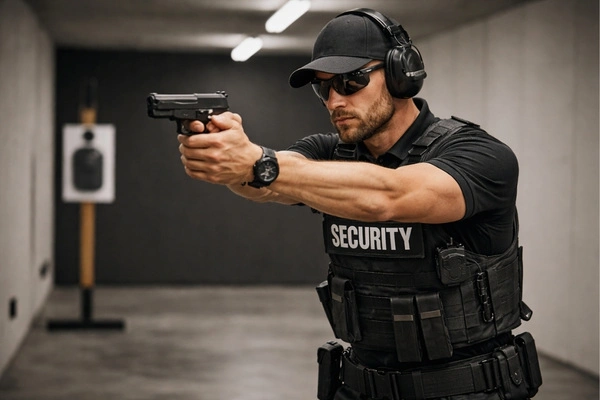
How Laws Decide What Guns Armed Security Guards Carry
Legal requirements must be understood before selecting firearms for security work. Armed officers must follow state and local laws governing approved weapon types. These regulations define licensing requirements and training standards. Rules vary by jurisdiction and may limit caliber size, magazine capacity, and carry methods. Texas law sets clear guidelines for what licensed armed officers may carry on duty. Professional Houston security providers ensure all issued firearms meet legal requirements.
Security companies maintain strict compliance standards for all personnel. Officers carry only firearms permitted under state law for their specific assignment. This approach supports accountability, public safety, and operational readiness. Legal compliance explains why armed security guards use standard firearm types that regulators approve. Insurance providers also favor widely accepted firearm platforms for commercial security operations. Houston security providers train their officers exclusively on approved firearms that meet Texas standards.
Why Job Duties and Work Settings Matter
Firearm selection depends on the type of security assignment being performed. An officer assigned to a corporate office faces different risks than one assigned to large public events. Factors such as lighting conditions, crowd density, and access points influence equipment decisions. Houston security companies assess these factors when assigning officers to various sites. The work environment directly influences which firearms may be appropriate for duty use.
Event security assignments require reliable, easy-to-control handguns suitable for close-range defense. High-traffic venues require equipment appropriate for defensive use in crowded environments. Armed security guards on perimeter patrol duty may need different equipment for their specific tasks. The firearm must align with the assignment while prioritizing bystander safety. Professional security services match weapon types to assignment needs for maximum protection. Armed security guards receive training on proper firearm use in various work environments.
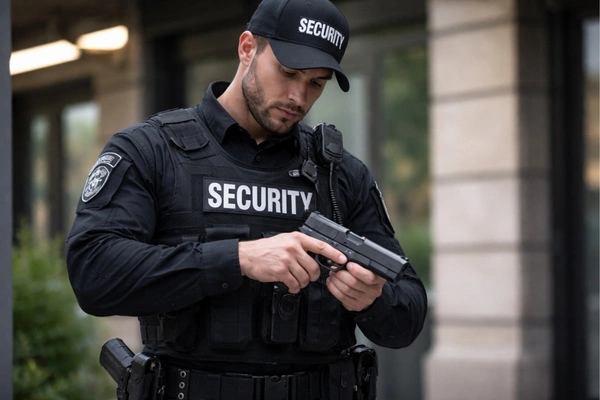
Semi-Automatic Pistols Work Best for Most Jobs
Why Pistols Are Most Popular
Semi-automatic pistols are the primary duty firearm across Houston security operations. These platforms balance reliability, manageable size, and effective defensive capability. Pistols are easier to carry comfortably during extended shifts. Officers can deploy pistols efficiently in confined or crowded areas when necessary. Houston security companies equip their armed security guards with semi-automatic pistols for most assignments. Pistols remain the standard because training programs focus on these firearms exclusively. Many certification courses for armed security guards teach semi-automatic handgun skills and safety procedures. This uniform approach helps armed security guards maintain shooting skills and pass qualification tests easily. Consistent training methods make armed security guards more effective at protecting Houston businesses and properties.
Popular Caliber Sizes
Armed guards typically carry pistols in common defensive caliber sizes used nationwide. Security companies choose these calibers for ease of control, ammunition availability, and proven stopping power. Using standard calibers makes training simpler and equipment maintenance more affordable for security operations. When clients ask what guns armed guards use, these popular calibers always come up. Armed security guards carry approved calibers that meet Texas law and industry standards.
Revolvers for Special Security Jobs
Revolvers are less common today but may still appear in limited assignments. Some agencies prefer revolvers due to their mechanical simplicity and dependable operation. Armed security guards find revolvers easier to maintain and clean after duty shifts. Some jurisdictions with strict gun laws still allow revolvers for security work purposes. Armed security guards use revolvers mainly in lower-risk locations or when they have years of experience. Revolvers typically hold fewer rounds than semi-automatic pistols but are valued for straightforward operation. Security companies that value simplicity and long-lasting equipment often choose revolvers for their armed security guards.
Smaller Guns for Hidden Protection Needs
Easy to Hide and Comfortable
Some security jobs need armed security guards to stay hidden from public view. Compact or subcompact firearms work best for these low-profile protection assignments in Houston. These smaller handguns conceal easily under clothing and feel comfortable during entire work shifts. Armed security guards use compact pistols for executive protection and discreet security service details. Houston security companies provide compact firearms when clients request subtle protection without obvious weapons.
Small guns still offer strong defensive power when armed security guards receive proper training. These compact weapons prove that firearms should match the job requirements perfectly. The weapon choice should support the security mission without drawing unnecessary attention to itself. Armed security guards train extensively with compact firearms to maintain accuracy and effectiveness. Professional security services ensure smaller guns never compromise protection quality or response capabilities.
Training and Testing Requirements
Compact firearms need precise handling skills that only professional training can provide properly. Armed guards must pass qualification tests with the exact weapon they carry on duty. These tests ensure security guards shoot accurately and handle guns safely under pressure. Houston security companies require all armed guards to complete regular training sessions throughout the year. Ongoing practice keeps armed guards skilled with their assigned compact firearms at all times.
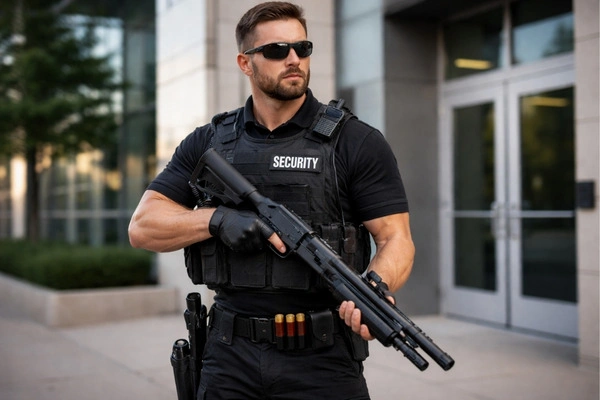
Why Long Guns Are Rarely Used
Limited Situations for Use
Long guns such as rifles or shotguns rarely appear in public-facing security roles. Their size and visibility make them impractical for most Houston security assignments. In limited cases, long guns may be authorized for restricted or high-risk facilities. High-risk sites sometimes require armed security guards to have access to long guns. Houston security companies deploy long guns only when absolutely necessary for specific protection needs.
When long guns become necessary, armed security guards store them securely until needed for use. Security teams access these weapons only under specific conditions approved by company supervisors beforehand. Their use follows strict protocols and requires management oversight at all times during deployment. Armed security guards receive specialized training before they can use long guns at work.
Public Safety Reasons
Public safety concerns explain why armed security guards rarely carry long guns in Houston. Pistols provide enough defensive power in crowded or city locations without extra risks. Larger firearms create more danger in urban environments where many people gather daily. This explains why conversations about what guns armed security guards use focus on handguns. Houston security services prioritize handguns because they balance protection with public safety effectively. Armed security guards can respond to threats quickly with pistols while minimizing risks to bystanders.
Holsters, Safety Features, and Proper Carrying Methods
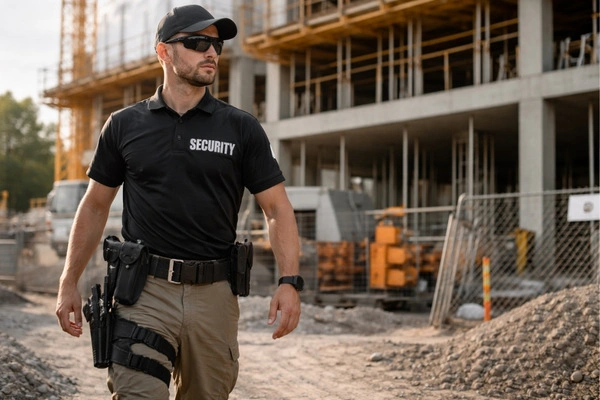
Firearms require proper equipment to ensure safe and controlled carry. Holsters and retention systems are critical components of duty equipment. Professional-grade holsters stop unauthorized people from grabbing weapons while allowing quick access when needed. Armed security guards must carry firearms in approved holsters that meet industry safety standards. Houston security companies provide quality holsters designed specifically for security work and long duty shifts. Retention levels match the risk level of each Armed Security Guard assignment throughout Houston. High-contact roles need stronger retention to stop weapon grabs during physical confrontations or struggles. This equipment choice shows that armed security guards carry firearms for defense only. Duty firearms serve strictly as defensive tools, not symbols of authority. Armed security guards train regularly on proper holster use and weapon retention techniques.
Training Forms the Base of Safe Gun Use
First-Time Certification
Every licensed armed officer must complete state-required firearm training and certification before carrying on duty. Training covers safe gun handling, legal force rules, situational awareness, and stress decision-making skills. Armed security guards learn when force is legal and when they must use other options. Houston security companies require all armed security guards to pass strict certification tests before deployment. Certification is not a one-time requirement. Officers must requalify regularly to maintain accuracy, safety, and legal authorization. Armed security guards complete periodic testing to maintain their firearm certification and employment status.
Continued Skill Building
Professional security companies invest in regular training to keep armed security guards competent and confident. This includes realistic scenario exercises, legal rule updates, and marksmanship practice at shooting ranges. Training teaches armed security guards when not to use firearms, which matters just as much. Houston security services ensure their armed security guards understand de-escalation and non-lethal options first. Ongoing education keeps armed security guards sharp and prepared for any security situation they face.
Risk Management and Force Rules
Firearms represent just one part of a complete risk management strategy for armed guards. Armed security guards follow clear use-of-force policies that stress de-escalation whenever situations allow it. The firearm serves as a last-resort defensive tool for armed guards in Houston. Security companies train their security guards to exhaust all other options before drawing weapons.
Understanding what guns armed security guards use means recognizing that equipment choices emphasize restraint and responsibility. Armed guards learn to assess threats properly, protect lives first, and avoid unnecessary escalation. Houston security services equip their armed guards with weapons that support defensive tactics only. Professional training ensures security guards understand when firearms become necessary and when other methods work.
Public Opinion and Professional Image
Firearms in security roles can shape how the public views armed security guards daily. Professional appearance, disciplined behavior, and proper equipment choices help maintain public trust in Houston. Firearms that are common, regulated, and well-maintained support this trust-building goal effectively. Armed security guards represent their security companies through professional conduct and responsible weapon handling. Security organizations avoid unusual or unconventional weapons that could alarm or confuse the public. Instead, armed security guards rely on proven firearm platforms that reflect industry standards. Regulatory approval guides all weapon choices for armed security guards working throughout the area. Professional standards ensure armed security guards carry only weapons the public recognizes and accepts.
Technology and Modern Gun Features
Modern firearms used by armed security guards often include safety and reliability improvements today. These features support safe carrying and consistent performance in all security situations armed guards face. While technology changes over time, core requirements stay the same for defensive weapon use. Reliability, control, and defensive suitability remain the most important factors for armed guards.
Security companies evaluate new equipment carefully before approving it for Armed Security Guard use. Houston security services ensure all firearms meet legal and operational standards before any deployment. Armed guards receive training on any new weapon features or safety systems added. Modern enhancements help armed security perform their duties more safely and effectively.
Insurance and Legal Responsibility Issues
Insurance providers often determine which firearms armed security can carry on security assignments. Certain firearms and calibers get insurance approval more easily because of widespread use. Established safety records make some weapons more insurable than others for Houston security companies. This practical factor limits the range of firearms armed guards use during work.
Liability concerns strengthen the importance of training, documentation, and rule-following for armed guards. Firearms exist to protect people and property, not to intimidate or threaten anyone. Houston security services maintain detailed records of all firearm training and qualification tests. Armed security guards understand their legal responsibilities when carrying weapons on duty assignments.
Why Using the Same Guns Helps
Using standard firearms across security teams makes training, maintenance, and oversight much simpler overall. Armed guards can support each other better when everyone carries the same equipment types. Supervisors ensure compliance and readiness more efficiently with standardized firearms for all armed guards. Houston security companies benefit from uniform equipment across their entire security force daily.
Standardization explains why the range of firearms armed security guards use remains relatively narrow. Conservative equipment choices ensure armed guards can share ammunition, holsters, and training resources easily. Professional security services avoid experimental weapons that could complicate operations or create safety issues. Standard firearms help armed security work together as an effective, coordinated team.
Conclusion
Selecting duty firearms involves balancing legal requirements, operational needs, and public safety considerations. Semi-automatic pistols remain the top choice because they offer reliability, ease of training, and proven defensive capability. Houston security companies select weapons that meet Texas state laws and insurance requirements every time. Licensed officers receive extensive training to handle firearms responsibly and deploy them only when legally justified. Understanding what guns armed security guards carry helps business owners make informed decisions about their security needs.
Professional security services prioritize equipment that protects people while maintaining public trust throughout the community. Standardized firearms, proper holsters, and ongoing training create effective security teams across Houston and surrounding areas. Whether you need armed protection for corporate buildings, construction sites, or special events, choosing experienced professionals matters. Contact a licensed Houston security provider to discuss your protection needs and learn how trained armed officers can safeguard your property, employees, and customers.
FAQs
What caliber guns do armed security guards carry most often?
Armed security guards typically carry pistols in common defensive calibers like 9mm, .40 S&W, and .45 ACP. These calibers offer good stopping power while remaining easy to control during defensive situations.
Can armed security guards carry rifles or shotguns in Houston?
Armed security guards rarely carry long guns like rifles or shotguns in public areas. These weapons appear only in specialized assignments at restricted facilities or high-risk locations.
Do all armed security guards need special training for their firearms?
Yes, every Armed Security Guard must complete state-required firearm training and pass certification tests before carrying weapons. Guards also requalify regularly to maintain their shooting skills and legal authorization to carry.
Why do most armed security guards use semi-automatic pistols instead of revolvers?
Semi-automatic pistols hold more ammunition and reload faster than revolvers for defensive situations. Training programs focus on semi-automatic handguns, making them easier for guards to master and maintain.
How do Houston security companies choose which firearms their armed security guards carry?
Security companies select firearms based on Texas laws, insurance requirements, job assignments, and public safety needs. They choose proven weapon platforms that offer reliability while meeting all legal and operational standards.