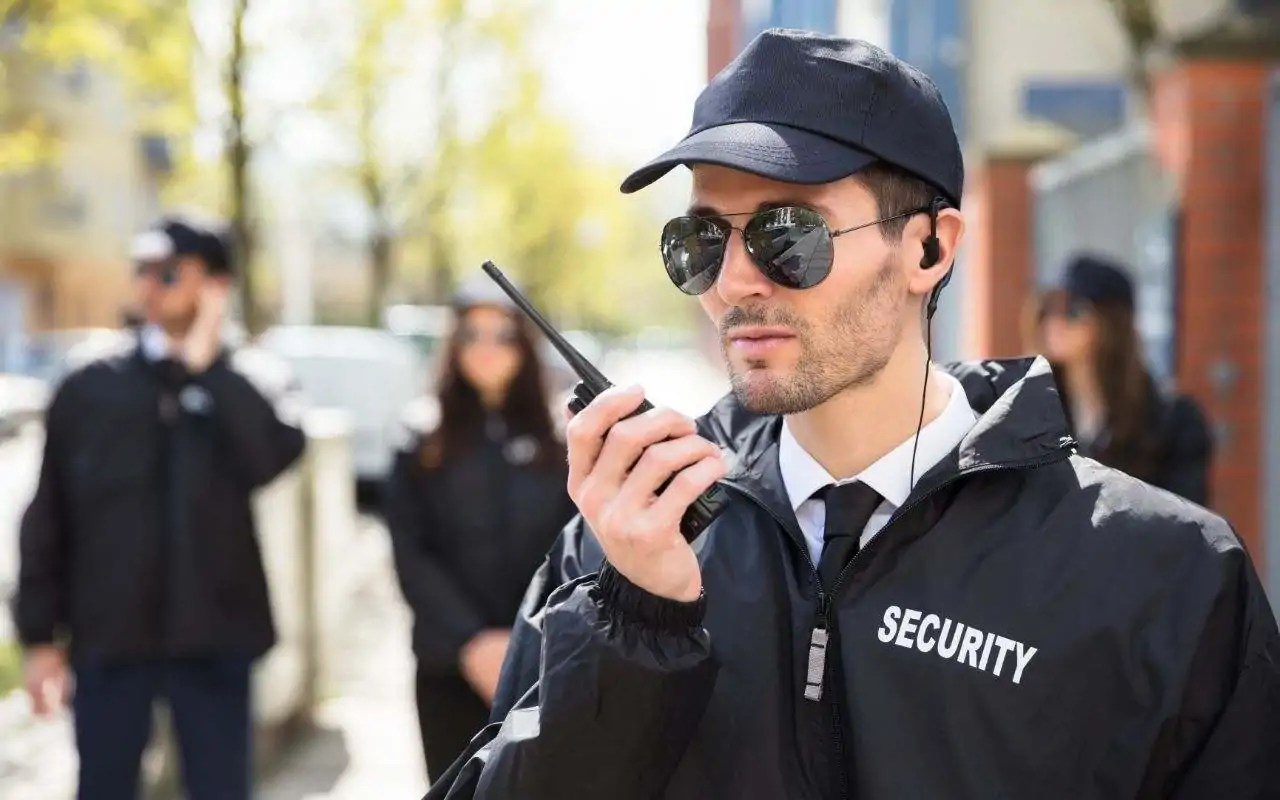
Types of security guard services are the categories of private security a business hires to protect people, property, and events. The common ones are on-site (static) guards, mobile patrol, retail security, event security, close protection, vacant property security, corporate security, and construction site security. Each fits a specific risk.
Most guides list the types and stop. The harder question is which one your site needs, and that depends on your risk, not on price. We’ve staffed posts across Houston for years, and the same mistake repeats: the wrong guard for the job.
What Are The Main Types Of Security Guard Services?
Eight types matter, plus one split across all of them: armed or unarmed. Start there, because it changes your liability and the officer you get. Unarmed guards handle most jobs. They deter, watch, report, and calm things down. Armed guards are for cash handling, high-value assets, or a real history of violence. Match it to the threat, not to what sounds tougher.
On-Site (Static) Security Guards
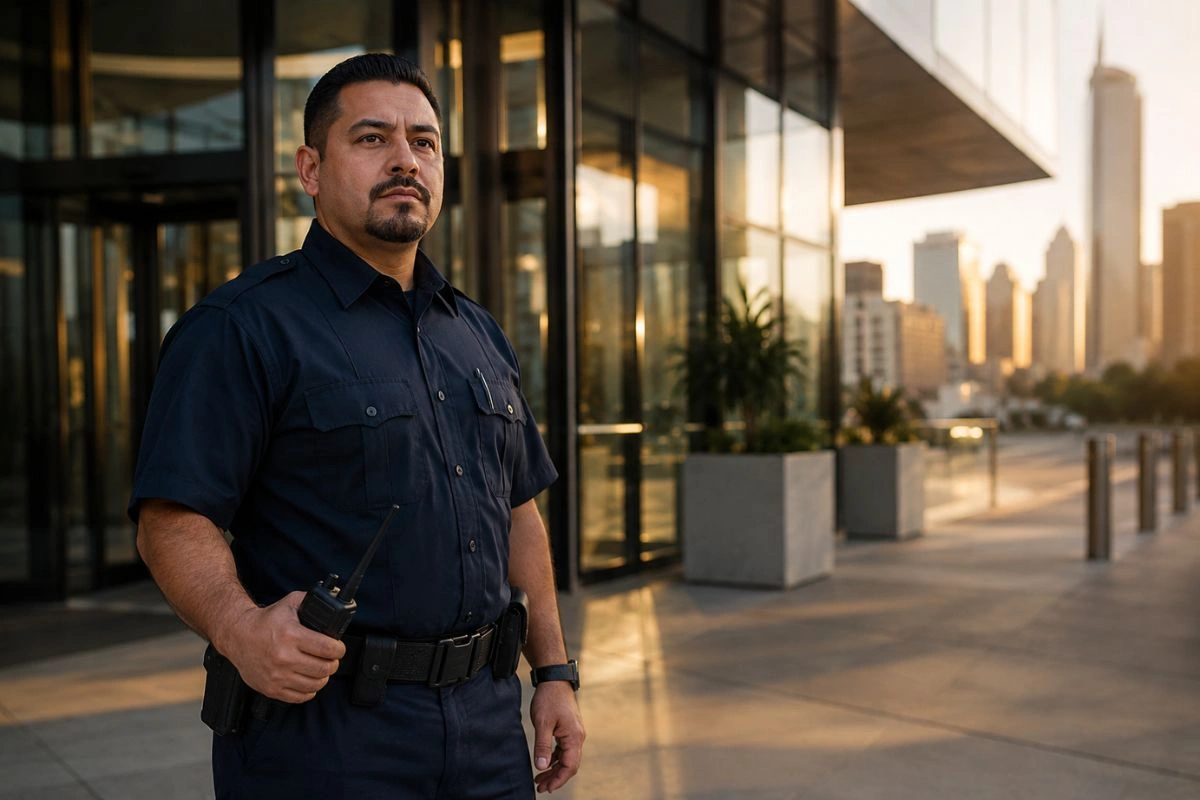
On-site guards stay put at one spot, usually an entrance, lobby, or front desk. They run access control, check IDs, watch camera feeds, and respond to whatever comes through the door. It’s the workhorse post for office towers and apartments around Bellaire and Sugar Land.
Mobile Patrol Guards
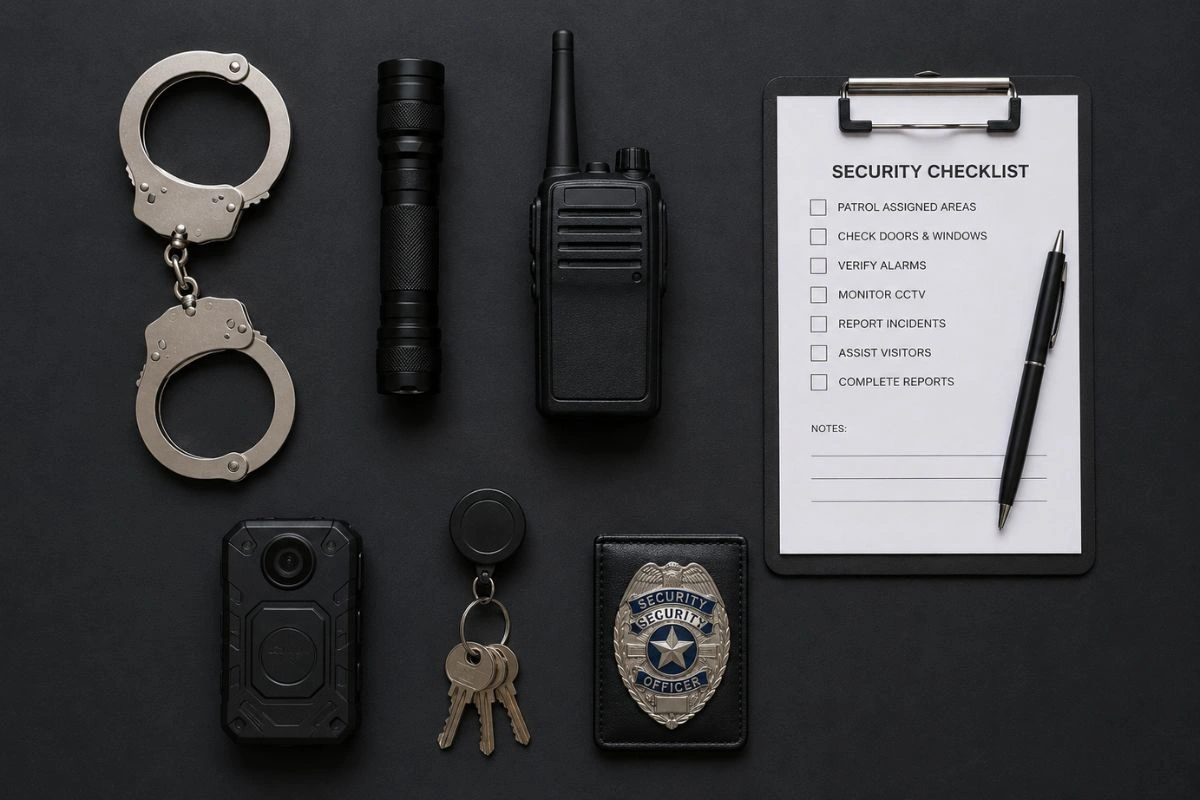
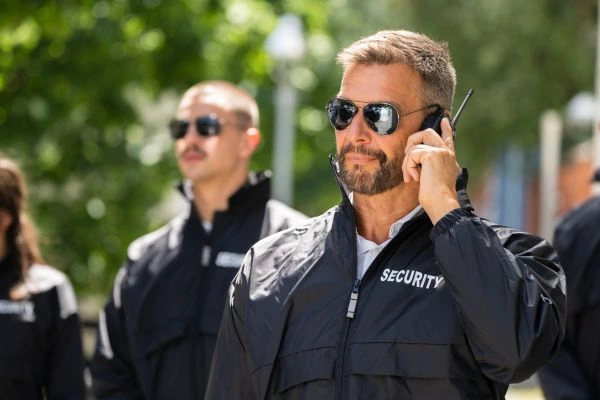
Mobile patrol covers ground a single post can’t. Guards move through a property by vehicle or on foot, hitting checkpoints on a set route, testing locks, answering alarms, and logging what they find. One officer can cover several sites a shift. Good patrol runs on a documented patrol route, not random loops, and in our August heat, rotations matter.
Retail And Loss Prevention Security
Retail guards protect stores and shopping centers from theft and keep the floor calm. They watch for shoplifting, deter organized retail crime, and defuse disputes early. A visible guard near the door beats any camera at stopping a grab-and-run, and demand climbs during busy shopping seasons.
Event Security
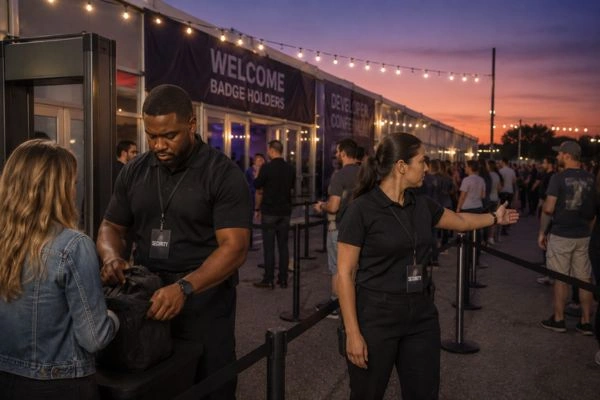
Event security manages crowds, access, and safety for any gathering. Guards check tickets, screen bags, watch crowd flow, and secure restricted areas. Houston runs big on events, the rodeo, downtown conventions, sports at NRG, and those crowds need real crowd management.
Close Protection Officers (Bodyguards)
Close protection officers, or bodyguards, give one-on-one security to people at higher risk: executives, public figures, anyone with a specific threat. They assess threats, plan routes, and stay close enough to act fast. In Texas, this calls for a higher license level than a standard post.
What Is Vacant Property Security?
Vacant property security protects empty buildings from theft, vandalism, and squatters. Empty sites draw copper theft and people moving in uninvited. Guards patrol, control access, and watch cameras so it doesn’t become someone else’s problem.
Corporate And Commercial Building Security
Corporate security handles the front desk, the data, and the safety of people inside a business. Guards manage lobby access, escort visitors, and protect sensitive areas. For banks and law firms, it’s as much about confidentiality as a locked door.
Construction Site And Fire Watch Security
Construction security protects sites loaded with equipment and copper that walks off fast. Guards control entry, log deliveries, patrol after hours, and stop the trespassing that causes theft and delays. The NICB reports equipment theft as a persistent problem, much like guarding a warehouse full of inventory. Texas sites also use fire watch: when an alarm or sprinkler fails, a guard walks the building on a schedule to catch a fire early. Often required, not optional.
Comparison: Types Of Security Guard Services At A Glance
| Type | What it protects | Common Houston setting | Armed or unarmed |
| On-site (static) | People, lobbies, access points | Office towers, apartment complexes | Usually unarmed |
| Mobile patrol | Large or multiple properties | Industrial parks, storage facilities | Usually unarmed |
| Retail / loss prevention | Merchandise, staff, shoppers | Stores, shopping centers | Usually unarmed |
| Event | Crowds, entrances, restricted zones | Rodeo, conventions, NRG events | Unarmed or armed |
| Close protection | High-risk individuals | Executive and public-figure details | Often armed |
| Vacant property | Empty buildings, fixtures, copper | Foreclosed or between-tenant sites | Usually unarmed |
| Corporate / commercial | Front desk, data, occupants | Banks, law firms, headquarters | Unarmed or armed |
| Construction / fire watch | Equipment, materials, fire risk | Active build sites, sites with failed alarms | Usually unarmed |
Do Houston Security Guards Need A License?
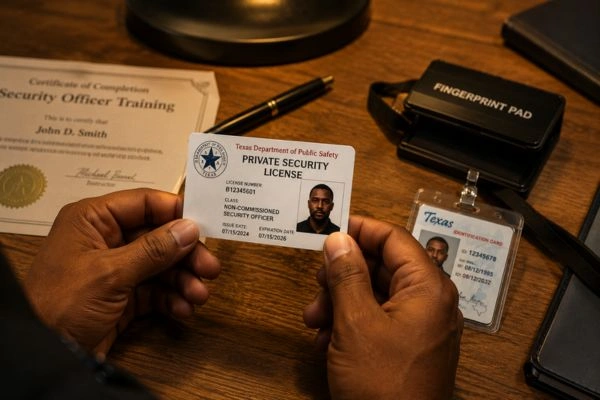
Yes. In Texas, both the security company and every officer must be licensed through the Texas Department of Public Safety Private Security Bureau. Guards register and renew through the state portal and pass a fingerprint-based background check before they work. Training runs by level. Level II covers unarmed officers, Level III adds firearm training for armed (commissioned) guards, and Level IV is for personal protection officers. The full Texas licensing rules change, so verify current requirements before you sign. Some companies also staff licensed peace officers, who answer to TCOLE standards, for higher-risk posts. It pays to know a guard’s legal limits first, since their authority is narrower than most people assume.
How Do You Choose The Right Security Company?
Choose on risk and proof, not price. The cheapest licensed company is usually the most expensive mistake you’ll make. I’ve watched a business save on a low bid, then lose far more to one preventable incident.
Before you sign, get straight answers on:
- Current DPS licenses for the company and every officer assigned to you.
- Insurance limits, and whether they’ll add you as an additional insured.
- Guard turnover and the supervisor-to-guard ratio.
- Written post orders, so everyone knows the job.
- References from comparable Houston sites in the last year.
Turnover is this industry’s quiet problem. In some segments it tops 100% a year, leaving a revolving door of guards who don’t know your building. Vet every vendor this way, even your marketing partner. And mind local needs: sites near the ship channel often require TWIC cards or extra training. A guard who can’t get on site is no guard at all.
Are Security Guards Worth The Investment?
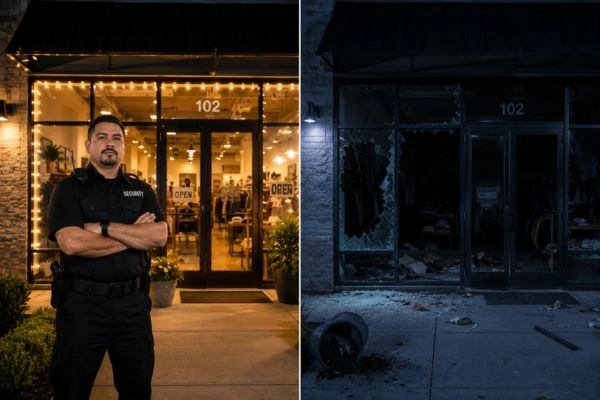
For most Houston businesses with real exposure, yes. A trained guard prevents losses that make the question answer itself. A visible guard deters crime before it starts, and responds in seconds when something does happen.
You’ll hear that cameras and AI make guards obsolete. They don’t. Industry forecasts frame AI as a force multiplier, not a replacement. Software flags an alert; it can’t walk over and make a judgment call. The best setups pair guards with technology; the worst buy cameras and call it done. The Bureau of Labor Statistics counts more than 1.27 million guards nationwide, and its employment figures show roughly 162,000 openings a year, almost all from turnover.
Match The Guard To The Risk
Strip away the categories and it’s one move: match the type of security guard service to the risk you actually have. A static guard for a lobby, patrol for a sprawling site, armed only when the threat earns it. Get the match right, verify the licenses, and don’t let a low bid make the call. That’s the whole game.
Frequently Asked Questions
What are the most common types of security guard services in Houston
The most common types of security guard services are on-site (static) guards, mobile patrol, retail and loss prevention, event security, close protection, vacant property security, corporate security, and construction and fire watch. Most Houston businesses use one or two of these based on their site and risk. The right mix depends on what you need to protect, not on what sounds most impressive.
What is the difference between armed and unarmed security guards?
Unarmed guards deter, observe, report, and de-escalate, and they cover most everyday posts. Armed guards carry a firearm and are used for cash handling, high-value assets, or a documented history of violence. In Texas, armed (commissioned) officers must complete a higher level of state training than unarmed guards.
Do security guards in Texas need a license?
Yes. Both the security company and each officer must be licensed through the Texas Department of Public Safety Private Security Bureau, and every guard passes a fingerprint-based background check. Training is tiered: Level II for unarmed officers, Level III for armed (commissioned) guards, and Level IV for personal protection officers.
Can a security guard detain or arrest someone in Texas?
A guard’s authority is limited and narrower than most people assume. In Texas a private citizen, including a guard, may detain someone only in narrow circumstances tied to a witnessed offense, while a licensed peace officer working a post has broader authority. Clear written post orders should spell out exactly what a guard can and cannot do on your site.
Are security guards better than cameras and AI monitoring?
Cameras and AI detect and record, but they cannot intervene. Industry forecasts describe AI as a force multiplier that supports officers rather than replacing them. The strongest setups pair trained guards with technology so an alert is followed by a real response.
How do I choose the right type of security guard service for my business?
Start with your risk: what you are protecting, where, and against what threat. Match the type of security guard service to that risk, confirm current DPS licenses, and ask for references from comparable Houston sites. Weigh proof and fit ahead of the lowest bid, since one preventable incident usually costs far more.
How many security guards work in the Houston area?
The Houston metro area employs roughly 29,250 security guards, part of more than 1.27 million counted nationwide by the Bureau of Labor Statistics. Demand stays steady, with much of the annual hiring driven by industry turnover rather than new growth.