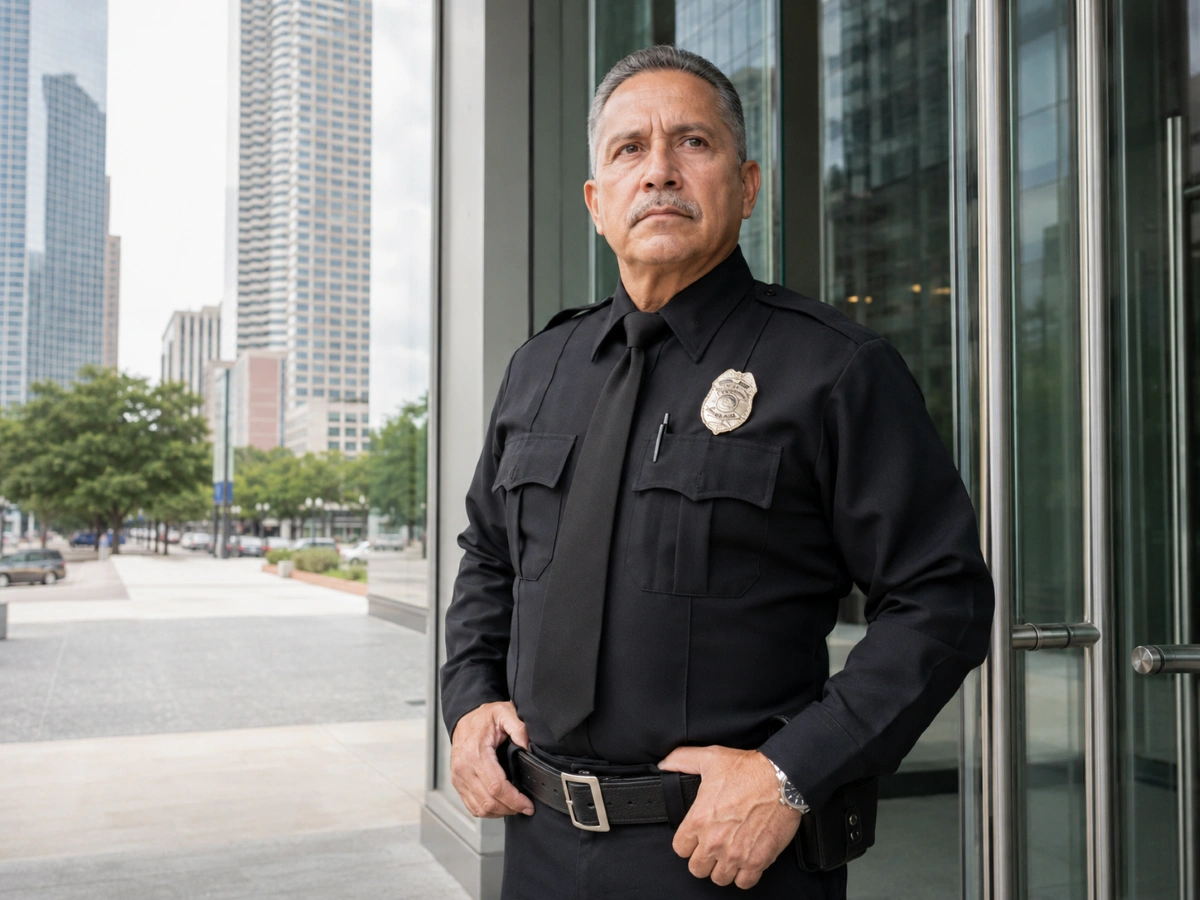
There’s no maximum age limit for security guard work in Texas. The state sets a minimum age of 18 and no upper cap. Pass a background check, finish the required training, and handle the duties of your assigned post, and your age won’t keep you out.
The maximum age limit for security guard work in Texas does not exist as a legal rule. Texas licenses guards through the state Department of Public Safety, which requires applicants to be at least 18, hold a clean enough record, and complete state-approved training. No statute names a retirement age or an upper limit.
Plenty of people over 50 assume the door is shut. They’re confusing the law with hiring reality, and the two are not the same thing. This article sticks to Texas private security. Federal roles like Border Patrol carry real age caps, but guarding a Houston office tower is a different world.
What Texas Law Says About the Maximum Age Limit for Security Guard Work in 2026
Texas law sets a floor and leaves the ceiling open. The rules live in the Texas Occupations Code and are enforced by the Texas Department of Public Safety, and not one line of them caps how old a licensed guard can be.
Guards in Texas fall into a few license types. A non-commissioned officer (Level II) works unarmed. A commissioned officer (Level III) carries a firearm on duty. A personal protection officer (Level IV) handles close protection, the bodyguard work. Each level has its own training and minimum age, and none carries a maximum.
Most Houston jobs split between unarmed and armed roles, and the daily work differs more than the age rule does. About 1.27 million people worked as security guards nationwide in 2024, according to the Bureau of Labor Statistics. That workforce skews older than most people picture, which tells you the rules aren’t pushing experienced people out.
What Are the Age Requirements for a Texas Security License?
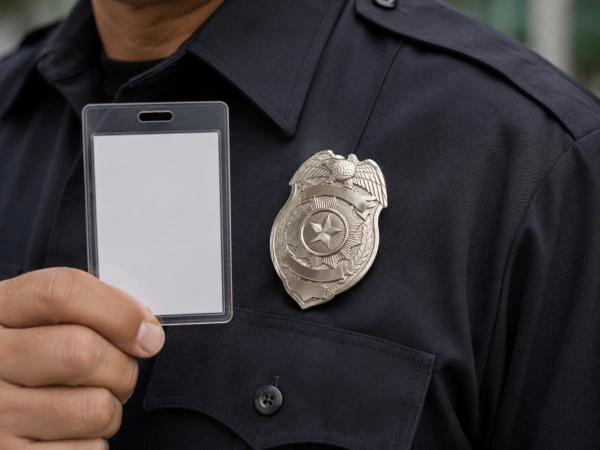
You must be at least 18 to hold a Texas security officer license, armed or unarmed. Personal protection officers have to be 21. None of the three has a maximum age.
That 18-year floor comes straight from the state’s Private Security statutes, in Section 1702.113. Armed work asks for more on top of age. A commissioned officer finishes a Level III course that runs a minimum of 45 hours, including a live firearms qualification, and from January 2024 also submits a psychological evaluation before the state issues the commission.
The three license levels compare like this:
| License level | Common name | Armed? | Minimum age | Maximum age |
|---|---|---|---|---|
| Level II | Non-commissioned officer | No | 18 | None |
| Level III | Commissioned officer | Yes | 18 | None |
| Level IV | Personal protection officer | Yes | 21 | None |
Armed officers also have to meet firearm-related requirements, which is where the extra training and the psychological evaluation come in.
Why Capability Matters More Than Your Birth Year
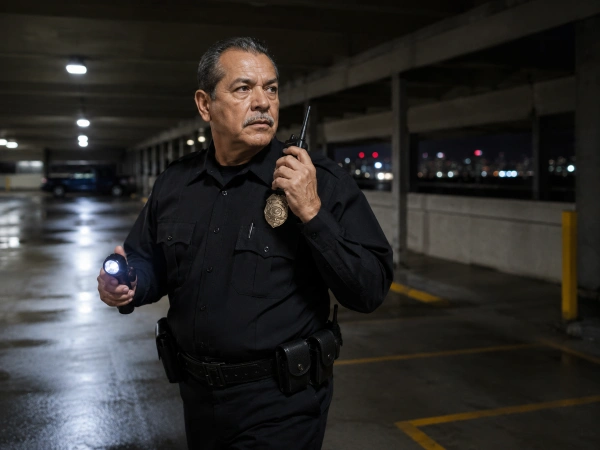
On the job, what matters is whether you can do the work, not the year on your license. Texas has no statewide physical agility test for private guards, so fitness expectations come from the employer and the specific post.
Actually, framing this as fitness versus age misses the point. The real question is fitness versus the post. A static lobby job and an overnight foot patrol are not the same work. One has you greeting visitors, watching a camera feed, and writing clear reports. The other keeps you on your feet for hours covering ground in Houston heat. A fit 65-year-old can run that lobby better than a distracted 25-year-old, and most companies know it.
Some skills sharpen with age instead of fading. Staying calm under pressure, reading a situation before it boils over, and talking a person down rather than squaring up all lean on experience. Those are the parts of the job that keep clients happy and keep incidents out of court.
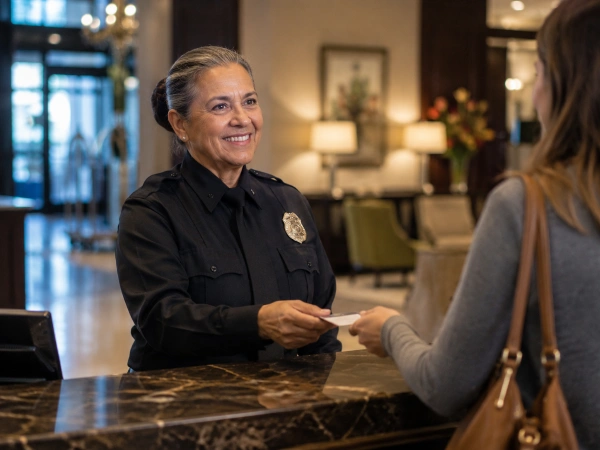
Where Older Guards Have the Edge
Experienced guards tend to land the posts where judgment beats foot speed, like hotel lobby posts, residential gate houses, corporate reception, hospital entrances, and camera rooms.
The numbers show how common older guards already are. In California, researchers at the Berkeley Labor Center found that about 14% of guards are between 55 and 64, and close to 8% are 65 or older, even with the physical side of the work. Texas doesn’t publish the same breakdown, but the pattern holds anywhere demand runs high.
And demand runs high.
The Bureau of Labor Statistics projects around 162,300 guard openings a year through 2034, almost all from turnover and retirements rather than new growth. That churn means companies can’t afford to ignore steady applicants over 50.

Can You Start a Security Career at 50, 60, or Beyond?
Yes. You can start a security career at 50, 60, or older in Texas, and people do it every year. The path matches what a 19-year-old follows: get hired by a licensed company, finish Level II training, clear the background check, and carry your pocket card.
A second career in security fits a lot of retirees and career-changers. Shifts can be part time, posts can be low-confrontation, and the work rewards the steadiness that comes with age. The trade-off is honest pay. The national median sits near $18.46 an hour, about $38,390 a year, per Bureau of Labor Statistics figures from May 2024.
One quirk of the system catches people off guard. In Texas you generally need a job offer from a licensed company before the state will issue your individual license, so you apply through the employer, not on your own. That’s also why scanning open guard roles is the first real step, not the last.
The Practical Barriers Nobody Talks About
The cheerful “age is just a number” line falls apart in practice. The law won’t stop you, but three quieter forces can.
First, client image. Some clients still picture a young, imposing guard at the door and ask for exactly that, even when it’s the wrong call. Second, insurance. Underwriters sometimes apply closer medical review to older armed officers, which can slow a placement. Third, the physical match. A post that truly needs sustained running or heavy lifting has to be staffed honestly, and that holds at any age.
Federal law helps here, to a point. The Age Discrimination in Employment Act protects workers over 40 from bias, but it can’t force a client to drop an image preference. None of this is a maximum age limit for security guard work. It’s friction, not a wall. Target posts that fit your strengths, and show you can do the job instead of just saying so.
The Bottom Line on Security Guard Age Limits in Texas
Age is rarely the thing standing between you and a security job in Texas. The state cares whether you’re at least 18, whether your record is clean, and whether you finished the training. After that, it comes down to matching the right person to the right post, and there’s plenty of security guard work across Houston that suits experienced people well.
If you’re over 50 and weighing it, the honest read is simple. There is no maximum age limit for security guard work in Texas, only a minimum and a set of standards anyone capable can meet. Pick posts that play to experience, prove you can handle them, and the years on your license stop mattering.
FAQs
Is there a maximum age limit for security guard jobs in Texas?
No. Texas sets a minimum age of 18 for a security officer license and no maximum age at all. As long as you pass the background check, complete the required training, and can perform your assigned post, your age does not disqualify you.
Can I become a security guard at 60 in Texas?
Yes. There is no upper age limit, and older applicants enter the field regularly. In one California workforce sample, close to 8% of guards were 65 or older, which shows it is common where demand is strong.
What is the minimum age to get a security guard license in Texas?
You must be at least 18 for both non-commissioned (unarmed) and commissioned (armed) security officer licenses. Personal protection officers, the close-protection level, must be at least 21. The 18-year minimum comes from Section 1702.113 of the Texas Occupations Code.
Do security companies discriminate against older applicants?
The Age Discrimination in Employment Act protects workers over 40 from age bias. Some informal hurdles still exist around client image preferences or perceived fitness, but many employers value the maturity and de-escalation skills that experienced guards bring.
Is security work a good second career or semi-retirement job?
For many people, yes. Shifts are often part time and many posts are low-confrontation, which suits career-changers and retirees. The Bureau of Labor Statistics projects around 162,300 guard openings a year through 2034, mostly from turnover, so opportunities are steady.
Does the maximum age limit for security guard work change for armed roles?
No. Texas sets no maximum age for armed (Level III) officers either. The minimum stays at 18, though armed applicants complete at least 45 hours of Level III training, a firearms qualification, and a psychological evaluation, and may face closer medical review.
How does physical fitness affect older security guard applicants?
Texas has no statewide agility test for private guards, so fitness standards depend on the employer and the post. Lower-confrontation roles like reception, gatehouse, or camera monitoring focus on observation and communication rather than physical strength.


