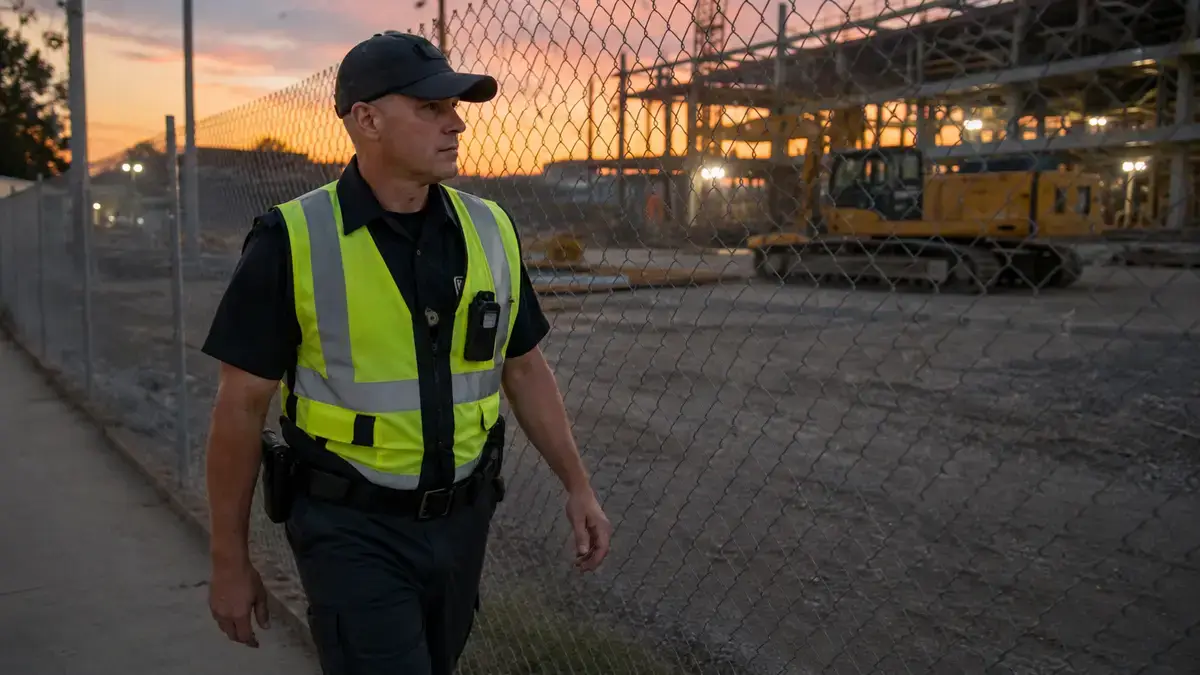
The fastest way to lose money on a job site isn’t a blown schedule. It’s a theft you could have prevented for a fraction of what it cost you. Construction site security is the mix of physical barriers, lighting, alarms, cameras, and trained people that keeps tools, copper, and heavy equipment from walking off after the crew clocks out. In Texas that problem runs hot: the National Equipment Register puts the state at roughly 24% of all reported construction equipment theft in the country, more than anywhere else. For a builder around Houston, that’s not a statistic, it’s a Tuesday, and it’s why demand for security guards in Houston on active sites stays high. Here’s what most vendors won’t say: no single product fixes this. The eight forms below work because they stack.
Get the Physical Basics Right First
The first four layers are cheap, low-tech, and skipped more often than you’d guess. Alone they won’t stop a determined crew, but they peel off the casual thief, the bored kid, and the opportunist cruising for an easy load. Lock the site down before crews break ground, not after the first tools vanish.
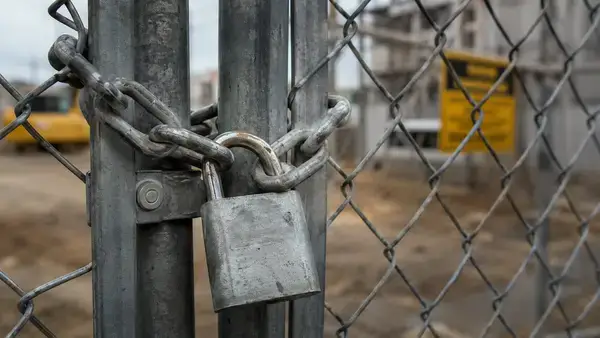
Fences, Locks, and Controlled Access
A perimeter fence is the most basic move, and plenty of sites still leave gaps in theirs. It slows anyone trying to get in and makes clear that crossing the line is trespassing, not wandering. Chain-link with locked gates is the floor. Around high-value zones, like the tool trailer or the area staging copper and wire, add a second barrier and electronic access. Don’t oversell it, though. Fences get cut, climbed, and left wide open when a gate is propped for a delivery and nobody closes it.
Do Warning Signs Actually Stop Anyone?
Some do, some don’t. The organized crew that already knows what’s on your site won’t blink at a sign. The casual intruder testing whether anyone’s watching might. A clear notice spelling out the penalty for trespassing gives that person a reason to keep driving. Signs cost almost nothing, so you’re not relying on them, you’re using them to clear out the laziest threats first.
Tag and Inventory Every Tool and Machine
This is where most sites quietly lose the recovery game. When a generator or skid steer disappears and you can’t prove it was yours, you’re stuck. Mark equipment in several places, including hidden ones, with owner-applied numbers, and keep an inventory list that actually gets updated. Recovery odds are brutal: fewer than one in four stolen pieces of heavy equipment ever comes back, according to the National Insurance Crime Bureau, and for hand tools the rate drops below 7%. GPS and telematics tags on your high-value machines move those odds more than anything else.
Why Lighting Earns Its Keep
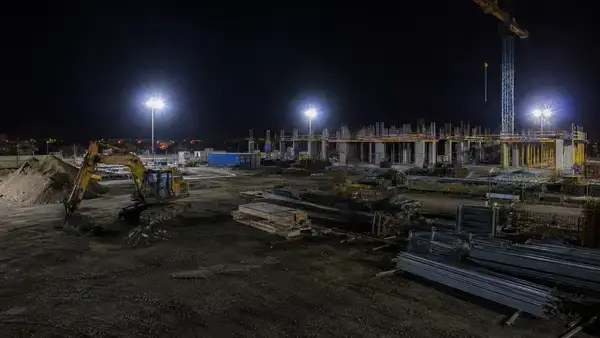
Most site theft happens after dark, because thieves want cover. Floodlights and motion-triggered fixtures take that cover away. A site that lights up the second someone steps into the lot is the one most opportunists skip for the darker one down the block. It’s among the lowest-cost layers you can add, and on a poorly lit site it does more deterrent work per dollar than almost anything. Aim it at access points, staging areas, and the blind corners cameras struggle with.
The Active Layers Most Sites Still Skip
The first four layers deter. These four respond. They stand between a breach and an actual loss, and they’re where the real differences in protection and price show up. This is also where online advice gets lazy, usually because the company handing it out sells one of these and wants you believing it replaces the rest.
Alarms and Intrusion Detection
Alarms turn a quiet break-in into a problem for the intruder. Motion sensors can trigger loud sirens and flashing lights that stop someone cold, or send a silent alert that notifies a monitoring center and dispatches a response. Video-verified alarms usually get priority when authorities are dispatched, because a person has confirmed a real intruder rather than a raccoon tripping a sensor. That cuts response time, and faster response is the line between catching someone and filing a report. False alarms are the weak spot, which is exactly why verification matters.
On-Site Security Guards
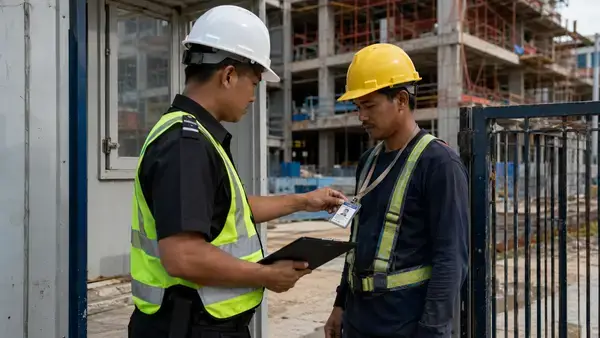
A trained guard is the only layer here that can make a decision. A camera records a theft. An alarm announces it. A guard sees the truck backing up to the fence at 2 a.m., knows it doesn’t belong, calls it in, and is standing there as a witness when it counts. That judgment is the thing technology still can’t copy, which is why a guard is the layer that makes the other seven work. I’ve watched sites cut their officer to save money and then eat a serious loss in the first month.
Guards do cost more per hour than a camera. Federal wage data puts the median pay for security officers near $38,370 a year, and a contractor’s billed rate runs higher once training, licensing, and overhead are added. A guard also keeps the site honest on safety, flagging blocked exits and missing fall protection that draw job site safety citations long before an inspector shows up. The mistake is treating guards and cameras as either-or. Pair them, and one officer covers far more ground while the cameras get the response a recording can’t. For a sense of a site guard’s duties, the job is far more than standing at a gate.
What Should Job Site Cameras Actually Do?
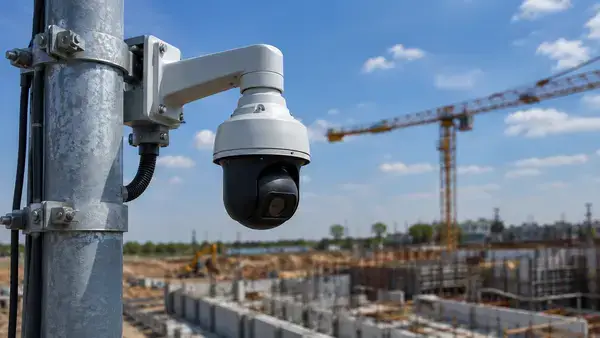
More than sit there looking official. A visible camera deters some thieves, but a cheap unit nobody watches mostly hands you grainy footage of a loss you’ve already taken. The features that matter: pan-tilt-zoom to follow movement live, analytics that flag motion in a protected zone, and a talk-down speaker so a monitor can warn an intruder off before anything’s gone. Match the right camera type to the site, because what protects a tight downtown lot isn’t what a half-built subdivision needs. Solar and cellular units have taken over temporary sites because they don’t need power and wiring the site doesn’t have yet.
Is Remote Video Monitoring Worth Paying For?
For most mid-size and larger sites, yes. Live remote video monitoring puts a trained person on your cameras when nobody’s on site, watching for movement that matters and dispatching the instant something’s wrong, instead of you reviewing footage the next morning. That shift, from recording the loss to interrupting it, is the whole point. It usually costs less per month than round-the-clock guards while covering a wider perimeter, which is why many contractors run monitoring overnight and bring officers in for the higher-risk windows. The catch is response: ask exactly how verification and dispatch work before you sign.
How Much Construction Site Security Do You Need in 2026?
Not all eight, and not the same eight for every site. A short residential build in a quiet area might be fine with solid fencing, lights, signage, and a camera. A high-value commercial project sitting on copper and heavy equipment needs the active layers too, with a trained officer as the keystone. Here’s how the layers trade off.
| Security Layer | Best At | Relative Cost | Where It Fits |
| Fences, locks, access control | Slowing entry, marking the boundary | Low, mostly upfront | Every site, day one |
| Warning signage | Deterring casual intruders | Very low | Every site |
| Equipment tagging and inventory | Recovery and insurance proof | Low; GPS tags add cost | Sites with movable high-value gear |
| Lighting | Removing nighttime cover | Low | Any site, especially dark lots |
| Alarms (video-verified) | Fast alerts and dispatch | Moderate monthly | Sites with structures or stored assets |
| On-site guards | Real-time judgment and response | Highest ongoing | High-value or high-risk builds |
| Cameras (PTZ, solar/cellular) | Visible deterrence and evidence | Moderate upfront plus storage | Most sites; temporary or remote |
| Remote video monitoring | Interrupting theft in progress | Mid-range monthly | Mid-size and larger sites overnight |
Relative cost only, not price quotes. Actual pricing depends on site size, risk, and coverage hours.
If you take one thing from this, take this: stop shopping for the single product that fixes construction site security and start building in layers, with a person who can actually respond at the center. The cheap layers thin the herd. The active ones stop the loss. When you’re ready to put real coverage on an active build, construction site security guards who know the local patterns are the place to start, and you can confirm a company is licensed through the state in about two minutes. The same way you lean on specialists for every trade, a good security company leans on its own people, from the licensed officers in the field to the ones who keep it easy to find online.
FAQs
When are construction sites most likely to be targeted?
Most theft happens when no one is around: overnight, on weekends, and over holidays, when sites sit empty and unlit. More than 11,000 construction equipment thefts are reported across the US each year, and the bulk occur after hours, with late summer often cited as a peak. The hours your crew is gone are the hours your site is most exposed.
What is the most effective construction site security setup?
Layering, not any single product. The strongest construction site security combines physical deterrents like fencing, lighting, and signage with detection from alarms and cameras, plus an active human layer that can respond in real time. On high-value sites, a trained on-site guard is the piece that ties the rest together, because cameras and alarms record or announce a theft but cannot intervene.
Do security cameras stop theft or just record it?
Both, depending on how they are set up. Visible cameras deter some thieves, but an unmonitored system mostly gives you evidence after the loss, and recovery odds are poor: fewer than one in four stolen pieces of heavy equipment is ever recovered. Cameras paired with live monitoring and analytics shift from recording a theft to interrupting it.
Are security guards worth it compared to cameras?
On high-risk or high-value sites, usually yes. A camera records a theft and an alarm announces it, but a trained guard can read a situation in real time, intervene, and serve as a witness, which technology cannot do. The strongest approach often pairs the two, using cameras and live monitoring to extend one officer’s reach across a larger site.
How effective is fencing alone for construction site security?
Useful but not enough on its own. Fencing slows intruders and marks your boundary, yet it is routinely cut, climbed, or left open at an unlocked gate. And once tools leave a site, fewer than 7% are ever recovered, so the goal is prevention, not chasing losses. Pair fencing with lighting, cameras, and either monitoring or guards.
Does construction site security affect insurance claims?
Often, yes. Documented security measures and video evidence can support a theft claim and show due diligence, and some carriers weigh them in how they handle coverage. Gaps in security can complicate or slow a claim. Confirm the specifics with your carrier.


